Bertrand de Jouvenel: The Philosopher Who Understood the Nature of Power Before Anyone Else
Some people seem to have the gift of looking at the world and seeing what others miss. Bertrand de Jouvenel (1903–1987) was one of those people. Political philosopher, economist, writer, and father of futures studies, Jouvenel devoted his life to understanding how power actually works. And what he discovered is not only relevant today — it is the key that unlocks every door of this investigation.
In a world racing toward digital centralization, mass surveillance, and the concentration of power in fewer and fewer hands — whether corporate or state — the French philosopher’s thought has become more urgent than ever. His diagnosis is as lucid as it is uncomfortable: power does not need evil intentions to become tyrannical. It simply needs to exist.
This article opens the “Geopolitics of Control” series, and there is no better starting point than Jouvenel. Because before we discuss debt, surveillance, neocolonialism, or cultural manipulation, we must understand the driving force that pulses behind them all.
Who Was Bertrand de Jouvenel?
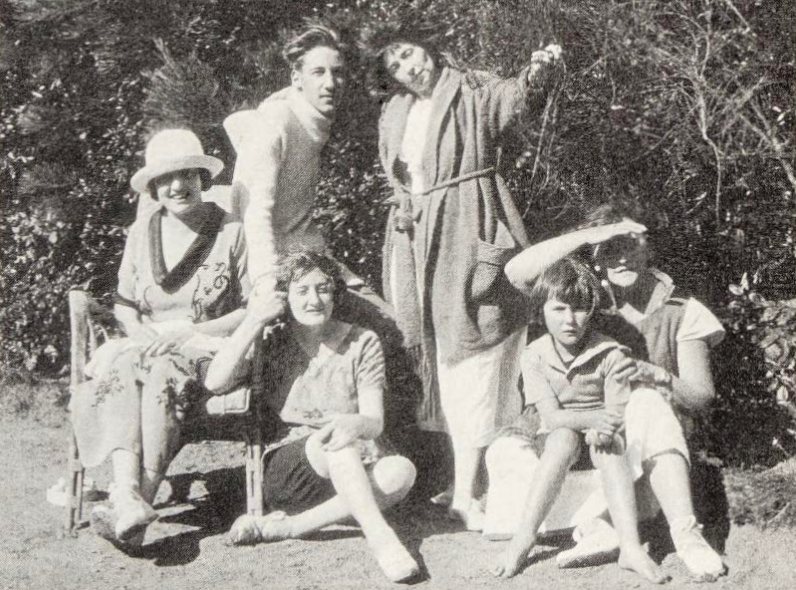
Born in Paris in 1903 into a family of intellectuals — his father, Henri de Jouvenel, was a journalist and politician; his stepmother was the celebrated writer Colette, with whom young Bertrand had a relationship that marked his youth — Jouvenel experienced firsthand the great convulsions of the 20th century. He grew up amid political debates, literary salons, and the effervescent atmosphere of the French Third Republic.
His ideological trajectory is itself a lesson in critical thinking: he began with sympathies for fascism in the 1930s — like many European intellectuals seeking an alternative to the chaos of the interwar period — but after World War II he radically shifted toward classical liberalism, decentralism, and an ecological awareness far ahead of its time. In 1945 he published Power (Du Pouvoir), his masterpiece, where he laid the foundations of his theory on the natural expansion of power.
This evolution was neither frivolity nor opportunism. It was the result of years of observing how power behaves, how it expands, and how it devours freedom if left unchecked. His major works — Power (1945), The Republic of Comrades, and The Ethics of Redistribution — are the fruit of decades of political observation and philosophical reflection.
Jouvenel was also a prolific essayist. He contributed to publications such as La Revue des Débats, wrote for newspapers across Europe, and maintained correspondence with some of the most influential intellectuals of his time, from Friedrich Hayek to Raymond Aron. He died in Paris in 1987, leaving behind a legacy that we are rediscovering with astonishment today.
Bertrand de Jouvenel Timeline: A Life Straddling Two Centuries
To grasp the depth of the French thinker, there is no better way than to trace the milestones of his biography. Each stage of his life reflects an intellectual and political transformation that anticipates the dilemmas of our own time.
| Year | Event |
|---|---|
| 1903 | Born in Paris on October 31, into a prominent family of French intellectuals and politicians. |
| 1920s | Spends his youth in Colette’s literary circle, frequenting Parisian intellectual salons. First travels across Europe. |
| 1930–1936 | Works as a journalist and correspondent in Central Europe. Initially sympathizes with authoritarian movements, disillusioned with interwar liberal democracy. |
| 1936 | Travels to the United States, where he begins to distance himself from fascism after observing liberal democracies up close. |
| 1939–1945 | World War II. Jouvenel experiences the conflict firsthand. This period radically transforms his political thought. |
| 1945 | Publishes Power (Du Pouvoir), his foundational work. The book is a lucid warning about the natural tendency of power to expand and concentrate. |
| 1947 | Founds the Futuribles organization, dedicated to the study of possible futures. Futures studies is formally born as a discipline. |
| 1950s–1960s | Consolidates his reputation as a classical liberal thinker. Writes extensively on economics, decentralization, and the limits of the state. |
| 1960s–1970s | Anticipates the environmental movement with writings on the limits to growth, sustainability, and ecological economics. |
| 1987 | Dies in Paris on March 1. His work would be rediscovered decades later by new generations of political analysts. |
The Core Thesis: Power Expands by Its Very Nature
For Jouvenel, power is not something someone “possesses” and chooses whether or not to use. Power is a living, organic force that naturally tends to expand and concentrate. Like a gas in a container, it seeks to occupy all available space. It does not matter who wields it or under what ideology: power always pushes toward more power.
This idea is revolutionary because it shifts the focus of traditional political debate. It is not about “good” versus “evil,” democratic governments versus dictatorships, left versus right. It is about an inherent property of power itself. All power, by definition, wants to grow. And whoever does not actively restrain it ends up being consumed by it.
Jouvenel argues that this expansion does not occur because rulers are evil — though some certainly are — but because the logic of office, bureaucracy, and administration inevitably pushes toward concentration. The official who wants to solve a problem needs more resources, more authority, more staff. And every new attribution, however well-intentioned, swells the machinery of power.
The French thinker describes this mechanism with almost surgical precision in Power. In its pages, he shows how the modern state — from absolutism through 20th-century democracies — has followed an unstoppable trajectory of expansion. Not because of a conspiracy, but because the dynamic is structural.
“Power is like fire: a good servant but a bad master. And it always tends to become the master.”
— Bertrand de Jouvenel (paraphrase of his thought)
Jouvenel’s Critique of the Centralized State
From this premise, Bertrand de Jouvenel draws an uncomfortable conclusion that many prefer not to face: the modern state, in any of its forms, is the most efficient machine ever invented for concentrating power. It does not matter whether it is democratic or authoritarian, monarchical or republican, capitalist or socialist. The internal logic of the state is always the same: centralize, homogenize, control.
And here is the key insight that connects to the rest of our investigation: Jouvenel was not an ideological “anti-statist” in the anarchist style. He was a realist pointing out a structural mechanism. If effective counterweights are not designed — not merely formal ones like elections every four years — the state will end up invading every space of life, from the economy to culture, from education to private life.
The philosopher of futures studies distinguished between two types of power: authorized power (what society delegates for specific, limited functions) and expansive power (which tends to exceed those limits). The problem, according to Jouvenel, is that the second always ends up devouring the first if there are no robust containment mechanisms in place.
This distinction is key to understanding phenomena we see today: mass surveillance justified in the name of security, regulation that starts by protecting consumers and ends up suffocating small businesses, public debt that mortgages entire generations. In every case, expansive power uses necessity as its pretext to grow.
Jouvenel, Environmentalist Before His Time
One of the most fascinating facets of Jouvenel is that by the 1960s and 1970s — long before environmentalism went mainstream — he was already writing about the limits to growth, sustainability, and the need for an economy that respects natural equilibria. Not from a romantic or New Age perspective, but from the cold analysis that infinite growth on a finite planet is a physical impossibility that power will deny until the very last moment.
Jouvenel thus anticipated debates that are now at the center of the global agenda. When he published The Ethics of Redistribution (1957), he was already pointing out that economic growth could not be divorced from its material and ecological foundations. Decades before the Club of Rome and IPCC reports, the French thinker warned that industrial civilization was built on a fiction: that resources are inexhaustible.
This ecological vision was not an eccentricity in his thought, but a direct consequence of his theory of power. If power expands without restraint, it will also do so over nature. The result is the overexploitation of resources, irrational growth, and ultimately ecological crisis. Jouvenel’s environmentalism is not sentimental — it is structural.
Bertrand de Jouvenel, Father of Futures Studies
Jouvenel is also considered the father of futures studies or futurology. In 1947 he founded the Futuribles group, dedicated to exploring possible futures — not to predict them, but so that societies could consciously choose which direction to take. Because if you do not imagine alternative futures, the future imposed on you will be the one someone else has decided on your behalf.
Jouvenel’s approach to futures studies rests on a simple but powerful idea: the future is not written. It is not something that “happens” — it is something that is built. The decisions we make today — or that others make for us — determine the possible futures. That is why the analyst’s task is not to guess what will happen, but to map out scenarios and put them on the table so that society can debate them.
This methodology has been adopted by governments, corporations, and international organizations. But the philosopher of futures studies originally conceived it as a tool for citizen empowerment: if you understand possible futures, you can choose the one you want and fight for it. Futures studies is, at its core, an act of freedom against the fatalism of expansive power.
Today, organizations such as the World Future Society or UNESCO’s futures laboratories draw directly from the ideas that Jouvenel planted in the 1950s. Futures studies has become a recognized academic discipline, but its original spirit — serving collective freedom — is often diluted in technical reports that no one reads. Reclaiming futures studies as a tool for social transformation is perhaps one of Jouvenel’s most urgent legacies.
Why Start Here? Jouvenel as the Unifying Framework
This series of articles — which we have titled “Geopolitics of Control” — begins with Bertrand de Jouvenel for a very simple reason: he gave us the framework. His idea that power expands by its very nature is the explanatory principle that unifies everything else.
Without Jouvenel, the phenomena we will explore in upcoming articles would seem disconnected: debt as a millennia-old tool of control, mass digital surveillance, financial neocolonialism, the levers of domination. With Jouvenel, it all makes sense. They are different manifestations of the same force: the natural expansion of power.
- David Graeber — Markets Are Founded on Violence: debt as the first great instrument of social control, from ancient Mesopotamia to the IMF.
- Maurizio Lazzarato — The Indebted Man: how neoliberalism turns every citizen into a perpetual debtor, a docile subject of financial power.
- John Perkins — Confessions of an Economic Hit Man: the hidden mechanisms by which powers subdue entire countries without firing a single shot.
- Kwame Nkrumah and Thomas Sankara — Neocolonialism: the final phase of imperialism, where control is no longer military but financial and cultural.
- Eduardo Galeano and Aníbal Quijano — Open Veins and the Coloniality of Power: the wounds of extractivism that continue to bleed five centuries later.
- Pedro Baños — The 7 Levers of Domination: the complete map of how power is exercised in the 21st century.
- Zbigniew Brzezinski and Halford Mackinder — The Grand Chessboard: the historical and geographical roots of the struggle for global control.
- Michel Foucault — Biopolitics: how power no longer merely governs territories but manages life itself.
It all fits. It is all manifestations of that same expansive force that Jouvenel identified in his work Power. The forms change — from direct military conquest to silent conquest through debt, surveillance, cultural manipulation, and algorithmic control — but the underlying logic remains the same. As Jouvenel wrote: the instruments change, but the will to dominate does not.
❓ Frequently Asked Questions About Bertrand de Jouvenel
What is Bertrand de Jouvenel’s most important work?
Undoubtedly, Power (Du Pouvoir), published in 1945. It is his magnum opus, where he first develops his theory on the natural tendency of power to expand and concentrate. The book is considered a classic of 20th-century political thought and has influenced authors as diverse as Friedrich Hayek, Hannah Arendt, and Michel Foucault. Also essential are The Ethics of Redistribution (1957) and his writings on futures studies and ecology.
Why is Bertrand de Jouvenel considered the father of futures studies?
Because in 1947 he founded Futuribles, the first organization systematically dedicated to the study of possible futures. Jouvenel developed an entire methodology — based on scenarios, driving forces, and change factors — that laid the groundwork for what we now know as strategic foresight. His approach was not predictive but exploratory: mapping alternative futures so that societies could choose consciously.
What is Jouvenel’s connection to modern environmentalism?
Jouvenel was a forgotten pioneer of environmental thought. As early as the 1960s and 1970s he wrote about the limits to growth, the unsustainability of the industrial model, and the need for an economy respectful of natural balances. His approach was not romantic but structural: given that power tends to expand without restraint, it also tends to overexploit natural resources. He thus anticipated debates that would not erupt for decades.
Was Jouvenel left-wing or right-wing?
It is difficult to place Jouvenel on the traditional political spectrum. He began with sympathies for fascism in the 1930s, evolved toward classical liberalism after World War II, and developed an advanced ecological awareness. His thought is transversal and challenging for any ideology. In fact, his thesis on the natural expansion of power is uncomfortable for both the left and the right, because it suggests that the problem is not who governs, but the very nature of power itself.
Is Jouvenel’s thought still relevant in the 21st century?
Completely. In fact, perhaps today it is more relevant than ever. In an era of mass surveillance, algorithms that condition our decisions, corporations accumulating power comparable to states, and a global ecological crisis, Jouvenel’s thesis — power expands by its nature if not actively contained — has become an almost daily evident reality. His work offers conceptual tools to understand and resist these dynamics.
Conclusion: Bertrand de Jouvenel, the Necessary Starting Point
Bertrand de Jouvenel taught us that power does not correct itself. It is not a benevolent force that self-regulates, nor a necessary evil that can be ignored. It must be actively contained — by designing systems that limit it, decentralizing control, creating real and effective counterweights. And the first step toward containing it is understanding it in all its depth.
Jouvenel’s legacy reminds us that freedom is not a natural state that sustains itself, but a fragile balance that must be defended every day. Every time we delegate power without oversight, every time we accept a new regulation without asking who will control it, every time we sacrifice privacy for convenience, we are feeding the expansive machine that Jouvenel described.
But he also left us a tool: futures studies. If the future is not written, we can imagine it and build it. We can design societies where power is distributed, where counterweights are real, and where no one — not a government, not a corporation, not an algorithm — has the final word over our lives.
This article is only the first stone. In the coming ones, we will unfold each piece of the puzzle: debt as a millennia-old tool of domestication through the lens of David Graeber, financial neocolonialism, Pedro Baños’s seven levers of domination, and finally the pattern that repeats throughout history. A pattern that Jouvenel was the first to point out with clarity.
Welcome to Geopolitics of Control. The doors are open. 🌿
📬 Don’t Miss the Upcoming Articles
The “Geopolitics of Control” series has just begun. Every week we will publish a new article dismantling the power structures that shape our world. If you want to understand how the system really works — and how we can build alternatives — this is for you.
Subscribe to Geopolitics of Control to receive each new article directly in your inbox. No spam, no hidden agendas. Just knowledge in service of freedom.
🔗 Continue Reading the “Geopolitics of Control” Series
- → Article 2: Markets Are Founded on Violence — David Graeber and 5,000 Years of Debt
- → Article 3: The Indebted Man — Maurizio Lazzarato and the Making of the Docile Subject
- → Article 4: Confessions of an Economic Hit Man — John Perkins and War Without Rifles
- → Article 5: Financial Neocolonialism — Nkrumah, Sankara, and Debt as a Whip
- → Article 6: Open Veins of Latin America — Galeano, Quijano, and the Coloniality of Power
- → Article 7: The 7 Levers of Domination — Pedro Baños and the Complete Map of the Board
- → Article 8: The Grand Chessboard — Brzezinski, Mackinder, and the Roots of Geopolitics
- → Article 9: Biopolitics and Governmentality — Foucault and Power Over Life
🌐 Share This Article
If this analysis was useful to you, share it with someone who should read it. Critical knowledge only serves its purpose when it circulates. You can also explore other articles from Geopolitics of Control using the site map or the search tool.