Introduction
“The international division of labor consists in some countries specializing in winning and others in losing. Our part of the world, which today we call Latin America, was precocious: it specialized in losing ever since the remote times when Renaissance Europeans hurled themselves upon the sea and sank their teeth into its throat.”
With these words, Eduardo Galeano opened Open Veins of Latin America in 1971—a book that would become a thunderclap in the conscience of the continent. It was no ordinary academic essay. It was a passionate, thoroughly documented, and heart-wrenching chronicle of the systematic plunder inflicted upon Latin American peoples over five centuries.
Almost simultaneously, on the other side of the Andes, Peruvian sociologist Aníbal Quijano was developing the theoretical tool that would explain why that plunder had not ended with the nineteenth-century independences: coloniality of power.
Two thinkers, two perspectives that complement each other like the two sides of a single wound. Galeano gave us the blood, the memory, and the fury. Quijano gave us the conceptual map to understand that coloniality is not a closed chapter, but the very matrix of global power still operating today—disguised as debt, structural adjustment, and free markets.
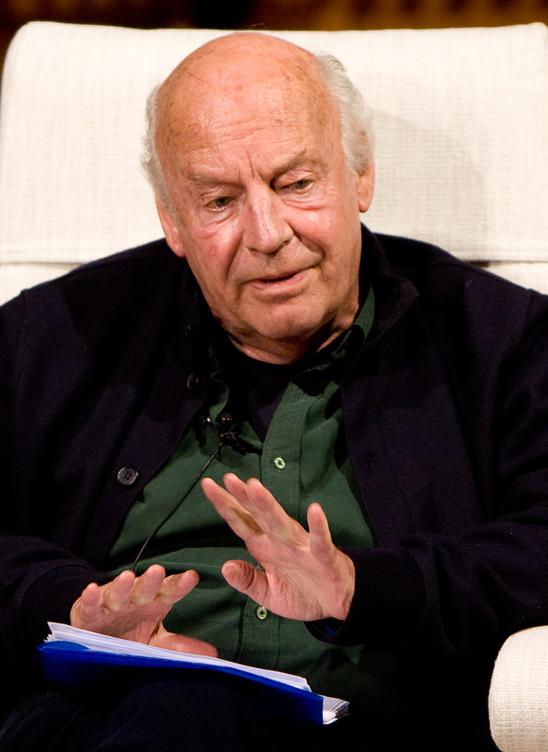
Eduardo Galeano: Chronicle of Plunder
Galeano (Montevideo, 1940–2015) was a journalist, writer, and chronicler. His masterpiece, Open Veins of Latin America, does not seek neutrality: it seeks the truth of those who lose. Over four years he compiled information from historical, economic, and political sources, and in “ninety nights riddled with caffeine” wove a narrative connecting the gold stolen from the Incas with Chilean copper, Bolivian tin, and Venezuelan oil.
The Structure of the Book
The book is divided into two major parts:
1. “Poverty of Man as a Result of the Wealth of the Land” — A journey through colonial plunder: the silver of Potosí, the gold of Mexico and Colombia, the rubber of the Amazon, the sugar of the Caribbean. Galeano shows how resource abundance became the continent’s curse. Each time a resource was exhausted or lost value in the global market, the region was left devastated, while the metropolises accumulated capital.
2. “Development Is a Voyage with More Shipwrecks Than Sailors” — The second part delves into the neocolonialism that followed independence: foreign debt, the control of transnational corporations, the role of the IMF and the World Bank, and the complicity of local elites. Plunder no longer came by the sword, but through contracts, loans, and treaties.
The Pillage of Gold and Silver
One of the most striking chapters describes the Cerro Rico of Potosí, in present-day Bolivia:
“There was no more coveted metal in the world. Potosí supplied silver to the entire world. In three centuries, more than 30,000 tons of silver came out of the bowels of the Rich Hill. But the Rich Hill did not enrich Bolivia. It enriched Europe.”
It is estimated that between 1500 and 1800, 80% of the world’s silver production and 70% of its gold came from Latin America. That wealth financed the European Industrial Revolution, while on the American continent poverty, inequality, and dependence took hold.
Debt as the New Shackle
Galeano devotes crucial pages to showing how, after the wars of independence, first England and then the United States used foreign debt as a control mechanism:
“The bankers of London and New York lent money to the new Latin American governments with one hand, while with the other they collected interest payments that were never fully repaid. When a country rebelled, the cannons arrived.”
This connection is key to our series: the control through debt that we have explored with Graeber (article 3), Lazzarato (article 4), Perkins (article 5), and Nkrumah and Sankara (article 6) finds in Galeano its most visceral and best-documented expression. This is not abstract theory: it is the living history of millions of people.
Aníbal Quijano: Coloniality as the Matrix of Power
While Galeano wrote with his heart on his sleeve and his feet on the ground, Aníbal Quijano (Yanama, Peru, 1930–2018) built from sociology the theoretical scaffolding that explained why the end of colonialism had not brought freedom.
Coloniality vs. Colonialism
The distinction is fundamental. Colonialism is a historical period: the political and military occupation of a territory by a foreign power. Most Latin American countries achieved formal independence in the nineteenth century.
Coloniality, by contrast, is the power structure that survives colonialism. It is the global pattern of domination that organizes labor, race, knowledge, and subjectivities according to a hierarchy imposed by Europe and the West. Quijano put it this way:
“Coloniality is not something of the past. It is a matrix of power that constantly reproduces itself, even after countries become independent. Political independence did not bring about the decolonization of social, economic, or epistemic relations.”
Race as a Structuring Axis
Quijano demonstrated that the modern concept of race was a colonial invention. It did not exist before 1492 as a category of social classification. It was created to justify domination:
- Indigenous peoples were classified as “Indians”—a homogeneous category that erased their cultural diversity and placed them on an inferior rung.
- Enslaved Africans were classified as “Blacks,” stripped of all humanity.
- Europeans placed themselves at the top of the racial hierarchy.
This pigmentocracy, as Quijano called it, was not a side effect of colonialism but its organizational core. Race determined who could own property, who could study, who could govern, and who was to be exploited.
The Three Dimensions of Coloniality
Quijano and his successors (Walter Mignolo, Ramón Grosfoguel, María Lugones) identified three dimensions of coloniality that operate to this day:
1. Coloniality of power — The global racial hierarchy that organizes labor exploitation, resource control, and wealth distribution on a planetary scale.
2. Coloniality of knowledge — The imposition of European-Western knowledge as the only valid form, marginalizing or destroying indigenous, African, and popular knowledges. Modern science, law, philosophy, and Western economics present themselves as universal when they are in fact particular.
3. Coloniality of being — The internalization of inferiority by the colonized. Racism does not only operate from the outside: it operates from within, when an indigenous or Afro-descendant person assumes that their culture, language, or way of thinking is worth less.
Debt as an Expression of the Coloniality of Power
Here the connection to our series becomes crystal clear. Foreign debt is not a purely economic phenomenon. It is a manifestation of the coloniality of power:
- Countries of the Global South are classified as “risky,” “underdeveloped,” or “emerging”—categories that carry an implicit racial and civilizational hierarchy.
- International financial institutions (IMF, World Bank) impose conditions that reproduce dependency: structural adjustment, privatization of resources, cuts to public services.
- The “expert” economic knowledge that justifies these policies comes almost exclusively from the Global North (coloniality of knowledge).
- Leaders from the South who rebel against this system are demonized, intervened against, or assassinated (coloniality of power in action).
Quijano did not speak directly of debt as a control mechanism in the same terms as Graeber or Lazzarato, but his theoretical framework encompasses it perfectly. From a decolonial perspective, debt is the continuation of colonial tribute by other means.
Connection to the Series
This eighth article represents, in a sense, a turning point in our investigation.
The previous articles took us from the theory of power that expands by its own nature (Jouvenel), through debt as a millenary tool of social control (Graeber), the creation of the indebted subject (Lazzarato), the confessions of an economic hit man (Perkins), and the denunciation of financial neocolonialism (Nkrumah and Sankara), all the way to the complete map of the 7 levers of domination (Pedro Baños).
Galeano and Quijano offer us the view from the South, from the perspective of the victims of plunder. They are not distant theorists analyzing power from an ivory tower: they are thinkers who lived in their own flesh—Galeano in exile, Quijano in prison—what they denounced.
- Galeano gives us the data, the history, and the emotion of the plunder. His book is the living archive of five centuries of pillage.
- Quijano gives us the theoretical structure to understand why that plunder did not stop with independence. His concept of coloniality of power explains the continuity between colonial tribute and foreign debt.
Together, they close the circle that Jouvenel opened: power expands by its own nature, yes, but it does so through concrete mechanisms that these thinkers help us identify. Coloniality is one of those mechanisms. Perhaps the deepest and most persistent of them all.
Frequently Asked Questions
❓ What is the difference between colonialism and coloniality?
Colonialism is a historical period of direct political and military occupation. Coloniality is the structure of power, knowledge, and being that survives colonialism and reproduces itself even after formal independence.
❓ Is Open Veins of Latin America still relevant today?
Absolutely. The book documents patterns of plunder and dependency that remain in force: foreign debt, resource extraction, control by transnational corporations. Although Galeano himself once said the book was “outdated” as a work of political economy, its value as a historical chronicle and testimony remains immense.
❓ What is the relationship between coloniality of power and debt?
Foreign debt is a contemporary expression of the coloniality of power: it classifies Global South countries as inferior (“country risk”), imposes conditions from the North (coloniality of knowledge), and reproduces economic dependency through institutions controlled by the former metropolises.
❓ How does Quijano connect with the other thinkers in the series?
Quijano provides the theoretical foundation that connects all the others. He explains why power expands (Jouvenel), why debt is so effective as control (Graeber, Lazzarato), why economic hit men exist (Perkins), why neocolonialism works (Nkrumah and Sankara), and why Baños’s 7 levers operate as they do.
❓ What criticisms have Galeano and Quijano received?
Galeano has been criticized for a certain economic oversimplification and a tone that some consider too passionate for rigorous analysis. Quijano has received criticism from orthodox Marxism for decentering class struggle in favor of the racial axis. Nevertheless, both have profoundly influenced critical thought in Latin America and globally.
❓ What does it mean that debt is a manifestation of the coloniality of power?
It means that debt is not merely a neutral financial instrument. It is a mechanism of domination that reproduces the global hierarchies established during the colonial period: creditor countries are mostly the former colonial empires, and debtors are the countries that were colonized.
Conclusion
Galeano and Quijano teach us something essential that we often forget: the conquest did not end. It changed form. The outright plunder of gold and silver became the extraction of lithium, coltan, and copper. Forced labor in mines became maquiladoras and semislavery working conditions. Colonial tribute became foreign debt, structural adjustment, and IMF conditionalities.
The coloniality of power is the invisible thread connecting the Cerro Rico of Potosí with twenty-first-century sovereign debt bonds. It is the pattern through which countries immensely rich in natural resources remain immensely poor in well-being for their people.
Perhaps that is why Galeano wrote that sentence that both hurts and illuminates so deeply:
“History is a prophet looking backward: by what was, and against what was, it announces what will be.”
And what will be, if we do not break the coloniality of power, is more of the same: plunder, debt, and control. The geopolitics of control feeds on this structure. Knowing it is the first step toward dismantling it.
📚 Suggested Internal Links
- ← Article 7: Pedro Baños — The 7 Levers of Domination
- → Article 9: Brzezinski and Mackinder — The Global Chessboard
🌐 Recommended External Links
- Open Veins of Latin America — Full PDF (Spanish)
- Aníbal Quijano — Coloniality of Power, Eurocentrism and Latin America (PDF, Spanish)
- Eduardo Galeano on Wikipedia
- Aníbal Quijano on Wikipedia
🖼️ Featured Image Prompt
An image combining two visual elements: on the left, the vintage cover of Eduardo Galeano’s “Open Veins of Latin America” with red tones and 1970s typography; on the right, a conceptual diagram of “coloniality of power” with arrows connecting race, labor, knowledge, and debt, with a silhouette of the Latin American map in the background. Documentary collage style. 1200×630 px format.
🔍 ALT Text
Visual collage combining the cover of Eduardo Galeano’s book “Open Veins of Latin America” with a conceptual diagram of Aníbal Quijano’s coloniality of power, over a background with the map of Latin America.
This article is part of the Geopolítica del Control series. Read the previous article: Pedro Baños — The 7 Levers of Domination.