Introduction
There are truths that power does not forgive. And there are those who speak them aloud, knowing the price they may pay. Kwame Nkrumah and Thomas Sankara did exactly that. The first wrote the book that defined financial neocolonialism as “the last stage of imperialism.” The second delivered, from the podium of the Organization of African Unity (OAU), a speech calling for a united front against debt. Both denounced that colonialism had not died — it had merely disguised itself as debt, banks, and IMF conditions.
Nkrumah was overthrown by a coup d’état in 1966, barely a year after publishing his masterwork. Sankara was assassinated on October 15, 1987, less than three months after his speech in Addis Ababa.
Coincidence or not, this article is the story of two men who understood that neocolonialism is not an accident of history — it is the system working as intended.
The Prophet Who Defined Neocolonialism: Kwame Nkrumah
From the Gold Coast to Independence
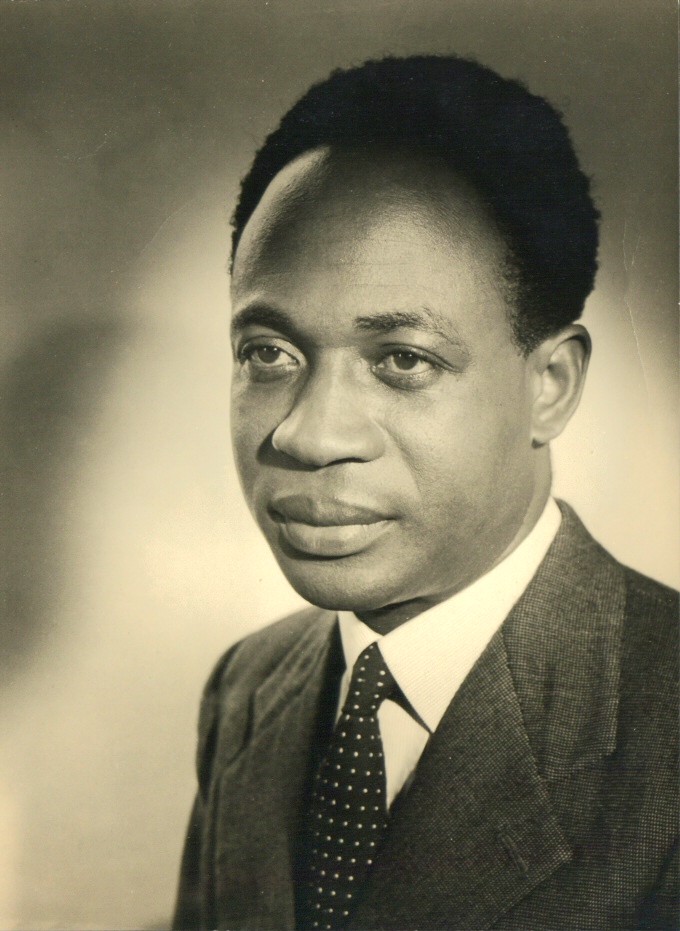
Kwame Nkrumah was born in 1909 in the Gold Coast (now Ghana), into the Nzima people. He studied in the United States and the United Kingdom, where he absorbed the ideas of pan-Africanism and socialism. In 1947 he returned to his homeland to lead the independence movement.
On March 6, 1957, Ghana became the first country in sub-Saharan Africa to achieve independence from colonial rule. Nkrumah, its first president, spoke a phrase that day that would resonate for decades:
“The independence of Ghana is meaningless unless it is linked to the total liberation of Africa.”
Nkrumah sought not only his country’s freedom. He dreamed of a United States of Africa, a federation that would break the artificial borders drawn by the colonial powers at the Berlin Conference (1884–1885). He drove the creation of the Organization of African Unity (OAU) in 1963 and promoted Ghana’s industrialization with megaprojects such as the Akosombo Dam.
But Nkrumah committed an unforgivable mistake in the eyes of the powers that be: revealing how the system really works.
“Neo-Colonialism: The Last Stage of Imperialism” (1965)
In 1965 he published his most striking work: Neo-Colonialism: The Last Stage of Imperialism. The title itself is a complete program. If Lenin had defined imperialism as the highest stage of capitalism, Nkrumah went one step further: neocolonialism was the highest — and most dangerous — stage of imperialism.
The central thesis of the book is as simple as it is devastating:
“The essence of neocolonialism is that the State which is subject to it is, in theory, independent and has all the outward trappings of international sovereignty. In reality, its economic system and thus its political policy are directed from outside.”
Nkrumah identified the concrete mechanisms of neocolonialism:
| Mechanism | Description |
|---|---|
| External debt | Conditional loans that tie the debtor country to policies dictated by the creditor |
| Monetary control | Imposition of a banking system controlled by the imperialist power |
| Technical assistance | “Advisor” officials who dictate policies from within the government |
| Multinational corporations | Foreign investment that exploits resources without developing the country |
| Military pressure | Bases, troops, or funding of mercenaries and coup plotters |
| Financial consortia | Control exerted by interest groups not identifiable with any specific state |
The book documents with concrete data how the former colonial powers — and especially the United States — continued to control the “independent” African countries economically. Nkrumah demonstrated that foreign investment under neocolonialism did not close the gap between rich and poor: it widened it.
“The result of neocolonialism is that foreign capital is used for the exploitation rather than for the development of the less developed parts of the world.”
And he concluded with a prophetic warning:
“Neocolonialism is also the worst form of imperialism. For those who practice it, it means power without responsibility. For those who suffer from it, it means exploitation without redress.”
The 1966 Coup: The Price of Speaking Truth
On February 24, 1966, while Nkrumah was traveling to Hanoi (Vietnam) on a peace mission to mediate in the war, a military coup overthrew him in Ghana. The new regime, backed by the United States and the United Kingdom, dismantled his policies, opened the country to foreign capital, and aligned itself with the West.
Nkrumah spent the rest of his life in exile in Guinea, where he died in 1972. He never set foot in Ghana again.
Many historians consider the 1966 coup no coincidence. Nkrumah’s book, published barely a year earlier, had bluntly exposed how neocolonialism worked. He had named the companies, banks, and governments that kept Africa poor after “independence.” Revealing the system’s source code has consequences.
The Revolutionary Who Called for Non-Payment: Thomas Sankara
From Upper Volta to Burkina Faso
Thomas Isidore Noël Sankara was born on December 21, 1949, in Yako, Upper Volta (a French colony). He trained as a soldier and stood out for his charisma, his oratory, and his commitment to social justice. On August 4, 1983, at just 33 years old, he led a revolutionary coup that brought him to the presidency.
His first symbolic act was to rename the country — from Upper Volta (imposed by the French) to Burkina Faso, meaning “the land of upright people” or “the homeland of dignified men.”
In just four years of government (1983–1987), Sankara launched one of the most ambitious revolutions on the continent:
- Mass vaccination: 2.5 million children vaccinated against meningitis, yellow fever, and measles in a matter of weeks.
- Agrarian reform: Redistribution of land from large estates to peasants.
- Tree planting: 10 million trees planted to halt desertification in the Sahel.
- Women’s emancipation: Ban on female genital mutilation, forced marriages, and polygamy. Women appointed to high government posts.
- Anti-corruption drive: He demanded that public officials declare their assets. Luxury official cars were auctioned off and replaced by the cheapest model in the country, the Renault 5.
- Food self-sufficiency: Burkina Faso went from importing food to producing enough to feed its population.
But Sankara made the same mistake as Nkrumah: publicly denouncing the debt system.
The Addis Ababa Speech (July 29, 1987)
On July 29, 1987, at the twenty-fifth OAU Conference in Addis Ababa, Ethiopia, Sankara delivered the most radical speech on external debt ever heard at an international forum. His words are worth pausing over, for they stand as a monument to political clarity:
“The origins of debt go back to the origins of colonialism. Those who have lent us money are the same ones who colonized us. They are the ones who managed our states and our economies. It is the colonizers who indebted Africa to the lenders — their brothers and cousins. We are strangers to this debt. Therefore we cannot pay it.”
Sankara rejected the debt not only on economic grounds but on moral and historical ones as well:
“Debt is neocolonialism, with the colonialists transformed into ‘technical assistants.’ In reality, we should say technical assassins.”
His argument was devastating:
- The debt was not contracted by the African peoples, but by puppet governments imposed by the colonial powers.
- Africa has already paid its debt in blood, resources, and centuries of exploitation.
- Those demanding payment are the same ones who plundered the continent during colonialism.
- If Africa pays, its people die. If it does not pay, the lenders do not die.
And he uttered one of the most quoted phrases in modern African history:
“Debt cannot be repaid because, in the first place, if we do not pay, the lenders will not die. Let us be sure of that. On the other hand, if we pay, it is we who are going to die. Let us be equally sure of that.”
Sankara called on African leaders to create a United Front Against Debt, an African club that would sit at the same table as the Paris Club or the Rome Club, but with a clear position: the debt will not be paid.
“Between the rich and the poor, there is no single morality. The Bible, the Quran cannot serve in the same way the one who exploits the people and the one who is exploited.”
The Assassination (October 15, 1987)
Less than three months after that speech, on October 15, 1987, Sankara was assassinated along with twelve of his collaborators during a coup led by his former comrade, Blaise Compaoré.
The circumstances of the assassination are revealing: Sankara was gunned down during a meeting of the Entente Council. His body was destroyed to hinder identification. Compaoré, who had been his friend and ally, took power and made a 180-degree turn: he reversed the reforms, reestablished relations with the IMF and the World Bank, and opened the country to foreign investment. Compaoré ruled Burkina Faso for 27 years until he was overthrown by a popular uprising in 2014.
Direct involvement by France or the United States in the coup has never been proven, but the circumstantial evidence is overwhelming. France, which had lost influence under Sankara’s policies, quickly restored its ties with the new regime.
Two Decades, One Pattern
Nkrumah (1966) and Sankara (1987) are separated by 21 years. One was overthrown; the other was assassinated. But the pattern is identical:
- An African leader comes to power.
- He challenges the system of debt and external economic control.
- He denounces neocolonialism with data and arguments.
- He proposes alternatives: self-sufficiency, African unity, debt repudiation.
- He is eliminated by a coup, directly or indirectly supported by the powers.
- His successor dismantles the reforms and restores the status quo.
This pattern is not a conspiracy in the simplistic sense of the term. It is the geopolitics of control operating in its purest expression. As we saw in the article about Bertrand de Jouvenel, power expands by its very nature. Those who control global financial flows cannot allow a country — especially if its example might spread — to escape the system of debt and dependency.
Connection to the Series
This article is the bridge between two blocks of our “Geopolitics of Control” series:
-
Previous articles (Jouvenel, Graeber, Lazzarato, Perkins): They established the theoretical framework of power, debt as a tool of control, and the concrete mechanisms (economic hit men).
-
Nkrumah and Sankara: They prove that these tools are not abstract. They have names, dates, and corpses. Financial neocolonialism is not a theory — it is a practice that kills.
Nkrumah and Sankara connect directly with debt as control as seen in Graeber (debt is the oldest tool of social control) and with Perkins’ economic hit men (the debt trap as a method of conquest). But they go further: they show that the system not only indebts — it physically eliminates those who denounce it.
And they prepare us for the next article in the series: Pedro Baños and the 7 Levers of Domination, where we will see how these levers — military, economic, technological, media, cultural, mental, and diplomatic — combine to maintain global control.
Frequently Asked Questions
❓ What exactly is neocolonialism according to Nkrumah?
It is the most advanced form of imperialism, where a country is theoretically independent but its economy and policies are directed from the outside through debt, monetary control, corporations, and political pressure.
❓ How long was Sankara in power?
Exactly four years: from August 4, 1983, to October 15, 1987, when he was assassinated.
❓ Why is Sankara’s speech on debt relevant today?
Because the external debt of Global South countries remains a mechanism of control. The COVID-19 pandemic worsened the debt crisis in dozens of countries, and IMF conditions continue to dictate austerity policies. Sankara’s speech is more relevant than ever.
❓ Did the coup against Nkrumah coincide with the publication of his book?
The book was published in 1965 and Nkrumah was overthrown in February 1966, just a few months later. Many analysts consider the book to have been a determining factor.
❓ What happened to Blaise Compaoré, who killed Sankara?
He ruled Burkina Faso for 27 years (1987–2014). He was overthrown by a popular uprising in October 2014. In 2022 he was sentenced to life in prison for Sankara’s murder.
❓ How does this relate to the earlier articles in the series?
Nkrumah and Sankara are the practical confirmation of the theories of Jouvenel (power expands), Graeber (debt as social control), and Perkins (economic hit men). Theory and practice meet here.
Conclusion
Kwame Nkrumah and Thomas Sankara left us two lessons that power would prefer we forget.
The first: colonialism did not end. It only transformed. Today it is called debt, IMF conditionalities, asymmetric free trade agreements, extractivism, and technological dependency.
The second: those who denounce the system pay the price. Nkrumah was overthrown the year after publishing his book. Sankara was assassinated three months after his speech. The message is clear: neocolonialism does not tolerate being named.
But the story does not end there. The peoples of Ghana and Burkina Faso remember their leaders. Social movements around the world quote Sankara when they speak about debt. And Nkrumah’s book is still being read, 60 years after its publication.
Because ideas, unlike bodies, cannot be assassinated.
In the next article in the series, we will rise one level of abstraction to analyze the 7 levers of domination according to Pedro Baños, the complete framework that unifies everything we have discovered so far.
📚 Suggested Internal Links
- ← Article 1: Bertrand de Jouvenel — Power Expands by Its Very Nature
- ← Article 2: David Graeber — Markets Are Founded on Violence
- ← Article 3: Maurizio Lazzarato — The Indebted Man
- ← Article 4: John Perkins — Confessions of an Economic Hit Man
- → Article 7: Pedro Baños — The 7 Levers of Domination
🌐 Recommended External Links
- Neo-Colonialism: The Last Stage of Imperialism — Full text (Marxists.org)
- Sankara’s Speech “A United Front Against Debt” — Full text (CADTM)
- Kwame Nkrumah — Wikipedia
- Thomas Sankara — Wikipedia
- CADTM — Committee for the Abolition of Third World Debt
🖼️ Featured Image Prompt
An image split into two halves. On the left, Kwame Nkrumah in a dark suit and cap, standing before a microphone, with the Ghanaian flag in the background. On the right, Thomas Sankara in green military uniform and red beret, gesticulating at a podium, with the map of Africa in the background. Documentary photographic style, saturated colors, high contrast. The image should convey leadership, resistance, and warning. 1200×630 pixel format.
🔍 ALT Text
Split photograph of Kwame Nkrumah (left) and Thomas Sankara (right), two African leaders who denounced neocolonialism and external debt, and were overthrown and assassinated respectively.