Introduction
So far in this series, we’ve travelled a fascinating path. We began with Bertrand de Jouvenel and his discovery that power expands by its very nature. We followed with David Graeber and 5,000 years of debt as a tool of social control. We met Maurizio Lazzarato’s indebted man, John Perkins’s economic hit man, and the African prophets Nkrumah and Sankara, who paid with their lives for denouncing financial neocolonialism.
Each article has been a piece of a larger puzzle. But the complete puzzle — the map of the board — was drawn by a Spanish colonel: Pedro Baños.
Baños did something that none of the other thinkers we have seen had done: he systematised power. He did not limit himself to analysing one lever (debt, military force, or propaganda). He identified them all, named them, ordered them, and showed how they combine. His framework of the 7 levers of domination is the definitive tool for understanding how the world is controlled.
This article is, in a sense, the crowning piece of the entire series. Here, everything falls into place.
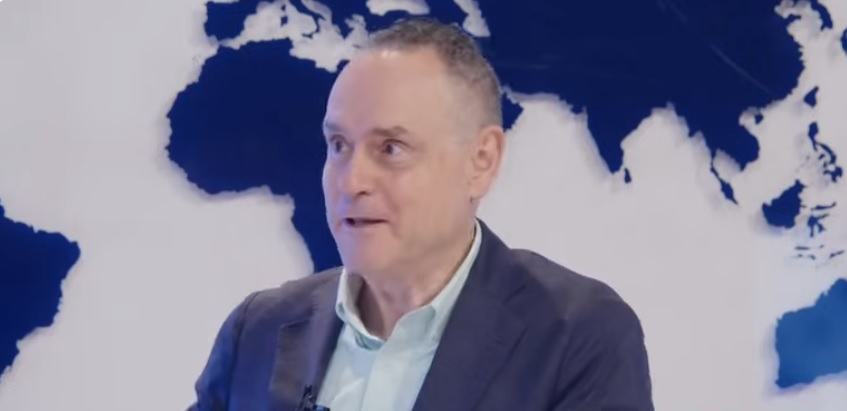
Who Is Pedro Baños?
Pedro Baños Bajo was born in León, Spain, on 29 August 1960. He is a retired infantry colonel of the Spanish Army, but his career reads like a field manual in geostrategy.
Key milestones in his career:
- Head of Counterintelligence and Security of the European Corps in Strasbourg.
- Master’s Degree in Defence and Security from the Complutense University of Madrid.
- Professor of Strategy and International Relations at the Spanish Joint Staff College (CESEDEN) between 2004 and 2010.
- Head of the Geopolitical Analysis Area in the Secretary General for Defence Policy (2010–2012).
- Participant in international missions in Bosnia and Herzegovina (UNPROFOR, SFOR, EUFOR).
- Director and host of La mesa del coronel (Cuatro, 2019), the first television programme hosted by a military officer in democratic Spain.
But what has truly brought him international renown are his books. His trilogy on power is essential reading for anyone interested in geopolitics:
| Year | Title | Main Content |
|---|---|---|
| 2017 | Así se domina el mundo (How the World Is Dominated) | Classic power strategies, international hypocrisy, geopolitical mistakes |
| 2018 | El dominio mundial (World Domination) | The elements of power: military force, economics, diplomacy, intelligence, resources, knowledge, communication |
| 2020 | El dominio mental (Mental Domination) | The geopolitics of the mind: how perception, emotions and collective thought are controlled |
| 2022 | La encrucijada mundial (The Global Crossroads) | Analysis of the new world order and the challenges of the 21st century |
| 2023 | Geohispanidad (Geo-Hispanidad) | The role of the Hispanic world on the global chessboard |
The thesis running through all his work is simple and unsettling: in international relations there are no good guys or bad guys. Every country pursues its own interests, and the tools for imposing them are always the same, even if their form changes over time.
The 7 Levers of Domination
Baños does not speak of “levers” as watertight compartments, but rather as instruments that combine, reinforce each other, and are used simultaneously. Dominating the world does not require using just one; it requires knowing how to orchestrate them all.
These are the 7 levers:
1. 🏛️ Military Lever
The oldest and most visible. The capacity to impose one’s will through force or the threat of force.
How it is exercised:
– Military bases on foreign soil (the U.S. has more than 750 worldwide).
– Naval fleets patrolling global trade routes.
– Nuclear weapons as ultimate deterrence.
– Special operations forces and drones.
– Arms sales as a tool of influence.
– Mercenaries and private military companies (Wagner, Blackwater/Academi).
Classic example: The United States maintains a fleet in every ocean and bases in more than 80 countries. No one militarily challenges someone with that projection capability. But the military lever is rarely used alone: hard power paves the way for soft power, and vice versa.
Connection to the series: The expansion of power that Jouvenel described finds its crudest expression here. Power that finds no internal limits seeks to expand outward, and military force is its most direct tool.
2. 💰 Economic Lever
If the military lever is the most visible, the economic one is the most penetrating. Controlling another country’s economy means controlling it without needing to occupy it.
How it is exercised:
– External debt and IMF/World Bank conditionality (as we saw with Perkins and Sankara).
– Economic sanctions that isolate entire countries (Cuba, Iran, Venezuela, Russia).
– Control of strategic resources: oil, gas, rare minerals, water, food.
– Multinational corporations with budgets larger than many countries’ GDP.
– Currency manipulation and global payment systems (SWIFT, the dollar as reserve currency).
– Asymmetric free trade agreements that disproportionately benefit the dominant power.
Debt as an instrument of control: Baños fully agrees with the thesis we have developed throughout this series. Debt is not just an economic phenomenon: it is a tool of geopolitical discipline. The indebted country loses sovereignty without formally losing independence — the exact definition of neocolonialism that Nkrumah gave.
Connection to the series: This lever is the heart of the articles on Graeber (debt as millenary social control), Lazzarato (the indebted man), Perkins (the economic hit men), and Nkrumah and Sankara (financial neocolonialism). All of them, from different angles, describe the same reality that Baños systematises.
3. 📡 Technological Lever
In the 21st century, whoever controls technology controls the present and, above all, the future.
How it is exercised:
– Cyberwarfare: attacks on critical infrastructure, theft of intellectual property, electoral manipulation.
– Mass surveillance: programmes like PRISM, intelligence-sharing networks (Five Eyes), facial recognition.
– Technological dependence: forcing other countries to use hardware and software controlled by the dominant power.
– Control of patents and standards: who defines the rules of the internet, telecommunications, artificial intelligence.
– Blockchain and digital currencies: the next battle for control of money and data.
The Huawei case: The U.S. pursuit of Huawei was not about “national security” in the traditional sense. It was because a Chinese company controlling global 5G infrastructure meant that the technological lever would no longer be a Western monopoly.
Connection to the series: Technology is the new frontier of the expansion of power. Jouvenel could not have imagined it, but his logic applies perfectly: technological power, like all power, tends to expand without limits if it finds no counterweights.
4. 📺 Media Lever
Controlling the narrative is almost as important as controlling territories. Whoever defines what is news, what is acceptable, and what is unthinkable, governs public debate.
How it is exercised:
– Media concentration: a handful of conglomerates control the majority of global media.
– Agenda setting: deciding what is talked about and what is not.
– Manufacturing consent: Noam Chomsky and Edward Herman’s model: filters that shape information before it reaches the public.
– Strategic disinformation: poisoning campaigns, fake news, bots and trolls.
– Media soft power: Hollywood, Netflix, series, documentaries. Mass culture is propaganda without the propaganda label.
The Iraq War case (2003): The Bush administration sold the invasion with a massive media campaign based on “weapons of mass destruction” that never existed. Mainstream media amplified the narrative without questioning it. Whoever controls the media, controls perceived reality.
Connection to the series: This lever connects to the management of perceptions we already saw in Perkins (how economic hit men sold loans as “development aid”) and to the idea that power does not just act, but builds the reality in which its actions make sense.
5. 🎭 Cultural Lever
More subtle than the military or economic levers, but equally effective. This is what is called soft power: the ability to get others to want what you want.
How it is exercised:
– Entertainment industry: films, series, music, video games that normalise values and lifestyles.
– Educational exchanges: scholarships and programmes that train foreign elites in the values of the host country.
– Language and culture: the expansion of English, Spanish, French as languages of cultural exchange.
– Nation branding: associating positive values with a nation (the “American Dream,” the French “art de vivre,” German “quality”).
– Cultural diplomacy: Cervantes Institute, British Council, Goethe-Institut, Alliance Française.
The power of normalisation: The cultural lever does not force you to do something. It makes you want to do it. It makes you consider “natural” mass consumption, the Western lifestyle, liberal democracy as the only possible model. When a culture succeeds in having its values perceived as universal, it has won the game.
Connection to the series: The normalisation of debt as “natural” and “inevitable” that Lazzarato described is a perfect example of the cultural lever in action. The indebted man is not only economically trapped: he is also culturally trapped, because debt has been naturalised as part of life.
6. 🧠 Mental Lever
This is perhaps the most sophisticated of all, and Baños dedicated an entire book to it (El dominio mental, 2020). It is no longer about controlling what people do, but what they think, what they feel, and what they believe is possible.
How it is exercised:
– Perception management: shaping how people interpret reality.
– Psychological manipulation: exploiting cognitive biases, fears and desires.
– Educational control: what is taught and how it is taught in schools and universities.
– Creation of fictitious enemies: building threats to generate cohesion and justify policies.
– Social engineering: fragmenting societies by exploiting identity divisions.
– Attention management: digital platforms designed to capture and monetise human attention.
The opinion factory: The mental lever operates in what Baños calls “the geopolitics of the mind.” You do not need to physically control a population if you control their mental framework. If you get people to believe there is no alternative to the system, you have won without firing a single shot.
Connection to the series: This is the lever that explains why Lazzarato’s indebted man does not rebel: because his subjectivity has been shaped to accept debt as inevitable. It also connects with Foucault and biopolitics (power that governs life itself), which will be the subject of an upcoming article.
7. 👥 Diplomatic Lever
The most “civilised” of the levers, but no less effective for that. It consists of weaving networks of alliances and dependencies that make the use of brute force unnecessary.
How it is exercised:
– Captured international organisations: the UN, the IMF, the World Bank, the WTO, NATO.
– Treaties and bilateral agreements that create frameworks favourable to the dominant power.
– Selective diplomatic recognition: legitimising or delegitimising governments according to interests.
– Diplomatic sanctions: isolation, expulsion of ambassadors, veto power in multilateral bodies.
– Exclusive forums: G7, G20, UN Security Council, Paris Club.
– Strategic alliances: NATO, EU, Indo-Pacific alliances, BRICS.
International law as a weapon: The dominant power writes the rules and then applies them selectively. When convenient, it invokes them. When not, it ignores or reinterprets them. International law is not an impartial justice system: it is one more lever of power.
Connection to the series: Diplomacy is the tool that allows the other six levers to operate with legal and moral cover. Nkrumah and Sankara were eliminated not only for their ideas, but because they challenged the international diplomatic order that legitimised neocolonialism.
How the Levers Combine: The Art of Orchestration
The truly valuable aspect of Baños’s framework is not the list of levers itself — many analysts have identified similar elements — but his insistence that power is not exercised with a single lever, but by orchestrating them all.
Let us take a concrete example: the war in Ukraine seen through the 7 levers:
| Lever | How It Has Been Used |
|---|---|
| 🏛️ Military | Arms shipments, training, NATO troops on the eastern flank |
| 💰 Economic | Sanctions on Russia, freezing of reserves, SWIFT exclusion |
| 📡 Technological | Cyberwarfare, Starlink, intelligence satellites |
| 📺 Media | Narrative construction of “unprovoked aggression,” selective amplification |
| 🎭 Cultural | Cancellation of Russian culture, rewriting of history |
| 🧠 Mental | Management of nuclear fear, narrative control on social media |
| 👥 Diplomatic | Isolation of Russia at the UN, NATO expansion, pressure on non-aligned countries |
None of these levers acted alone. The war was won (or lost, depending on perspective) on all fronts simultaneously. Whoever masters the art of combining the 7 levers has a decisive advantage over someone who only handles one or two.
Connection to the Series: The Complete Map
This article is, in many ways, the one that unifies everything we have seen so far:
| Article | Baños Lever(s) It Explains |
|---|---|
| Jouvenel — Power expands by nature | 🏛️ Theoretical basis for all levers |
| Graeber — Debt as control | 💰 Economic lever (historical origin) |
| Lazzarato — The indebted man | 🧠 Mental lever + 💰 Economic lever |
| Perkins — The economic hit man | 💰 Economic lever (concrete mechanisms) |
| Nkrumah & Sankara — Neocolonialism | 💰 + 🏛️ + 👥 Neocolonialism as lever combination |
Baños does not contradict the previous authors. He provides a framework for them. Jouvenel described the nature of power; Graeber, the oldest tool of control; Lazzarato, the disciplined subject; Perkins, the concrete operative; Nkrumah and Sankara, the victims and the martyrs. Baños provides the board where all those pieces fit.
Criticisms and Limitations of Baños’s Framework
No model is perfect. The 7-levers framework has limitations worth noting:
-
Western-centrism: Although Baños mentions China and Russia, his framework is clearly conceived from a Western (especially American) power perspective. The levers may work differently in different cultural contexts.
-
Difficulty of verification: Many of the mechanisms he describes are, by their very nature, opaque. There is no way to “prove” that a diplomatic decision was really the result of lever orchestration. The framework is more interpretive than empirical.
-
Risk of determinism: Viewing the world only through the prism of “domination” can lead to a cynical worldview where every international action is reduced to a power play, ignoring factors such as genuine cooperation, shared values, or chance.
-
Are levers missing? Some analysts add the ecological/environmental lever (control of water resources, climate, biodiversity) and the demographic lever (migration control, birth policies) as distinct elements.
That said, the framework remains, by far, the most complete tool available for analysing global power relations. No other author has achieved such clarity and system in a field dominated by fragmentation and excessive specialisation.
Frequently Asked Questions
❓ Is Pedro Baños a conspiracy theorist?
No. Baños is a military officer with an operational and academic career. His books are based on open-source documentation, history, and strategic analysis. What looks like “conspiracy” is, in reality, how power works when observed without idealism.
❓ What is the difference between Así se domina el mundo and El dominio mundial?
The first is more strategic: it analyses the tactics and manoeuvres countries use to impose themselves. The second is more structural: it breaks down the concrete elements of power (the levers). They complement each other.
❓ Which of Baños’s books do you recommend starting with?
Así se domina el mundo (2017) is the perfect entry point. Fluid, full of examples, and written for non-specialists. Then El dominio mundial for the systematisation, and El dominio mental for the deepest layer.
❓ How does Baños relate to the authors we have seen before?
Baños is the architect who builds the house where everyone else’s ideas live. He does not replace them: he organises them. Jouvenel, Graeber, Lazzarato, Perkins, Nkrumah and Sankara analysed parts of the system. Baños draws the complete system.
❓ Is there criticism of Baños from academia?
Yes. Some academics consider his work too popularising and simplifying for university rigour. But that very quality is his strength: he makes geostrategy accessible to a broad audience without losing depth.
Conclusion
We have travelled a long way in this series.
We started with Jouvenel and the expansive nature of power. We discovered that debt is humanity’s oldest tool of control with Graeber. We saw how neoliberalism fabricates indebted subjects with Lazzarato. We met Perkins’s economic hit men and the murdered prophets Nkrumah and Sankara.
And now, with Pedro Baños, we have the complete map.
The 7 levers of domination are not a conspiracy theory or a manual for dictators. They are an analytical tool for understanding how power really works in the world. And that knowledge, in the hands of informed citizens, is the first step towards not becoming its victim.
Because power does not disappear just because you ignore it. Power is exercised, expanded and combined constantly. Knowing the levers does not disable them, but it at least allows you to see them in action.
And as Baños would say: in geopolitics, there are no good guys or bad guys. There are interests. And whoever does not understand that plays at a disadvantage.
In the next article of the series, we will close this block with Michel Foucault and biopolitics: power that no longer governs territories, but life itself.
📚 Suggested Internal Links
- ← Article 1: Jouvenel — Power Expands by Nature
- ← Article 2: Graeber — Markets Are Founded on Violence
- ← Article 3: Lazzarato — The Indebted Man
- ← Article 4: Perkins — Confessions of an Economic Hit Man
- ← Article 6: Nkrumah & Sankara — Financial Neocolonialism
- → Article 8: Galeano & Quijano — Open Veins and the Coloniality of Power
- → Article 9: Michel Foucault — Biopolitics
🌐 Recommended External Links
- Pedro Baños — Wikipedia
- Así se domina el mundo — Summary (Club de Lecturas)
- El dominio mundial — PlanetadeLibros
- Pedro Baños — Official website
- Noam Chomsky — The Manufacture of Consent
🖼️ Featured Image Prompt
A geopolitical chessboard seen from above. Seven key pieces glow in different colours: a military helmet (silver), banknotes and coins (gold), a technological circuit (electric blue), a television camera (red), a theatrical mask (purple), a human brain (neon green), and handshakes (white). Each piece is connected by lines of light forming a network. In the background, a world map in dark tones. Modern, clean visual style with dramatic lighting. 1200×630 pixel format.
🔍 ALT Text
Conceptual illustration representing Pedro Baños’s 7 levers of domination: military, economic, technological, media, cultural, mental and diplomatic, depicted as chess pieces on a world map.
✅ Article 30 ready