Introduction
On the morning of January 17, 1961, outgoing U.S. President Dwight D. Eisenhower — a five-star general who had commanded the D-Day landings at Normandy — sat before television cameras to deliver his farewell address. His message was not a triumphant review of accomplishments, but a warning that resonates more powerfully today than ever: the military-industrial complex threatened to corrupt democracy from within.
What Eisenhower described that day was the “conjunction of an immense military establishment and a large arms industry” — an informal alliance between the Pentagon, defense contractors, and Washington politicians that had turned war into a permanent business. Six decades later, the United States spends over a trillion dollars annually on defense, its five largest contractors bill more than $200 billion a year, and the country has been at war continuously since 2001.
This article explores what the military-industrial complex is, how it operates, who profits from it, and why it represents one of the most powerful levers of global domination.
The Origin of the Concept: Eisenhower’s Warning
The term “military-industrial complex” was not coined by Eisenhower, but he was the one who placed it at the center of public debate. The first known use was by economist Winfield W. Riefler in 1947, who analyzed how the aggregate economic potential of belligerents determined the outcome of wars. But it was the president who gave it political and moral weight.
The speech that changed the conversation
Eisenhower said on that January 17:
“This conjunction of an immense military establishment and a large arms industry is new in the American experience. The total influence — economic, political, even spiritual — is felt in every city, every statehouse, every office of the federal government. […] In the councils of government, we must guard against the acquisition of unwarranted influence, whether sought or unsought, by the military-industrial complex. The potential for the disastrous rise of misplaced power exists, and will persist.”
What makes this extraordinary is that the man delivering the warning was a general who had devoted his life to the military. He was neither a pacifist nor a radical: he was the person best placed to know what he was talking about.
Earlier voices
Although Eisenhower popularized the term, other thinkers had already identified the connection between war and profit. In 1935, General Smedley Butler — one of the most decorated Marines in U.S. history — published War Is a Racket, describing how he had served as “a racketeer for Wall Street” during his interventions in Latin America. C. Wright Mills, in his 1956 book The Power Elite, described how American society had split into a powerful elite of military and corporate chieftains set against a powerless mass society.
How It Works: The Iron Triangle
The military-industrial complex is not a secret conspiracy of people meeting in basements. It is a perfectly visible system operating in broad daylight, composed of three actors who feed off each other:
1. The Pentagon (Department of Defense)
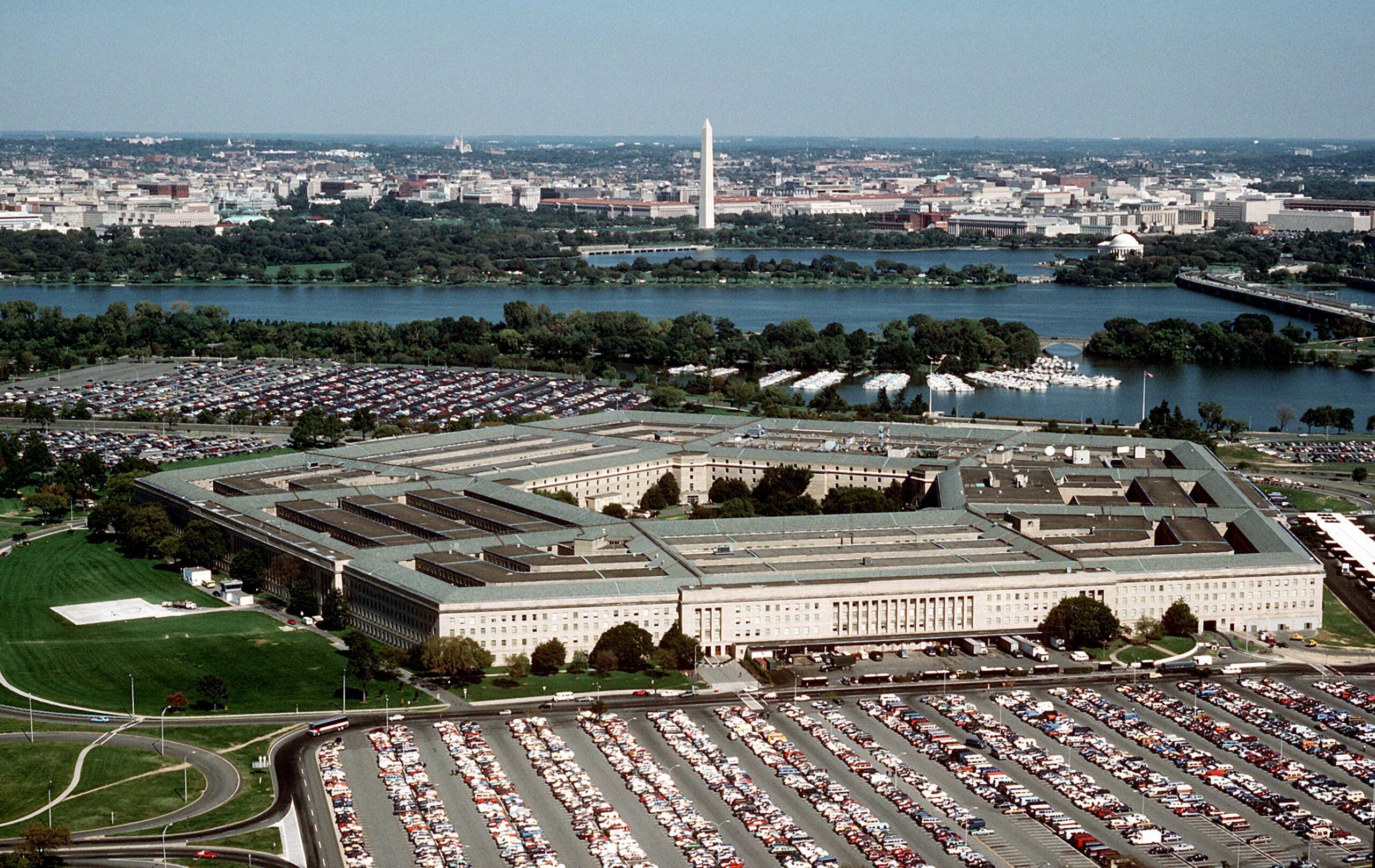
With a budget that exceeded one trillion dollars in 2025 — more than the next ten countries combined — the Pentagon is the world’s largest customer. It needs equipment, technology, research, and personnel. And the bigger its budget, the more power it wields.
2. Defense contractors
The five largest companies in the sector — Lockheed Martin, RTX (formerly Raytheon), Northrop Grumman, General Dynamics, and Boeing — collectively received over $200 billion in Pentagon contracts in 2024 alone. Lockheed Martin, the number one, billed over $71 billion, with 96% of its revenue coming from government contracts.
3. Congress
Politicians approve defense budgets, and in return they receive campaign contributions, jobs for their districts (weapons factories generate local employment), and often lucrative positions in the industry after leaving politics.
This triangle creates a virtuous cycle (for them): more threats → more military budget → more contracts → more profits → more lobbying → more pressure to create more threats.
The Revolving Door
One of the most effective mechanisms of the military-industrial complex is the “revolving door” between government and industry. According to a 2023 OpenSecrets report, at least 672 former high-ranking government officials, military officers, and members of Congress worked as lobbyists, board members, or executives for the top 20 defense contractors.
The pattern is always the same: a senior Pentagon official or retired general negotiates multi-million dollar contracts from within the government, and the following year joins one of those companies to “advise” on how to win more contracts. Senator Elizabeth Warren documented nearly 700 cases of this practice in a single decade in a 2024 report.
The result is that the arms industry has direct access to those who decide military spending, and that access translates into overpriced contracts, programs that are never cancelled even when they fail, and fierce resistance to any attempt to reduce the defense budget.
The Numbers of Permanent War
U.S. Military Spending
| Year | Military Spending ($ billions) | % of Federal Budget |
|---|---|---|
| 2000 | $531 | 16.5% |
| 2010 | $865 | 20.1% |
| 2020 | $778 | 15.2% |
| 2025 | $899 | 13.3% |
| 2026 (projected) | $1,060 | — |
Source: Watson Institute, Brown University / USAspending.gov
This spending exceeds that of China, Russia, India, Saudi Arabia, the United Kingdom, Germany, France, Japan, and South Korea combined.
The Biggest Beneficiaries
According to Defense News Top 100 and the Costs of War project at Brown University:
- Lockheed Martin — $71 billion in defense revenue (F-35, missiles, missile defense systems)
- RTX (Raytheon) — $42 billion (Patriot missiles, radar systems, cyber defense)
- Northrop Grumman — $38 billion (B-21 Raider, drones, space systems)
- General Dynamics — $36 billion (Abrams tanks, warships, information systems)
- Boeing — $34 billion (F/A-18 fighters, helicopters, satellites)
War as Business: From Vietnam to Ukraine
Vietnam and the anti-war movement
The military-industrial complex was central to criticism of the Vietnam War. Activists like Noam Chomsky and Seymour Melman popularized Eisenhower’s concept to denounce how the arms industry pushed the United States into endless conflicts. The founding manifesto of the student movement, the Port Huron Statement (1962), already used the term to question U.S. foreign policy.
Kennan’s prophecy
George F. Kennan, the diplomat who designed the containment doctrine against the Soviet Union, wrote in 1987 a chilling sentence:
“Were the Soviet Union to sink tomorrow under the waters of the ocean, the American military-industrial complex would have to remain, substantially unchanged, until some other adversary could be invented. Anything else would be an unacceptable shock to the American economy.”
The collapse of the USSR did not bring the “peace dividend” many had hoped for. Instead, defense contractors pressured for new threats to be found: first the war on drugs, then global terrorism, then China.
From 9/11 to the Global War on Terror
After the September 11 attacks, U.S. military spending skyrocketed. The wars in Afghanistan and Iraq, lasting two decades, cost over $8 trillion according to Brown University’s Costs of War study. And they benefited not only traditional contractors: tech companies like Palantir (intelligence data analysis) and Anduril (drones and autonomous systems) emerged as new players in the complex, merging Silicon Valley with the Pentagon.
Ukraine: the new goldmine
The war in Ukraine has been an extraordinary business for the arms industry. The United States has allocated over $100 billion in military aid to Ukraine, money that largely flows back to defense contractors to replenish arsenals and develop new weapons. As William Hartung of the Quincy Institute noted: “The war in Ukraine has been a gift from heaven for arms manufacturers.”
Connection to the Geopolitics of Control Series
The military-industrial complex fits perfectly within the framework of Pedro Baños’s 7 Levers of Domination, which we explored in previous articles:
- 🏛️ Military lever → the military-industrial complex is its most complete expression: the capacity to project armed force, maintain bases worldwide, and fight simultaneous wars.
- 💰 Economic lever → the $200 billion in annual contracts sustain the largest corporations in the country, which in turn finance political campaigns and lobbies.
- 📡 Technological lever → military innovation (GPS, the internet, drones) creates technological dependency and strategic advantages.
- 📺 Media lever → news media, often owned by the same conglomerates that hold defense contracts, present wars as inevitable.
As we explored in the article on Bertrand de Jouvenel and power that expands by nature, power tends to concentrate and expand if it finds no counterbalance. The military-industrial complex is the clearest demonstration of this law: a mechanism that feeds its own growth through the permanent creation of threats.
And as we noted in the analysis of David Graeber and 5,000 years of debt, war and debt have always gone hand in hand. Military spending is the greatest driver of public indebtedness, and debt is, in turn, humanity’s oldest tool of control.
FAQ
What is the military-industrial complex in simple terms?
It is the alliance between the military (Pentagon), the companies that manufacture weapons (Lockheed Martin, Raytheon, etc.), and the politicians who approve the military budget. All three benefit from each other, creating a system that tends to perpetuate war and arms spending.
Does it only exist in the United States?
Although the term is most commonly applied to the U.S., military-industrial complexes exist in other countries, especially Russia and China. However, the scale and influence of the American one is unparalleled.
How much does the U.S. actually spend on defense?
In 2025, U.S. military spending exceeded $899 billion, and with legislation passed in July 2025, it is projected to reach $1 trillion annually. That is more than the next ten countries combined.
What role do lobbyists play?
The arms industry spends tens of millions of dollars annually on lobbying. The largest contractors employ armies of lobbyists — many of them former Pentagon officials — who pressure Congress to approve ever-larger defense budgets.
Is there an alternative to the military-industrial complex?
Various movements and think tanks propose reducing military spending, reinvesting the “peace dividend” in infrastructure and social services, and promoting diplomatic conflict resolution. However, the power of the complex makes any significant reform extremely difficult.
Conclusion
The military-industrial complex is not a conspiracy theory: it is a real, documented system that operates in broad daylight and turns war into the most profitable business on the planet. Eisenhower warned about it over sixty years ago, and his prophecy has been fulfilled beyond measure.
What makes this system so difficult to dismantle is that its beneficiaries — the contractors, the high-ranking military officers, the politicians, the lobbyists — are precisely the ones with the power to change it. And as George Kennan said, even if the enemy disappears, the complex will find another.
The question this analysis leaves us is not technical but political: can a democracy survive when the main driver of its economy is war?
In the next article, we will explore digital colonialism, another silent but equally devastating lever of domination: how technological dependency has become the new instrument of global control.
📚 Related Books
- War Is a Racket — Smedley Butler (1935)
- The Power Elite — C. Wright Mills (1956)
- El dominio mundial — Pedro Baños (2018) [Spanish]
- The Pentagon Labyrinth — Winslow T. Wheeler (2011)
- The Profits of War — various authors