Introduction
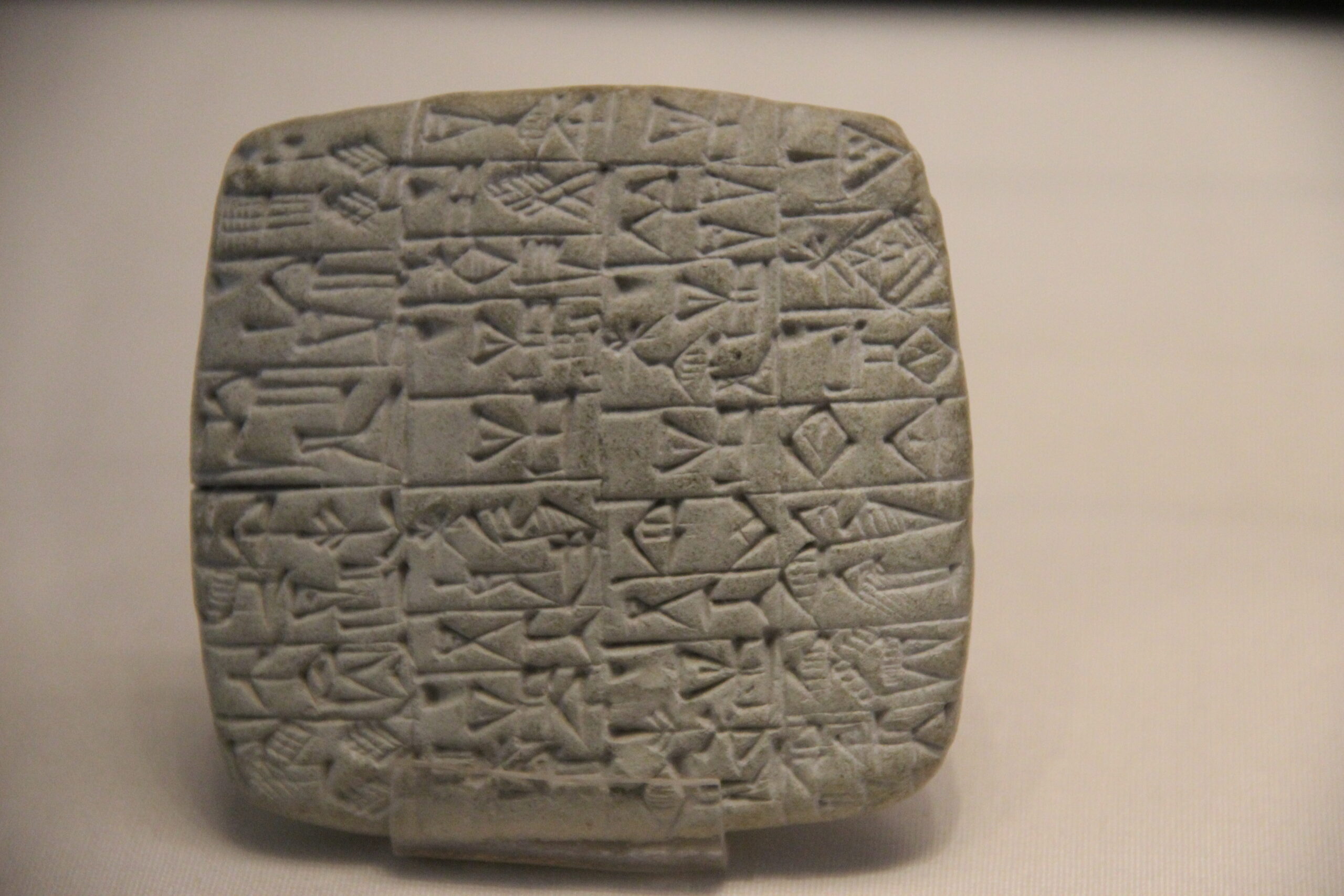
Between 3400 and 3000 BCE, in Lower Mesopotamia, a civilization invented writing. The first clay tablets did not record poems or hymns: they recorded debts. This fact is not an archaeological curiosity. It is the first historical record of centralized power.
In Sumer we find the first documented evidence of social control through debt, registration, and bureaucracy. Writing was born as a tool for power administration, not as cultural expression. And since then, the history of recorded power is the history of how power has perfected its tools of registration, measurement, and dominion.
This article traces that arc: from clay tablets to 21st-century algorithms.
The myth of barter and the reality of debt
For centuries, economics textbooks taught that before money there was barter: a story of spontaneous cooperation and natural markets. The problem is that it never existed.
David Graeber, in Debt: The First 5,000 Years, demonstrated that barter as a generalized economic system is a myth invented by 18th-century economists —Adam Smith included— to justify the theory of the market as a natural phenomenon. What actually existed in pre-state societies were gift economies and deferred reciprocity: «I give you a goat today; you owe me a favor, with no due date, no interest, no violence». Debt was personal, flexible, social.
The change came with the State. When the first Sumerian city-states centralized resources, they needed a system to record who owed what to the temple or palace. Writing was born as a tool of administrative control. The first cuneiform tablets are records of grain, livestock, and workers. They are accounting books.
Graeber put it bluntly: «Markets are founded and maintained through systematic state violence». The barter myth concealed this reality: mathematical, impersonal, enforceable debt did not precede the State. It created it.
Writing as the first technology of power
The revolutionary aspect of the Sumerian invention was not the ability to communicate over distance. It was the ability to fix an obligation. Before writing, a debt was an agreement between people that was remembered and transmitted orally. After writing, a debt became an objective, recorded, verifiable datum —and above all— enforceable by a central authority.
This capacity to fix obligations transformed the nature of power. For the first time, a ruler could know exactly how much each territory produced, how much each peasant owed, how much grain each temple stored. The census, the cadastre, the tax registry: all are technologies of recorded power born in Sumer.
Bertrand de Jouvenel formulated in the 20th century a law that Sumerian scribes already knew in practice: power tends to expand by nature. It is not a deviation or an accident. It is its essence. Each new tool of registration allowed power to know more, control more, and expand further.
The census allowed armies to be recruited. The cadastre allowed taxes to be collected. The debt registry allowed dependence to be created. And each expansion of power generated the need for new registration tools. A cycle that has not stopped in five thousand years.
From Sumer to Rome: the evolution of tools
The Sumerian model —central temple, scribal bureaucracy, debt registration— was reproduced and evolved in all subsequent civilizations.
In Babylon, the Code of Hammurabi (1750 BCE) fixed laws and penalties in writing, centralizing the interpretation of justice. In Assyria, the first systematic military empire combined census, tribute, and terror. In Persia, the satrap system and state postal service allowed the administration of a vast territory.
Rome took the technology of power to another level: the Roman census, written law, the provincial tax system, the roads that connected the empire and allowed the movement of troops and information. The census —that word we still use— was the heart of Roman control: knowing who you were, what you had, and where you were.
Each civilization added layers of sophistication, but the core remained the same as in Sumer: register, measure, control.
The seven levers of control in the modern world
Pedro Baños, colonel of the Spanish Army and geopolitical analyst, has systematized the current forms of power in what he calls the 7 levers of domination: military, economic, technological, media, cultural, mental, and diplomatic. We explored his framework in previous articles such as Soft Power and Cultural Control and Digital Colonialism.
Each of these levers has its roots in the power technologies that emerged in Sumer:
Military. Sargon of Akkad unified Mesopotamia by force around 2334 BCE. Today’s military bases and fleets serve the same function: projecting power over strategic territories.
Economic. Sumerian temples functioned as banks: they lent grain and silver, charged interest, and recorded everything on tablets. The IMF and the World Bank are direct heirs to that logic, with interest now paid in national sovereignty.
Technological. Cuneiform writing was the first technology of control. Those who could write belonged to a reduced elite. Today, control over algorithms, operating systems, and internet infrastructure serves the same function: whoever dominates technology dominates the flow of information.
Media and cultural. Sumerian temples controlled the narratives that legitimized the king. Hymns and monuments were state propaganda. Today, Hollywood, social media, and corporate advertising shape perceptions and values.
Mental. The priestly caste held exclusive knowledge of rituals and prophecies, giving them power over the interpretation of reality. Today, algorithmic attention management and strategic disinformation pursue the same goal.
Diplomatic. Alliances between Sumerian city-states and trade treaties were soft power tools avant la lettre. Today, multilateral organizations and economic diplomacy serve the same function.
Debt: the most persistent tool
Let us return to the beginning. The first function of writing was to record debts. And debt remains the most persistent tool of control in history, as we analyzed in The IMF and the World Bank: The Guardians of Debt.
Maurizio Lazzarato describes in The Making of the Indebted Man how neoliberalism has created a new subject: the indebted man, living in a permanent state of guilt and docility. But this logic is not new. It is the same as in Sumer when a peasant owed grain to the temple and worked to pay a debt whose interest grew faster than his ability to pay.
Kwame Nkrumah and Thomas Sankara denounced in the 20th century what Sumerian tablets already documented: debt is neocolonialism. The cycles of massive debt, crisis, and forgiveness that Graeber describes have repeated from Uruk to Greece, from Lagash to Argentina.
The biblical Jubilee —the periodic forgiveness of debts every fifty years— was an attempt to break that cycle. But power, as Jouvenel says, tends to expand, and forgiveness is precisely what power does not want. Because without debt, without dependence, without guilt, control weakens.
From census to algorithm: recorded power in the digital age
The evolution of registration technologies has reached an unprecedented point. The Sumerian census recorded a few thousand people on a tablet. Today’s algorithms record, process, and analyze the behavior of billions.
Every click, every search, every purchase, every movement is recorded. Personal data is the new grain of the digital temples. Technology platforms are the new palaces centralizing information. And artificial intelligence algorithms are the new scribes: no one fully understands how they work, but everyone depends on them.
The difference with Sumer is not one of nature, but of scale and speed. Recorded power knows more about us than any ancient king could have dreamed. And debt —now in the form of mortgages, student loans, revolving credit— remains the binding tie.
FAQ
Was Sumer the first civilization to use debt as control?
Yes, it is the first of which we have written records. Sumerian tablets from 3400-3000 BCE document loans of grain and silver with interest, recorded by temple authority. Earlier civilizations may have had similar systems, but left no written record.
Is it true that barter never existed as an economic system?
Yes. Anthropological research, especially David Graeber’s work, shows that generalized barter is an 18th-century academic myth. Pre-state economies functioned through reciprocity and gift. Barter only occurred in very specific contexts.
What is the relationship between Sumerian scribes and today’s algorithms?
Both control access to knowledge and the interpretation of data. The Sumerian scribe belonged to an elite that could read and write, and their work was to record and administer state information. Today’s algorithms process information at a scale unimaginable to a scribe, but they serve the same function: managing and controlling the flow of data that sustains power.
How does Jouvenel relate to ancient power tools?
Jouvenel formulated that power tends to expand by nature. Registration tools —writing, census, cadastre— are the instruments that enable this expansion. Each new tool expands the reach of power, and each expansion generates the need for more sophisticated tools.
What do the IMF and a Sumerian temple have in common?
Both function as central lenders that condition the economic life of their debtors. The Sumerian temple lent grain and demanded interest; the IMF lends currency and demands structural reforms. The logic is the same: debt creates dependence, and dependence enables control.
Conclusion
Five thousand years separate the first Sumerian debt tablet from the algorithm that decides what information reaches our screen. But the pattern is the same: registration as a tool of control, debt as a mechanism of subjection, power expanding by nature.
Understanding this arc is not an academic exercise. It is recognizing that the tools of control are not recent or conspiratorial inventions. They are the evolution of technologies that began when a scribe carved the first debt into a clay tablet. Recorded power remains as active today as it was then.
Today we write with algorithms, but the clay remains the same.