Introduction
In 1971, President Richard Nixon closed the gold window. Until then, any country could exchange dollars for gold at a fixed price of $35 per ounce. This was the Bretton Woods system. When Nixon unilaterally broke it, the dollar lost its gold backing and the world entered an era of floating currencies. The dollar should have collapsed. But it didn’t.
Why? Because the United States found a new backing for its currency, far more powerful than gold: oil.
In 1973, Henry Kissinger and the Nixon administration forged a secret agreement with the House of Saud that would change the global balance of power forever. In exchange for military protection and support for the Saudi regime, Saudi Arabia would agree to sell all its oil exclusively in US dollars. The rest of OPEC followed suit. The petrodollar was born.
And with it came a system of global financial control that has allowed the United States to finance deficits, wars and sanctions for half a century — while any country that tried to challenge it, from Saddam Hussein to Muammar Gaddafi, was destroyed.
The end of Bretton Woods and the dollar crisis
To understand the petrodollar, you must first understand the crisis that made it necessary.
After World War II, the Bretton Woods Agreement (1944) established an international monetary system where the dollar was the global reserve currency, convertible into gold at $35 per ounce. The United States, which held two-thirds of the world’s gold reserves, guaranteed convertibility.
This system worked as long as the US was the world’s primary creditor. But in the 1960s, the costs of the Vietnam War and Lyndon B. Johnson’s Great Society programs sent the US deficit soaring. More and more dollars circulated outside the US —the «eurodollars»— and confidence in gold convertibility weakened.
European countries, led by France and Charles de Gaulle, began exchanging their dollars for gold. US gold reserves plummeted: from 20,000 tons in 1950 to less than 8,000 in 1971.
On August 15, 1971, Nixon announced the suspension of dollar-to-gold convertibility. It was the «Nixon Shock.» The dollar devalued against major currencies. Global inflation soared. And the United States desperately needed a new way to sustain demand for its currency.
The answer was oil.
The secret agreement with Saudi Arabia (1973)
Saudi Arabia was, in 1973, the world’s largest oil exporter. Its regime, the House of Saud, was an absolute monarchy that controlled the planet’s largest reserves but depended militarily on the United States for survival.
That year, under the direction of Kissinger (then Secretary of State) and with Nixon’s approval, the United States proposed a pact to the Saudis that would change history:
- Saudi Arabia would agree to sell all its oil exclusively in US dollars.
- The United States would provide military protection to the Saudi regime and diplomatic support against internal and external threats.
- Saudi petrodollar surpluses would be invested in US Treasury bonds, recycling the money back into the US economy.
The agreement was sealed in May 1973. Shortly after, the rest of the OPEC members adopted the same system. The dollar, which had lost its gold backing, acquired a new backing: any country that wanted oil —and all countries do— first needed dollars.
The financial genius of the system lay in its brutal simplicity: global demand for oil creates a perpetual demand for dollars. To buy oil, countries need dollars, and to get dollars they need to participate in the US financial system. The United States can print the currency the world needs for trade, finance its deficits without limit, and impose sanctions by excluding its enemies from the dollar payment system.
The 1973 oil crisis: oil as a political weapon
Just months after the agreement, oil demonstrated its power as a political weapon. In October 1973, during the Yom Kippur War (when Egypt and Syria attacked Israel), the Arab members of OPEC declared an oil embargo against countries supporting Israel, led by the United States.
The price of oil quadrupled: from $3 to $12 per barrel in just a few months. Gas stations across the US and Europe had endless lines. The global economy entered recession.
The embargo lasted until March 1974 and had profound consequences: it showed that oil could be used as a geopolitical weapon, and that those who controlled supply held immense power. But it also reinforced the logic of the petrodollar: the higher the oil price rose, the more dollars the world needed to pay for it.
The Saudis and Gulf emirates accumulated enormous petrodollar surpluses, which they invested in US Treasury bonds, real estate, banks and Western companies. Oil money flowed into the coffers of the Gulf monarchies and, from there, back to Wall Street. It was a perfect circuit.
How the petrodollar system works
The petrodollar system rests on three pillars:
First pillar: dollar-denominated pricing. All internationally traded oil and gas is priced in US dollars. This creates a structural demand for dollars independent of the US economy’s health. The world needs dollars to buy energy, even if it wants no other business with the United States.
Second pillar: petrodollar recycling. Oil-exporting countries accumulate enormous dollar surpluses. These surpluses are invested in US Treasury bonds, allowing the US to finance its public debt at artificially low interest rates. The Saudis alone hold hundreds of billions of dollars in US debt.
Third pillar: payment system control. Since oil trade is conducted in dollars, transactions pass through the US financial system. This gives the United States extraordinary power: it can sanction any country or entity by blocking its access to the dollar payment system, effectively cutting it off from global trade.
This system gives the dollar what French economist Jacques Rueff called an «exorbitant privilege»: the US can pay for its imports and its debt with a currency it prints, while the rest of the world must earn dollars by exporting real goods.
The weapon of financial sanctions
Control of the dollar payment system is perhaps the most underestimated power tool of the 21st century. Through mechanisms like SWIFT (the interbank communication network) and OFAC (the Treasury’s Office of Foreign Assets Control), the United States can block transactions, freeze assets and exclude entire countries from global trade.
Iran is the most paradigmatic case: since 1979, financial sanctions have strangled its economy. Excluded from SWIFT and unable to sell its oil in dollars, Iran has lost access to global markets, its currency has collapsed, and its population has suffered a humanitarian crisis.
The power of the petrodollar lies not so much in oil as in the dollar itself. As economist David Graeber argued, debt is the oldest tool of social control in human history. The petrodollar is the most sophisticated version of that control: a structural debt that every country in the world owes to the United States, because every country needs dollars to survive in the global economy.
Those who challenged the petrodollar (and were destroyed)
The petrodollar system has not gone unchallenged. But the results have been consistent:
-
Saddam Hussein (Iraq): In 2000, Saddam announced Iraq would sell its oil in euros, not dollars. Three years later, Iraq was invaded by the United States. Saddam was captured, tried and executed. His oil returned to being sold in dollars.
-
Muammar Gaddafi (Libya): Gaddafi proposed in 2009 the creation of a pan-African gold dinar to replace the dollar and the CFA franc in Africa. He also sought to sell Libyan oil in a currency basket. In 2011, NATO intervened in Libya. Gaddafi was captured and killed. His monetary project died with him.
-
Hugo Chávez (Venezuela): Chávez tried to create an alternative oil trading system, selling crude to allied countries on favorable terms and promoting the sucre as an alternative currency. Venezuela has been subjected to devastating sanctions.
-
Nicolás Maduro (Venezuela): He continued the challenge, and his country has been economically strangled through sanctions.
-
Vladimir Putin (Russia): After the 2022 invasion of Ukraine, Russia was cut off from SWIFT and its dollar reserves frozen. Russia has tried to sell its gas and oil in rubles and yuan, but sanctions have drastically reduced its energy revenues.
The pattern is clear: challenging the petrodollar carries an existential cost. This is no coincidence. As Colonel Pedro Baños noted, the economic lever is one of the seven fundamental tools of domination, and control of the global exchange currency is its ultimate expression.
Alternatives to the petrodollar in the 21st century
The petrodollar’s dominance is beginning to show cracks. Several factors are eroding the dollar’s monopoly on energy trade:
-
BRICS and alternative currencies: Brazil, Russia, India, China, South Africa (and new members including Iran, Saudi Arabia, Egypt, Ethiopia and the UAE) have discussed creating a common currency or using local currencies in bilateral trade.
-
The Chinese yuan: China has pushed for oil to be priced in yuan. In 2023, state-owned CNOOC completed the first yuan-denominated LNG transaction. In 2024, China and Saudi Arabia discussed trading oil in yuan, though without concrete progress.
-
Local currency contracts: India pays for some Russian oil in rupees and dirhams. China pays Russia, Iran and Saudi Arabia for some crude in yuan. These are small but growing transactions.
-
Cryptocurrencies and digital assets: Venezuela’s petro was a failed attempt, but the underlying blockchain technology offers possibilities for decentralized energy trade outside US control.
However, the dollar’s dominance remains overwhelming. According to the IMF, 58% of global reserves were in dollars in 2024, and over 80% of international trade is invoiced in dollars. Breaking the petrodollar would require a credible alternative with sufficient liquidity, stability and acceptance — something neither the yuan nor any other currency offers today.
Connection with the Geopolitics of Control series
The petrodollar is perhaps the central piece of the global control system we are mapping in this series.
Bertrand de Jouvenel taught us that power expands by nature. The petrodollar is the expansion of American power to its most extreme limits: control of the currency in which the world’s primary energy source is traded.
David Graeber demonstrated that debt is the oldest tool of social control in human history. The petrodollar institutionalizes that debt on a global scale: every country owes dollars to the United States, because every country needs dollars to buy energy.
Maurizio Lazzarato described the «indebted man» of neoliberalism. The petrodollar turns entire nations into «indebted countries,» trapped in a financial system they cannot escape.
Pedro Baños identified the seven levers of domination. The petrodollar combines the economic lever (control of currency and finance), the diplomatic lever (alliances with Gulf monarchies) and the military lever (protection of producing countries).
This article follows our introductory article and our analysis of the creation of Israel and Palestine as a laboratory of territorial control. Together, these three articles show how control of the Middle East operates on three levels: territorial (settlements and occupation), military (Israel as a regional power) and financial (the petrodollar). All three are faces of the same reality: seven decades of American domination over the world’s most strategic region.
FAQ
What is the petrodollar?
The petrodollar is the system by which oil and gas are traded exclusively in US dollars. It originated with the secret 1973 agreement between the United States and Saudi Arabia and has remained the pillar of America’s global financial dominance ever since.
Why is the petrodollar so important to the United States?
Because it creates a structural demand for dollars independent of the US economy. Every country that needs oil first needs dollars, allowing the US to finance its debt at low cost, maintain its currency’s value, and impose financial sanctions by blocking access to the dollar payment system.
Which countries have tried to break the petrodollar?
Iraq (Saddam Hussein in 2000), Libya (Gaddafi with the gold dinar in 2009), Venezuela (Chávez and Maduro), Iran (since 1979) and Russia (since 2022). All have suffered invasions, devastating sanctions or military interventions.
Can the Chinese yuan replace the petrodollar?
Not yet. Although China is making progress (first yuan-denominated gas transactions in 2023), the yuan lacks the convertibility, liquidity and global acceptance needed to replace the dollar in energy trade. The IMF estimates that 58% of global reserves remain in dollars.
What role does Saudi Arabia play in the petrodollar system?
Saudi Arabia is the key piece. As the world’s largest exporter and OPEC leader, its 1973 decision to sell oil only in dollars brought other producers in line. Its alliance with the US —security in exchange for petrodollars— remains the system’s foundation.
Conclusion
The petrodollar is the most powerful financial weapon ever created. It doesn’t fire bullets, it doesn’t explode, it doesn’t leave visible bodies. But it determines which countries prosper, which survive and which are destroyed. It is the invisible mechanism that has allowed the United States to maintain global hegemony for half a century, finance unlimited wars, and impose sanctions on its enemies without needing to invade them.
But the system is not eternal. The erosion of dollar dominance —driven by China’s rise, BRICS and new financial technologies— raises the possibility of a multipolar world where oil is no longer priced exclusively in dollars. When that happens —if it happens— the global balance of power will shift in ways we can barely imagine.
In the next article of this series we will explore Gaddafi: the leader who challenged the system and was erased from the map.
📚 Related Books
- The Oil Kings: How the US, Iran, and Saudi Arabia Changed the Balance of Power in the Middle East — Andrew Scott Cooper
- Petrodollar Warfare: Oil, Iraq and the Future of the Dollar — William R. Clark
- The Secret History of the US-Saudi Alliance — David B. Ottaway
- Confessions of an Economic Hit Man — John Perkins
- El dominio mundial — Pedro Baños
- Debt: The First 5,000 Years — David Graeber
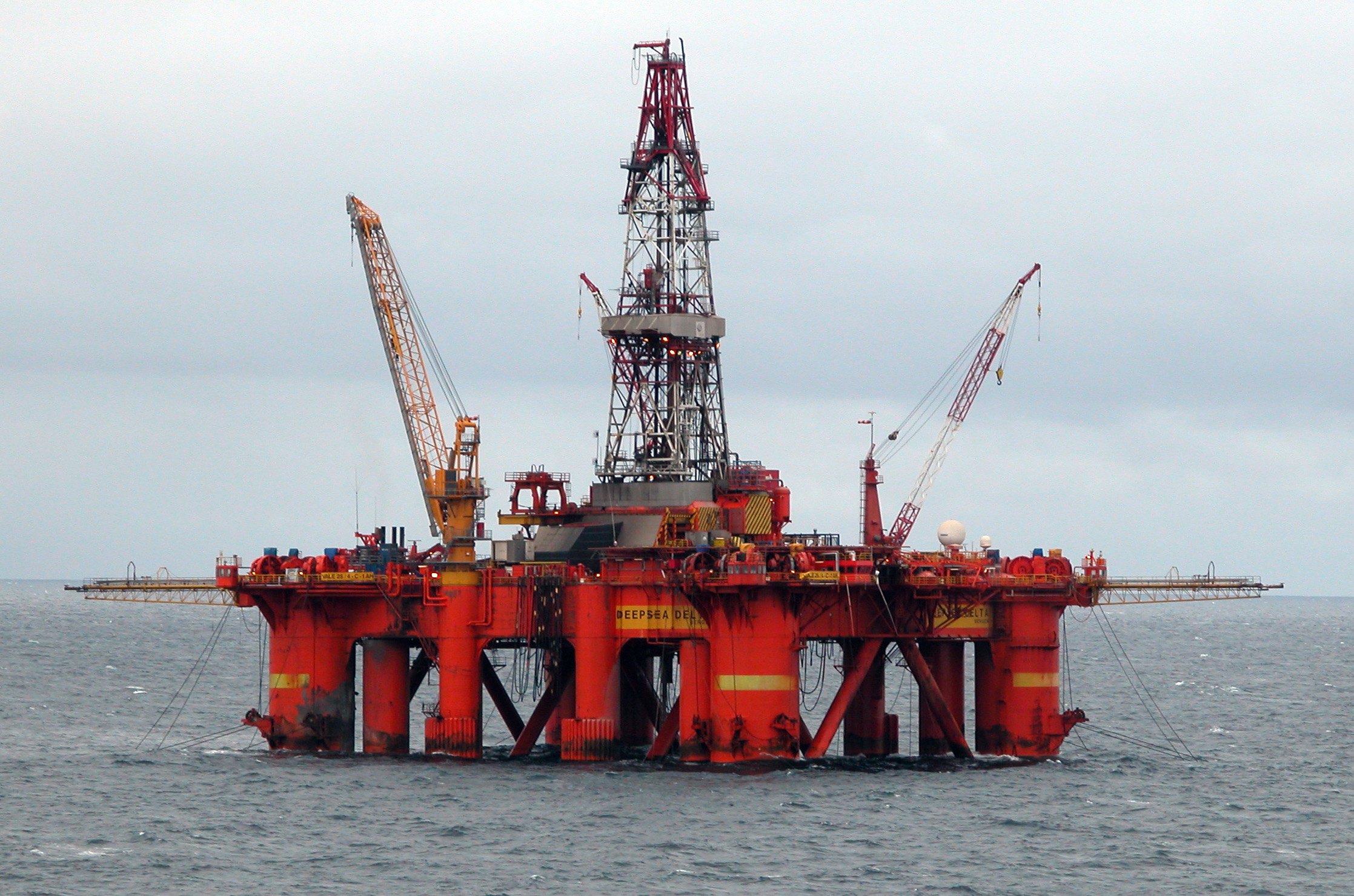
Featured image: Deepsea Delta oil platform in the North Sea by Erik Christensen, CC BY-SA 3.0, via Wikimedia Commons.
