David Graeber and Debt: The Barter Myth and the True History of Money
If you grew up hearing that barter came before money—trading a goat for ten kilos of wheat—get ready to have your worldview shaken. David Graeber (1961–2020), the American anthropologist and intellectual backbone of the Occupy Wall Street movement, spent years proving that barter never existed as a pre-monetary economic system. And that debt—not money—is humanity’s oldest tool of social control. His magnum opus Debt: The First 5,000 Years (2011) didn’t just rewrite economic history: it challenged the very foundations of our civilization.
To appreciate the scale of his thesis, you have to set the scene. In 2011, the world was still licking its wounds from the 2008 financial crisis. Bailed-out banks, foreclosed families, debts that could never be repaid. The Occupy Wall Street movement—for which Graeber served as an organic intellectual—was shouting “We are the 99%.” And Graeber, writing from the perspective of anthropology, answered with a book showing that debt was not some accidental byproduct of capitalism: it was the founding mechanism of hierarchical societies. Nothing less.

The Thesis That Changes Everything: Graeber vs. Classical Economics
In his monumental work Debt: The First 5,000 Years (Melville House, 2011, 534 pages), Graeber lays out a thesis as simple as it is devastating. For two centuries, economics textbooks repeated the same story: first came barter, then money, and finally credit. That sequence seemed like common sense. The problem, says the American anthropologist, is that there is not a single shred of evidence that it ever worked that way.
- Barter as a generalized economic system is a myth. Graeber drives this home with hard data: anthropologists have spent decades searching for societies that operated on pure barter and have never found a single one. Adam Smith invented it in the 18th century as a rhetorical device, and economists have been parroting it ever since without verification. Pre-monetary economies ran on credit and reciprocity, not spot exchanges. They worked like a giant mental ledger—but without exact numbers, deadlines, or interest.
- Debt and credit appeared before money. For millennia, communities kept informal tallies of favors and mutual obligations. “I owe you one” is far older than “I’ll pay you with this coin.” In Neolithic villages, pastoral societies, hunter-gatherer tribes, the logic was not “I must repay this favor right now,” but rather “this creates a bond between us.” The author of Debt insists: debt was not born as a transaction, but as a social relationship. And that distinction changes everything.
- Coins were invented by States to pay armies. Metallic money was not created to facilitate trade, but to standardize taxes and soldiers’ wages. Graeber calls this the “military-coinage-slavery complex.” The first mass coinages came from the kingdoms of Lydia (modern-day Turkey, around 600 BCE) and especially the Persian Empire under Darius I (522–486 BCE), who needed to pay his mercenary troops across conquered territories. Coinage was, from its very origin, a military and fiscal instrument—not a commercial one.
The Barter Myth: How Adam Smith Misled Us (Unintentionally)
To understand why Graeber’s thesis is so revolutionary, we need to go back to 1776. That year, Adam Smith published The Wealth of Nations and, in its opening pages, told a story: “When primitive man wanted something he didn’t have, he went and traded it with another.” This tale—the “primitive barter” story—became the founding myth of classical economics. But the American anthropologist shows that Smith made up this past. There is no historical or ethnographic record of any society whose primary economic system was barter. What we do find are gift economies (like those Marcel Mauss studied in the Trobriand Islands), communal credit systems, and networks of reciprocity. Barter only appears in societies that already know money, but have temporarily stopped using it due to war, collapse, or isolation.
The implication runs deep: if the barter myth is false, the entire narrative of classical economics about “natural” and “free” markets crumbles. There was no “state of nature” of pure exchange that the State later corrupted. It was the other way around: the State created the modern market through violence, taxation, and debt.
“Markets are founded and maintained through systematic state violence.”
— David Graeber, Debt: The First 5,000 Years
From Sumer to the Biblical Jubilee: The Historical Cycle of Debt
Graeber traces the history of debt back to the earliest Mesopotamian civilizations. In Sumer, over 4,000 years ago—specifically during the Ur III period (2112–2004 BCE)—cuneiform tablets recording loans already existed, with interest rates reaching as high as 33% per year. Temples and palaces acted as banks, lending grain and silver to farmers and merchants. And when the harvest failed, the farmer slipped into a spiral of debt that could end with him and his family sold into slavery.
But the Sumerians also had a fascinating institution: the jubilee, or periodic cancellation of debts, known in Akkadian as andurārum (“release”) or mīšarum (“justice”). When a new king ascended the throne, he would typically issue a decree canceling debts to win popular favor and prevent inequality from destabilizing the kingdom. The Sumerian king Enmetena of Lagash (circa 2400 BCE) already boasted in his inscriptions of having “restored freedom” for indebted citizens.
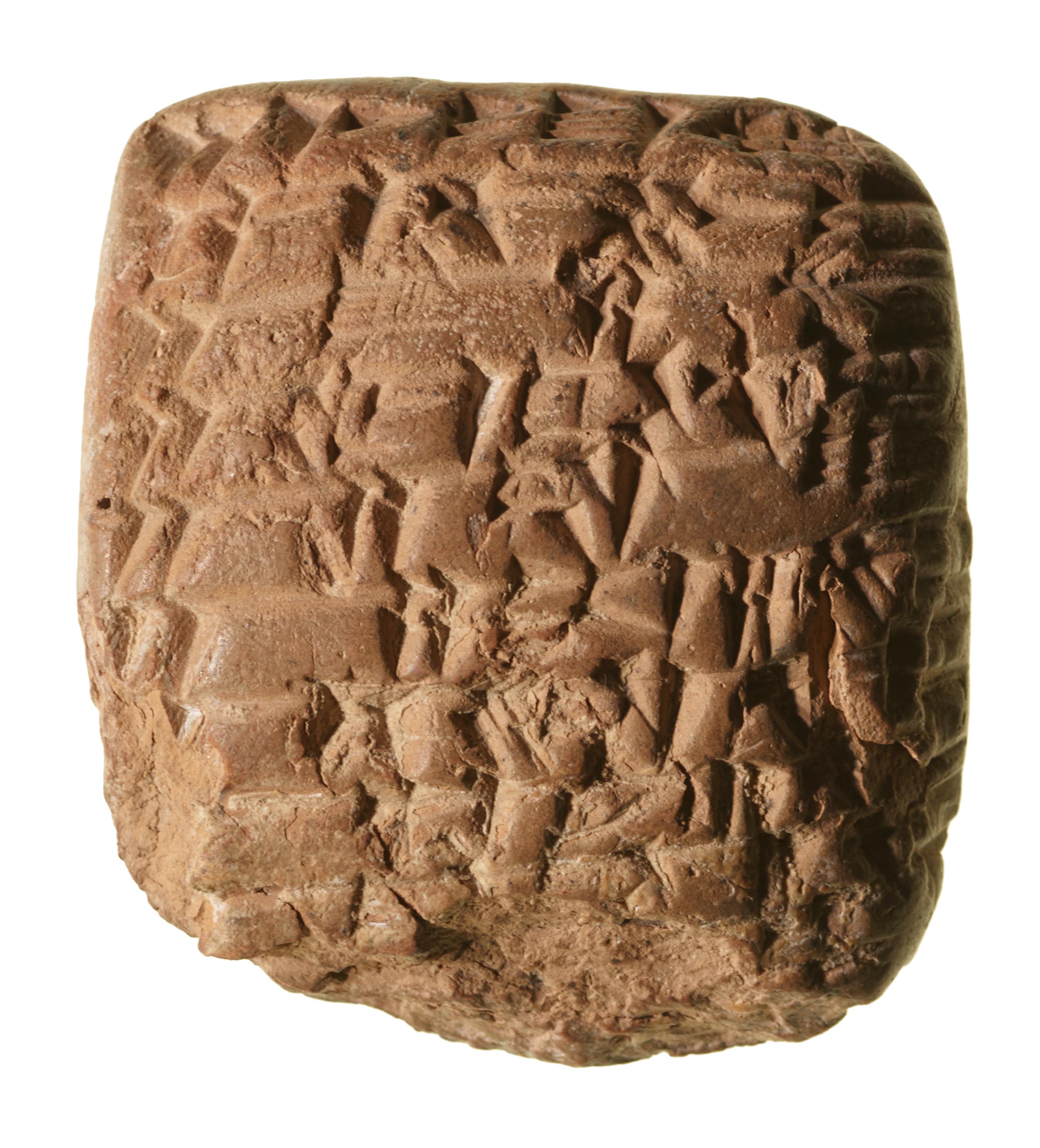
The historical pattern Graeber uncovers is astonishingly cyclical, repeating with a regularity that ought to give us pause:
- Credit expansion: In times of peace and prosperity, lending multiplies. Debt grows to unsustainable levels. In Sumer, during agricultural expansion; in Rome, through the Punic Wars; in Europe, during the Renaissance; in the United States, between 1980 and 2008. The cycle is always identical.
- Crisis: Debtors cannot pay. Social tensions mount. People end up in debt slavery—literally in antiquity, metaphorically in modern capitalism through foreclosures, garnishments, and predatory lending.
- Jubilee or revolution: Either the established power cancels the debts (as in Sumerian royal decrees, the Biblical Jubilee Law, or Solon’s reforms in Athens in 594 BCE), or the system explodes in revolutionary upheaval. History offers no third way.
The Jubilee Law in Leviticus (every 49 years all debts were canceled and slaves freed, as described in Leviticus 25:8–55) was no act of charity: it was a social safety valve to prevent accumulated inequality from tearing society apart. The Israelites understood—unlike our modern economists—that a society where debt grows without limit is a society headed for civil war. The Hebrew word deror (“freedom, liberation”) that appears in Leviticus is the same word we find in the inscriptions of Enmetena’s tablet, a thousand years earlier.
The Debt Cycle Across Civilizations
To visualize how this pattern repeats across history, let us examine the data Graeber compiles throughout his work:
| Civilization | Key Period | Debt System | Cancellation Mechanism | Consequence of Not Canceling |
|---|---|---|---|---|
| Sumer / Akkad | 2400–1750 BCE | Cuneiform tablets with 33% annual interest; temples as banks | Andurārum (royal decrees upon ascending the throne) | Landless peasants accumulate, revolts |
| Ancient Israel | 1200–586 BCE | Loans among Israelites with interest prohibited; debt servitude | Yovel (Jubilee) every 49 years; total debt cancellation and slave liberation | Social fragmentation, prophetic warnings of ruin (Amos, Isaiah) |
| Classical Athens | 594 BCE | Seisákhtheia (seisachtheia); Athenian peasants sold into debt slavery | Solon: debt cancellation, prohibition of debt slavery, land reform | Civil war between aristocrats and peasants |
| Republican Rome | 494–47 BCE | Nexum (debt slavery); interest up to 12% annually | Tabulae novae (new tablets); Caesar canceled debts in 49 BCE | Plebeian secession, civil wars, assassination of the Gracchi |
| Ancient India | 600 BCE–300 CE | Dharmaśāstra (Laws of Manu): agricultural interest 20%, commercial 60% | Royal cancellation during famines (kāraṇām); Hindu and Buddhist kings | Peasant uprisings, collapse of dynasties |
| Medieval Europe | 1100–1500 CE | Usury prohibited by the Church; Jewish and Lombard lenders; interest 15–43% | Monarchs declaring bankruptcy (Philip IV of France, 1306; Spain, 1557, 1575, 1596, 1607…) | Peasant revolts, expulsion of Jews, persecution of moneylenders |
| Modern Capitalism | 1980–present | Sovereign debt, mortgages, consumer credit, credit cards; variable interest | None? (Partial haircut on Greek debt in 2012; forgiveness is exceptional) | Financial crises (2008, 2020), movements like Occupy Wall Street, populism |
The table’s conclusion is unsettling: every earlier civilization understood that debt had to be periodically canceled. Ours does not. And we are seeing the consequences: spiraling inequality, fractured societies, and a political malaise that has found no outlet.
Debt as State Violence: Money Born from the Sword
One of Graeber’s most provocative ideas is that “mathematical, exact” debt—the kind measured in cold numbers that brooks no negotiation—can only be imposed through state violence. In natural human communities, obligations are diffuse, contextual, human. “I help you today, you help me tomorrow.” There is no “you owe exactly three and a half goats; if you don’t pay by Tuesday, we’re seizing your hut.”
The State, however, needs debts to be exact, quantifiable, and enforceable. Because only then can it collect taxes, pay armies, and maintain control. State violence lies at the heart of the monetary economy. That is why, when Spanish conquistadors arrived in the Americas in the 16th century, one of their first measures was to impose coins and tribute on indigenous populations: it was not merely an economic issue—it was a declaration of sovereignty. Whoever controls the currency controls debt. Whoever controls debt controls people.
The author of Debt also points out a fascinating fact: in most Indo-European languages, the words for “debt” and “guilt” are etymologically related. In German, Schuld means both “debt” and “guilt.” In English, a person who owes money is “in debt,” but also “indebted,” a word that carries moral weight. This is no coincidence: debt has always been framed as a moral failing. The debtor is not someone who cannot pay—they are someone who owes, and therefore ought to feel guilty. This fusion of economics and morality—debt as sin—is one of the most subtle and effective power technologies our civilization has ever devised.
Connecting with Jouvenel: Debt as a Tool of Expanding Power
Graeber’s thesis fits perfectly with that of Bertrand de Jouvenel (1903–1987), with whom we opened this series. If Jouvenel told us that power expands by its very nature in his work Power: The Natural History of Its Growth (1945), Graeber shows us one of its most effective tools: debt. Power expands by making people owe. And the more they owe, the more docile they become.
Jouvenel argued that any concentration of power tends to grow until it hits an external limit. Graeber fleshes out that mechanism: debt is the fuel for power’s expansion. States issue currency so that citizens can pay taxes. Citizens need to obtain that currency, and they go into debt. The State controls issuance, interest rates, and repayment terms. The circuit closes: debt perpetuates the very power that created it.
This connection bridges us to the next article: Maurizio Lazzarato and “The Indebted Man”, where we will examine how neoliberalism has turned debt into a machine for producing docile subjectivities. Because if Graeber explains the historical origin of debt as social control, Lazzarato shows us how it works today: every citizen is born already in debt, and that debt follows them to the grave—or until they decide to rebel.
Other articles in the series you might find interesting:
- Power Expands by Its Very Nature — Bertrand de Jouvenel
- Confessions of an Economic Hit Man — John Perkins
- David Graeber and the Barter Myth — Full Article (this article)
Frequently Asked Questions About David Graeber and Debt
❓ What is the main idea of Debt: The First 5,000 Years?
The central argument of David Graeber is that the historical sequence we take for granted—barter, then money, then credit/debt—is an academic myth. In reality, credit and reciprocity (forms of informal social debt) came first, followed by metallic money (invented by states for military and fiscal purposes), and only much later did barter as we know it appear. The book, 534 pages long, further argues that debt has been the primary instrument of social control throughout history, from Sumer to the 2008 crisis.
❓ Is it true that barter never existed?
The American anthropologist does not claim that barter never happens at all—clearly two people can exchange goods without money. What he denies is that there was ever an economy based on barter as a generalized system. There is not a single documented case in anthropology of a society whose primary mode of exchange was pure barter. Pre-monetary societies operated on logics of reciprocity, hospitality, gifts, informal credit, and social obligations. Large-scale barter only appears when money and the state have temporarily collapsed—as happened in post-Soviet Russia in the 1990s.
❓ What is Graeber’s “military-coinage-slavery complex”?
Graeber coined this term to describe the triple mechanism that, in his view, gave rise to metallic money: (1) states needed to mint coins to pay mercenary soldiers; (2) those coins were then used to collect taxes from the population; (3) those who could not pay their taxes ended up as debt slaves, providing forced labor for the state. Money, in this reading, was not born “to facilitate trade,” but to organize war, taxation, and exploitation. It is one of the most controversial—and most poorly received by orthodox economics—theses in his work.
❓ What are “debt jubilees” and why do they matter?
Debt jubilees are periodic, across-the-board cancellations of debts. The author of Debt demonstrates that they have existed in virtually every civilization: from the andurārum decrees of Sumerian kings (2400 BCE) to the Hebrew Jubilee Law in Leviticus (every 49 years) and Solon’s reforms in Athens (594 BCE). Their function was not charitable but structural: to prevent the accumulation of debt from generating such extreme inequality that society would explode. For Graeber, the absence of debt cancellation mechanisms in modern capitalism—with rare exceptions like the partial Greek debt haircut in 2012—is a historical anomaly that can only end badly.
❓ What is the connection between Graeber and the Occupy Wall Street movement?
David Graeber was one of the key intellectuals and activists of the Occupy Wall Street movement, which erupted in September 2011 in Zuccotti Park, New York. In fact, he is credited with coining the slogan “We are the 99%.” Graeber participated in the movement’s popular assemblies and applied his anthropological knowledge of direct democracy and horizontal organizing. His book Debt became essential reading for activists because it provided a historical narrative explaining why debt—mortgage, student, sovereign—was the central mechanism of contemporary inequality.
Conclusion: Debt as a Power Relationship—What If We Canceled It?
Graeber leaves us with a fundamental lesson: debt is not merely economic. It is a social and political relationship. To say that someone “owes” is not a neutral fact—it is a declaration of power. And throughout history, those who have controlled the system of debts have controlled societies.
Understanding this is the first step toward asking ourselves: who owes whom? Because perhaps—as David Graeber suggested—the problem is not that there are unpayable debts. The problem is that the global financial system has been built on the premise that debts are never canceled. And that, historically, leads only one way: bankruptcy, revolution… or catastrophe.
What would happen if we canceled the debts? This is not a rhetorical question. It is the question Graeber throws at the reader at the end of his 534-page work. And it is the question this blog wants you to walk away with: if debt is a social and political construction—not a law of nature—then it can be deconstructed, renegotiated… and perhaps, one day, canceled.
The first step toward changing something is understanding it. And David Graeber has given us the tools. Now the choice is ours.
📩 Enjoyed this? Don’t miss what’s coming
This article is part of a series on power, debt, and social control. If you want future articles delivered straight to your inbox—completely free—subscribe to the newsletter. I promise no spam (I’m a real person, not a marketing agency).
In the meantime, keep reading the series:
- ← Article 1: Power Expands by Its Very Nature — Bertrand de Jouvenel
- → Article 3: The Indebted Man — Maurizio Lazzarato and Neoliberal Biopolitics
- → Article 4: Confessions of an Economic Hit Man — John Perkins
- → Article 5: Byung-Chul Han and the Burnout Society
Share this if you found it interesting. Had you heard of David Graeber before? Did you know about the barter myth? Leave a comment below—I love reading readers’ opinions, especially (and above all) if you disagree. 👇