Introduction
David Graeber showed us that debt predates money, that barter is a myth, and that states invented coinage to pay armies. He left us with an unsettling question: what happens when an entire civilization is built on debts that are never cancelled?
Maurizio Lazzarato answers that question.
If Graeber was the archaeologist of debt — the one who dug into Sumer, ancient Israel, and classical Greece to find its origins — Lazzarato is the anatomist of the indebted man. He dissects how debt doesn’t just impoverish people economically, but manufactures a type of human being: a subject born already in debt, who feels guilty for not being able to repay it, and who, because of that guilt, becomes docile.
His work The Making of the Indebted Man (2011, translated into English in 2012 by Semiotext(e)) and its follow-up Governing by Debt (2015) constitute perhaps the most lucid and unsettling analysis of neoliberalism written in the twenty-first century. Because Lazzarato does not stop at economic critique: he goes to the psychological, moral, and political root of power.
And that root, according to him, is debt.
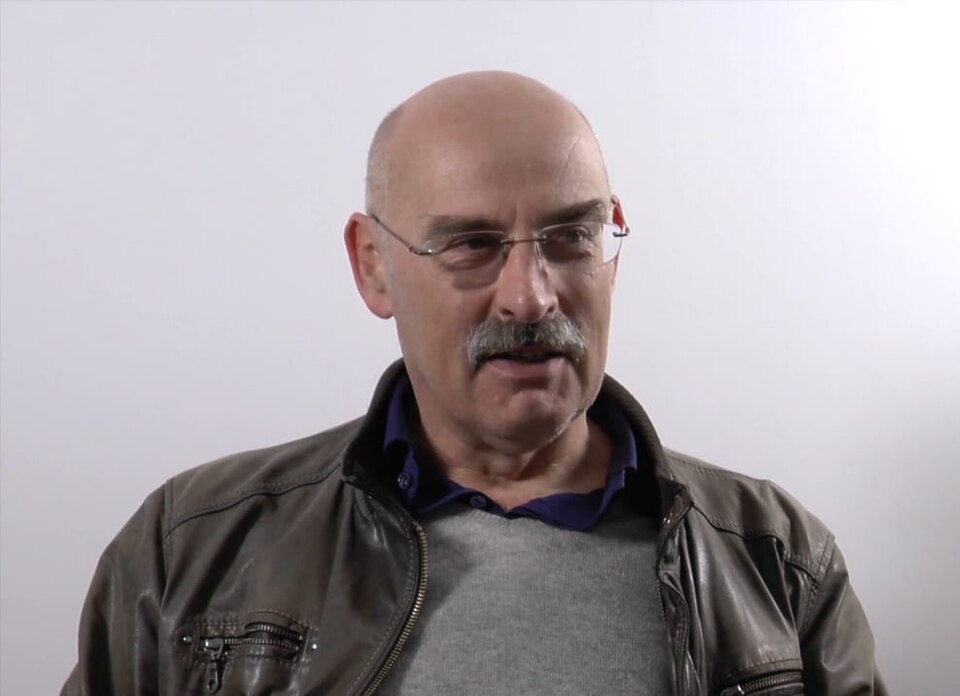
Who Is Maurizio Lazzarato?
Before diving into his thesis, it is worth getting to know the man who formulated it. His personal biography is not unrelated to his thought.
Maurizio Lazzarato was born in 1955 in Italy. He studied at the University of Padua in the 1970s, during a period of intense political ferment. Italy was then in the grip of the Autonomia Operaia movement — a heterodox Marxist current that rejected both capitalism and Soviet communism — and Lazzarato was a front-line activist.
The consequences were not long in coming: with the state crackdown against left-wing movements in Italy in the late 1970s, Lazzarato was forced into exile in France to escape political persecution. The charges against him were eventually dropped in the 1990s, but exile shaped his thinking.
In Paris, he became part of the intellectual circle around Michel Foucault, Gilles Deleuze, and Félix Guattari, whose ideas on power, biopolitics, and societies of control profoundly influenced his work. He was a founding member of Multitudes, one of the most influential political theory journals of contemporary critical thought.
Today he is a researcher at the CNRS (French National Centre for Scientific Research) and a member of the International College of Philosophy in Paris. His work spans immaterial labor and cognitive capitalism to biopolitics and, above all, debt as a technology of power.
The Central Thesis: Debt as a Subject-Manufacturing Machine
Lazzarato’s core idea is as simple as it is devastating: neoliberalism is not just an economic system. It is a machine for producing subjectivities.
And its raw material is debt.
Against traditional economic analyses, which treat debt as one financial instrument among many, Lazzarato argues that the creditor-debtor relationship is the central category of modern political economy. More important than money, capital, or labor. Because that relationship is not merely financial: it is a power relation that shapes the people who inhabit it.
“Debt is not just an economic instrument. It is a technique of government, a technology of power that manufactures a specific type of subjectivity: the indebted man.”
As we shall see, this idea has consequences that reach far beyond economics.
The Creditor-Debtor Relationship as a Fundamental Category
Lazzarato draws on Friedrich Nietzsche to build his argument. In On the Genealogy of Morality, Nietzsche devotes his second essay to the analysis of guilt, bad conscience, and the promise. And he traces their origin to an unexpected source: the relationship between creditor and debtor.
For Nietzsche, the most ancient and personal relationship between human beings is precisely this: someone who lends and someone who owes. And from that primordial relationship arise concepts that today seem natural to us but are, in reality, social constructions:
- The promise: making someone capable of promising to pay. This requires building a memory, an interiority, a conscience.
- Guilt: if you do not pay, you do not just owe money. You are morally culpable. Schuld in German means both “debt” and “guilt.”
- Punishment: the creditor has the right to punish the debtor. And that punishment — physical, moral, social — is the origin of criminal justice.
Lazzarato retrieves this genealogy and applies it to neoliberalism. The indebted man is not just someone who owes money. He is someone who has been trained to feel guilty, to promise, to accept punishment as just.
Herein lies the genius of the system: it does not need physical violence. It has internalized violence in the debtor’s consciousness.
From Graeber to Lazzarato: Debt as a Historical Continuum
If the series has followed a logical order so far, it is no accident. Jouvenel gave us the framework (power expands by its very nature), Graeber gave us the deep history of debt (5,000 years). Lazzarato gives us the present: how the mechanism works today.
Graeber and Lazzarato complement each other like the negative and positive of the same photograph. Graeber looks to the past and sees the cycle: debt → crisis → jubilee. Lazzarato looks to the present and sees a system that has broken that cycle: debt is no longer cancelled. It is perpetual.
This break is the great novelty of neoliberal capitalism. In all previous civilizations — Sumer, ancient Israel, Athens, Rome, the Middle Ages — there existed mechanisms for debt cancellation. The Jubilee, Solon’s seisachtheia, the Roman tabulae novae, medieval royal bankruptcies. All recognized that debt accumulated without limit destroys the social fabric.
Neoliberalism, for the first time in history, has eliminated those mechanisms. Debt is no longer cancelled. It is managed. It is refinanced. It is inherited. But it is not forgiven.
And that is the perfect trap.
Biopolitics: Debt as the Government of Life
Lazzarato draws directly from the late work of Michel Foucault and his concept of biopolitics. For Foucault, from the eighteenth century onward, power no longer merely governs territories and subjects: it governs life itself. It regulates birth rates, mortality, health, hygiene, productivity. The biological life of the population becomes an object of government.
Lazzarato updates this idea: debt is the biopolitical technology par excellence of neoliberalism. Why?
- Because it is universal: no one escapes. From student debt to mortgages, from consumer credit to sovereign debt, all citizens of the developed world are caught in the net.
- Because it is perpetual: it has no end. It is refinanced, inherited, accumulated. A student can take 30 years to pay off their education. A country can spend centuries paying the interest on its debt.
- Because it is intimate: debt does not just affect a bank account. It affects the psyche. It produces anxiety, guilt, shame, docility.
- Because it disciplines: the debtor knows they must behave well. They cannot risk losing their job, defaulting on their mortgage, being branded as delinquent. Debt is an invisible straitjacket.
“Debt is the most effective instrument of government because it needs neither police nor prisons. Every citizen carries their own prison inside them: their debt.”
The Making of the Indebted Man: The Process
Lazzarato describes the process of manufacturing the indebted man in several stages that reinforce each other:
1. Individualization of Debt
The neoliberal system has fragmented collective debts (public debt, social debt) and turned them into individual debts. It is no longer “society owes its citizens” — as was the case with the welfare state — but “you owe the bank, the university, the credit card company.”
This individualization has an immediate political effect: it destroys solidarity. When everyone carries their own debt, it is difficult to organize collectively. Debt isolates.
2. Financialization of Everyday Life
In the past, debt was an exception. People turned to it at specific moments: buying a house, starting a business, getting through a bad harvest. Today, debt is the normal condition of existence.
- You study → student debt.
- You move → rent or mortgage.
- You get sick → medical debt.
- You grow old → a pension fund dependent on financial markets.
- You consume → credit card.
All of life is mediated by debt. Being born already means incurring a debt to the healthcare system. Dying too: funeral expenses, inheritances, estate taxes.
3. Guilt as a Control Mechanism
Lazzarato insists on a key point: debt produces subjectivity through guilt. It is not just that you owe money. It is that you feel bad about owing it.
This feeling of guilt is the fuel of the system. Because the debtor does not protest. They do not organize. They do not demand. They accept cutbacks, they accept working more, they accept precarious conditions. All to pay off their debt and “clear their name.”
Guilt is the most effective shackle because it cannot be seen and cannot be broken from the outside.
4. Precariousness as a Permanent Condition
The indebted man cannot afford to say no. He accepts precarious jobs, low wages, flexible hours, unfair dismissals. What alternative does he have? Debt ties him down. He cannot risk losing income, no matter how meager that income may be.
Lazzarato describes this situation as “voluntary servitude”: not because the debtor wants to be a slave, but because the system has eliminated viable alternatives.
Governing by Debt: The Power Playbook
In his second book on the subject, Governing by Debt (2015), Lazzarato develops the political consequences of his analysis. Debt is not just an economic instrument: it is the central mechanism of government in neoliberal democracies.
The 2008 Crisis as a Turning Point
The 2008 financial crisis was the moment of truth. Banks went under, but instead of letting them fail, states bailed them out. How was that rescue paid for? With public debt. In other words, the private debt of the banks was transformed into public debt paid for by citizens.
This process — which economist Andrew Ross calls the socialization of debt — reveals the nature of neoliberal power: profits are privatized, losses are socialized. Banks reaped profits for decades, and when the crisis came, citizens bore the cost.
Austerity as a Political Program
After 2008, public debt became the perfect pretext for imposing austerity policies across Europe and Latin America. The argument was always the same: “There is no money. We must tighten our belts.”
The results were devastating:
– Cuts to healthcare, education, and social services.
– Privatization of public enterprises.
– Labor deregulation and job precarity.
– Rising inequality.
– Impoverishment of the middle and working classes.
Lazzarato shows that austerity was not an economic necessity but a political choice. Alternatives existed: debt forgiveness, taxing the rich, nationalizing banks. But austerity was chosen because it served the interests of financial power.
Democracy Held Hostage by Debt
Lazzarato’s conclusion is disturbing: in the name of debt, democracies have suspended democracy. Elected governments have less room to maneuver than ever. Key decisions — budgets, fiscal policies, structural reforms — are dictated by financial markets, rating agencies, the IMF, and the ECB.
Citizens vote, but the policies implemented do not correspond to their vote. Greece is the paradigmatic example: in 2015, the Greek people voted overwhelmingly against austerity, and yet the Syriza government ended up implementing even harsher measures than those it had promised to reject. Debt defeated everything.
Connecting the Series: From Jouvenel to Lazzarato
If we recall Article 1 of this series, Bertrand de Jouvenel told us that power expands by its very nature. That ideology and good intentions do not matter: power tends to grow and concentrate unless checked.
Lazzarato shows us one of the most sophisticated forms of that expansion: the one that operates through debt. Not through tanks or armies, but through contracts, interest rates, deadlines, rating agencies, and a diffuse sense of guilt that permeates the entire society.
If Graeber was the historian of debt and Jouvenel the theorist of power, Lazzarato is the political psychologist of voluntary servitude. He explains how a free person voluntarily accepts their own domination.
Because the indebted man is not a chained slave. He is a person who signs contracts, who promises to pay, who feels guilty when he cannot. He is a free subject who chooses his own subjection. That is the genius — and the perversity — of the system.
Lazzarato’s Legacy and Reception
The Making of the Indebted Man has become a reference work for social movements, heterodox economists, and critics of neoliberalism. Its influence extends across diverse fields including:
- Debt studies in the Global South: authors such as Verónica Gago and Luci Cavallero have applied Lazzarato’s framework to feminist analysis of debt, showing how financial violence hits feminized bodies first.
- The student debt cancellation movement: activists in the United States, Chile, and Spain have used his arguments to demand mass forgiveness of educational debts.
- The critique of the “indebted man” as a political figure: the term has become popular for describing the neoliberal citizen who has internalized debt as a natural condition of existence.
However, Lazzarato is not without his critics. Some scholars point out that while his diagnosis is accurate, he offers few concrete political solutions. Lazzarato himself leans toward the Italian operaismo tradition — which bets on rupture and revolt rather than reform — and his work does not provide easy recipes.
Others reproach him for a certain determinism: if the indebted man is such a totalizing subjectivity, how do we explain the resistance, revolts, and debtor organizations that have emerged around the world? Lazzarato would probably respond that such resistance exists, but that it is the exception in a sea of docility.
Frequently Asked Questions About Maurizio Lazzarato and the Indebted Man
❓ What is the main idea of The Making of the Indebted Man?
The central idea of Maurizio Lazzarato is that debt is not just an economic instrument, but a technology of power that manufactures a specific type of subjectivity: the indebted man. This subject does not merely owe money; he has internalized guilt, promise, and docility as traits of his personality. Neoliberalism governs through debt, shaping not only economies but the very souls of citizens.
❓ How does Lazzarato differ from other critics of debt?
While critics like David Graeber focus on the history and anthropology of debt, Lazzarato places emphasis on subjectivity and political psychology. His analysis sits within the tradition of continental philosophy (Nietzsche, Foucault, Deleuze) and examines how debt does not merely impoverish, but manufactures a type of person. That is, he does not ask only why we owe, but what kind of human beings that debt makes us become.
❓ What is Lazzarato’s relationship with Foucault and biopolitics?
Lazzarato extends and updates the Foucauldian concept of biopolitics — power that governs the life of populations — and applies it to contemporary neoliberalism. His argument is that debt is the central biopolitical technology of neoliberalism: it regulates people’s lives from birth (student debt, healthcare) to death (inheritances, taxes), shaping their decisions, their psychology, and their docility.
❓ What does Lazzarato propose as an alternative to the indebted man?
Lazzarato does not offer concrete political recipes or a reform program. His work belongs to the tradition of radical Italian critical thought, which bets on rupture rather than reform. Debt cancellation — as a political and economic gesture — appears as a necessity, but Lazzarato does not detail how to achieve it. For him, the first step is becoming aware that debt is a political construction, not a natural law. And that in itself is an act of rebellion.
❓ Is his analysis still relevant today (2026)?
More than ever. The COVID-19 crisis in 2020 pushed global debt levels to historic highs. The war in Ukraine, inflation, and rising energy costs have worsened the situation. In 2026, global debt exceeds $315 trillion, according to the Institute of International Finance. Millions of people around the world are more indebted than ever. The health pandemic has turned into a debt pandemic, and Lazzarato’s analysis of austerity, precarity, and the manufacturing of the docile subject is today an indispensable tool for understanding our world.
Conclusion: Beyond the Indebted Man
Maurizio Lazzarato has left us with an unsettling diagnosis. Neoliberalism is not just a system that materially impoverishes: it is a system that manufactures docile souls. And it does so through the simplest and most effective mechanism ever invented: debt.
But if the diagnosis is accurate, the question that remains open is the one Lazzarato himself leaves hovering at the end of his works: can the indebted man free himself?
The answer is not clear. Perhaps, as Lazzarato suggests, the first liberation is intellectual: understanding that debt is not a natural law but a political construction. And what has been constructed can be deconstructed.
Or perhaps, as other authors we will explore in this series suggest — from John Perkins’s economic hit men to Pedro Baños’s seven levers — liberation requires something more than awareness. It requires collective action, organization, and perhaps, one day, a new global Jubilee.
In the meantime, what Lazzarato offers us is a mirror. To look into it and recognize ourselves as indebted men and women is the first step toward ceasing to be so.
📖 Next article in the series: John Perkins and Confessions of an Economic Hit Man — How the great powers bend entire nations without firing a single shot.
📚 Suggested Internal Links
- ← Article 1: Bertrand de Jouvenel — Power Expands by Its Very Nature
- ← Article 2: David Graeber — Markets Are Founded on Violence
- → Article 4: John Perkins — Confessions of an Economic Hit Man
🌐 Recommended External Links
- Maurizio Lazzarato on Wikipedia: https://en.wikipedia.org/wiki/Maurizio_Lazzarato
- The Making of the Indebted Man (Semiotext(e)): https://mitpress.mit.edu/9781584351151/the-making-of-the-indebted-man/
- Governing by Debt (Semiotext(e)): https://mitpress.mit.edu/9781584351700/governing-by-debt/
🖼️ Featured Image Prompt
A conceptual illustration showing a human figure hunched under the weight of chains made of numbers, financial charts, and banknotes. In the background, classical temple architecture (referencing Nietzsche’s genealogy) fading into modern glass skyscrapers. 1200×630 pixels, dark editorial style with touches of red in the debt numbers. Overlaid text: “The Indebted Man.”
🔍 ALT Text for the Featured Image
Conceptual illustration of the indebted man chained by numbers, financial charts, and banknotes, with classical architecture fading into modern skyscrapers. Visual representation of Maurizio Lazzarato’s thesis on debt as a technology of neoliberal power.
Part of the Geopolítica del Control series on debt, power, and the manufacturing of docile subjects.