Introduction
In 1988, linguist and activist Noam Chomsky and economist Edward S. Herman published Manufacturing Consent: The Political Economy of the Mass Media, a book that would forever change how we understand mass media in capitalist societies. Their central thesis is as provocative as it is solid: rather than being defenders of truth and democracy, large media corporations function as a system of propaganda that manufactures public consent by shaping information to serve the interests of economic and political elites. Far from conspiracy theory, Chomsky and Herman demonstrated that this is a structural process: no secret plots are needed when the market system itself filters the information. This article explores the propaganda model, its five filters, and why it remains more relevant than ever in the age of digital disinformation.
Chomsky and Herman: Two Perspectives, One Diagnosis
Who Were They?
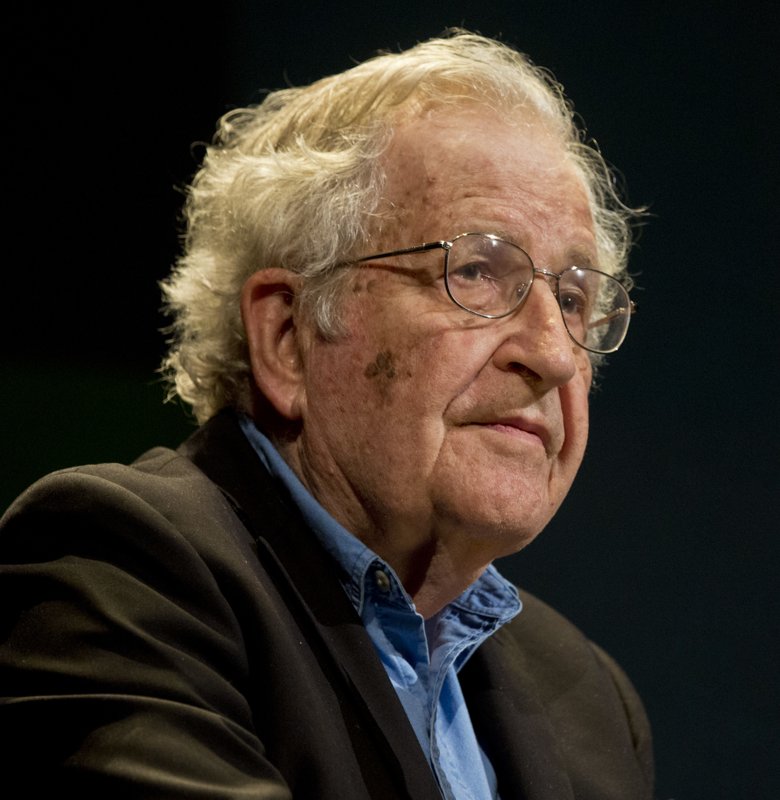
Noam Chomsky (1928–) is one of the most influential intellectuals of the twentieth century. An MIT professor, he revolutionized linguistics with his theory of generative grammar, but he is equally known for his tireless activism and criticism of American imperialism. His political work ranges from American Power and the New Mandarins to Hegemony or Survival.
Edward S. Herman (1925–2017) was an economist and media analyst who studied the relationship between corporate power and the media. Before co-writing Manufacturing Consent, Herman had already researched media coverage of human rights violations, demonstrating that abuses committed by enemies of the United States received disproportionate attention compared to those committed by its allies.
Together they developed the propaganda model, an analytical tool for understanding how media in capitalist democracies —without explicit censorship or state coercion— systematically produce a narrative favorable to the status quo.
The Fundamental Question
The question driving Manufacturing Consent is deceptively simple: if the media in Western democracies are formally free and independent, why is their coverage so consistently aligned with the interests of established power? Chomsky and Herman’s answer is that formal media freedom coexists with a system of structural filters that determine which information reaches the public and, more importantly, which information is excluded.
The Five Filters of the Propaganda Model
First Filter: Concentration of Ownership
Major media outlets belong to enormous corporations that, in turn, are part of even larger conglomerates. In 1983, when the first edition of the book was published, fifty corporations dominated the American media landscape. By 2015, that number had shrunk to six: Comcast, Disney, News Corp, Time Warner, ViacomCBS, and AT&T.
This concentration has direct consequences on content: media owners have commercial and political interests they do not want harmed. A television network owned by a conglomerate with investments in the energy sector will not investigate the abuses of that sector in depth. Not because of an explicit order, but because the mechanisms of hiring, budget allocation, and editorial hierarchy naturally filter out stories that harm corporate interests.
Second Filter: Advertising as a Revenue Source
Media do not sell information to readers: they sell audiences to advertisers. A newspaper that depends on advertising to survive must maintain a favorable advertising environment, which means avoiding content that might offend major advertisers or create a negative consumer climate.
Chomsky and Herman point out that this filter is subtler than the first: an advertiser does not need to call the editor to complain. Marketing departments detect which content creates discomfort among advertisers and adjust editorial lines accordingly. The result is journalism that systematically avoids questioning the consumer model and the economic structure that sustains it.
Third Filter: Sourcing
Media need a constant and predictable flow of information. The most reliable and cheapest sources are those provided by governments and large corporations: press conferences, official statements, leaked reports. A journalist who investigates independently needs time and resources; a journalist who reproduces a White House press release does not.
This imbalance creates a structural dependency: media cover news within the framework defined by official sources. When both parties in a conflict are treated with equal formal skepticism but the sources of one have institutional access to the media, the result is systematic bias. Herman and Chomsky call this the “bias of those in power.”
Fourth Filter: Flak
Flak is any form of attack or pressure directed against journalists or media that deviate from the acceptable line. It can manifest as legal threats, smear campaigns, political pressure from congressmen, orchestrated letters to the editor, or simply the exclusion from privileged sources.
Media that systematically challenge the status quo learn the hard way that the cost of doing so is high. Media watchdog organizations, corporate-funded think tanks, and politicians aligned with economic power take care of disciplining transgressors. The net effect is that most journalists internalize the limits of what is “publishable” and self-censor to avoid retaliation.
Fifth Filter: The Enemy Ideology
In the original 1988 edition, the fifth filter was anti-communism: a mobilizing ideology used to marginalize any criticism of the capitalist system by labeling it “communist” or “un-American.” After the fall of the Soviet Union, this filter evolved into broader forms: the “war on terror,” the defense of “liberal democracy,” and more recently, the fight against “populism” and “foreign interference.”
The mechanism is always the same: an enemy or existential threat is defined, against which all debate must be suspended. Anyone who questions the official narrative is automatically excluded from respectable debate. This filter remains fully operational, adapted to the new threats of each era.
Applying the Model: Two Case Studies
Chomsky and Herman analyzed two historical cases in detail to demonstrate the validity of their model:
The Cambodian genocide (1975–1979): media coverage was massive and sustained, condemning Pol Pot’s regime without nuance. A case of mass murder committed by an enemy of the United States deserved constant attention.
The East Timor genocide (1975–1999): the Indonesian invasion and the resulting deaths of over 200,000 people received minimal coverage wrapped in caveats. Indonesia was a strategic ally of the United States in Southeast Asia.
The difference lay not in the magnitude of the crimes but in the geopolitical relationship of the perpetrators with Washington. The propaganda model predicted exactly this pattern: the crimes of enemies are covered with horror; the crimes of allies are minimized, justified, or simply ignored.
The Model’s Relevance in the Digital Age
Do the Filters Still Work on the Internet?
A frequent criticism of the propaganda model is that it was developed before the explosion of the internet, social media, and alternative media. Is it still valid in an ecosystem where anyone can publish?
The authors themselves and analysts who have updated the model argue that the filters are not only still operational but have intensified in some respects:
- Ownership is even more concentrated. The six major corporations of 2015 have merged further. The power of platforms like Google, Meta, and Amazon in information distribution is greater than any newspaper ever had.
- Advertising has become even more central: the business model of digital platforms is entirely based on data extraction and the sale of segmented audiences.
- Sourcing remains dominated by official institutions, but now algorithms decide which information is “relevant.”
- Flak has multiplied with organized digital harassment campaigns.
- The fifth filter has mutated into the fight against “disinformation” —a real problem that is also used to discredit critical voices.
What did not exist in 1988 is the capacity of alternative media to bypass the filters. However, these outlets remain marginal in terms of reach and funding, and the digital ecosystem is increasingly dominated by the same corporations that controlled traditional media.
Connection to the Geopolitics of Control Series
Chomsky and Herman’s propaganda model is an essential complement to Pedro Baños’s media lever. It explains the how of that lever at a structural level: no central power needs to order what information to publish; the market system itself filters and shapes content.
The connection to other articles in the series is immediate:
- With Bertrand de Jouvenel and the expansion of power, because the propaganda model filters are the mechanism through which power shapes public discourse without direct coercion.
- With Michel Foucault and biopolitics, because the model describes a form of power that does not prohibit but produces consent by shaping subjectivities.
- With debt as control (Graeber, Lazzarato, Perkins), because the economic filters (ownership, advertising) are the ones that most distort information.
- With digital surveillance, because the business model of digital platforms reinforces the filters through datafication and algorithmic personalization.
FAQ
Does the propaganda model imply that journalists are consciously manipulating?
No. The model describes structural filters, not a conscious conspiracy. Most journalists sincerely believe in their independence and objectivity. The filters operate at the system level: they determine who is hired, what stories are covered, what sources are used, and what budgets are allocated. Individual journalists may have the best intentions, but the system filters their output.
Is the propaganda model still relevant today?
Yes, and several scholars have updated it. In 2009, Chomsky and Herman themselves noted that the fifth filter (anti-communism) had evolved into “anti-terrorism.” Authors such as Klaehn (2009) and Mullen (2010) have argued that the model remains valid and that technological changes have not altered its fundamental structure, although they have added new layers of complexity.
Does the propaganda model only apply to the United States?
Although developed by analyzing American media, the model has been successfully applied to media in other countries. The structure of ownership, advertising dependency, and relationship with official sources is similar in most capitalist democracies. Adaptations of the model have analyzed media in the UK, Canada, Australia, and several European countries.
What is the difference between the propaganda model and Gramsci’s hegemony theory?
Both share the idea that power is maintained through consensus rather than coercion. Gramsci speaks of cultural hegemony: the ruling class imposes its worldview as common sense. The propaganda model is more concrete and mechanistic: it describes the five specific filters that produce that consensus. While Gramsci offers a theory, Chomsky and Herman offer an empirical analytical tool.
Conclusion
Chomsky and Herman’s propaganda model remains, nearly four decades after its publication, one of the most powerful tools for understanding how information control operates in capitalist democracies. Its strength lies in not needing to invoke conspiracies: it demonstrates that information distortion is a structural result of the market system applied to news production.
In a world where disinformation, fake news, and polarization are central topics of public debate, understanding the five filters of the propaganda model is more urgent than ever. Because the real propaganda is not what comes to us from distant authoritarian regimes: it is what manufactures our consent through the media we consume every day.
In the next article of this series, we explore digital surveillance —from Snowden to datafication— the other side of information control: not just what information is shown to us, but what information about us is collected without our consent.
📚 Related Books
- Manufacturing Consent: The Political Economy of the Mass Media — Noam Chomsky and Edward S. Herman
- Understanding Power — Noam Chomsky
- The Age of Surveillance Capitalism — Shoshana Zuboff
- Así se domina el mundo (How the World Is Dominated) — Pedro Baños
- Power — Bertrand de Jouvenel
Photo: Augusto Starita / Ministerio de Cultura de la Nación (CC BY-SA 2.0)