Introduction
In June 2013, a young systems analyst named Edward Snowden leaked classified information to The Guardian and The Washington Post that revealed the staggering scale of the National Security Agency’s (NSA) mass surveillance program. The world discovered that their digital communications —emails, phone calls, messages, internet searches— were being intercepted and stored without judicial warrant or public knowledge. But that was not an anomaly: it was the first crack in a surveillance system that has only grown since. This article explores how digital surveillance has evolved from a state secret into the dominant business model of the 21st century, becoming a new lever of power that merges technology, capital, and social control.
From Snowden to PRISM: The Curtain Rises
What Did Snowden Actually Reveal?
Edward Snowden was working as an NSA contractor when he decided to make public what he had discovered in classified files. The leaks revealed the existence of PRISM, a mass data collection program that operated with the forced —or voluntary— collaboration of major US technology companies: Microsoft, Google, Facebook, Yahoo, Apple, and others.
Through PRISM, the NSA accessed central servers to extract emails, video calls, photos, files, and social media data from millions of people worldwide. Not just terrorism suspects, but ordinary citizens. As Snowden stated: “I’m not sorry I revealed that the US government is spying on everyone”.
The leaks also exposed other programs such as XKeyscore (a search engine allowing NSA analysts to query massive databases of emails, chats, and browsing history), Tempora (the British GCHQ’s fiber-optic cable tapping operation), and BULLRUN (a systematic effort to undermine encryption standards).
The International Response
The revelations triggered a diplomatic earthquake. Germany and Brazil, whose leaders Angela Merkel and Dilma Rousseff had been directly spied on, led protests at the United Nations. The UN General Assembly passed a resolution affirming the right to privacy in the digital age. However, the actual impact on surveillance practices was limited: the programs continued, often simply under new names.
Surveillance Capitalism: When Surveillance Became Business
Shoshana Zuboff and the Commodification of Human Experience
Sociologist Shoshana Zuboff coined the term “surveillance capitalism” in her book The Age of Surveillance Capitalism (2019) to describe a new economic logic: the systematic exploitation of personal data as raw material for predicting and modifying human behavior.
Zuboff explains that surveillance capitalism is not a mere extension of traditional capitalism but a deep mutation. In industrial capitalism, companies exploited natural resources. In surveillance capitalism, the raw material is our digital lives: every click, every search, every scroll, every pause in a video, every location visited.
Technology companies —Google, Meta (Facebook), Amazon, Microsoft— built economic empires on this model. They offer “free” services in exchange for data, which they then process with artificial intelligence algorithms to create behavioral prediction products. These products are sold to advertisers, governments, and other corporations.
Zuboff identifies a fundamental rupture: in surveillance capitalism, the product is not the data itself, but the predictions about our future behavior. What is sold is not what we did, but what we are predicted to do.
Datafication: Turning Life into Data
The concept of datafication —coined by Viktor Mayer-Schönberger and Kenneth Cukier in Big Data: A Revolution That Will Transform How We Live, Work, and Think— refers to the process of converting aspects of human life that were previously unquantifiable into processable data. Everything can be datafied: what we eat (through food apps), how we sleep (through wearables), how we move (through Google Maps), our social relationships (through social networks), our emotions (through sentiment analysis).
This process is not neutral. Those who control the data control the reality that data represents. As Zuboff argues, datafication is the material foundation of surveillance capitalism: without it, there would be no raw material to exploit.
The Geopolitical Dimensions of Digital Surveillance
Surveillance as a Tool of Interstate Power
Digital surveillance is not just a business: it is also a fundamental geopolitical instrument. The NSA is not a corporation but a state intelligence agency. The PRISM program did not seek economic profits but strategic advantages: information about foreign governments, competing corporations, organizations, and citizens.
Technological dependency creates strategic vulnerabilities. Countries that do not control their digital infrastructure —servers, submarine cables, operating systems, hardware— are exposed to surveillance by the powers that do. This connects directly with the concept of digital colonialism, which we explore in another article in this series: a new form of dependency where the Global North extracts data from the Global South, reproducing classic colonial dynamics.
Within the framework of Pedro Baños’s seven levers of domination, digital surveillance sits at the intersection of the technological and military levers. It is the spearhead of a control that no longer needs visible armies: access to data is enough.
China’s Social Credit System: The Authoritarian Mirror
China has taken digital surveillance to an unprecedented level with its Social Credit System (SCS). This system, combining mass surveillance with artificial intelligence, aims to monitor, evaluate, and modify the behavior of over 1.4 billion people.
The SCS assigns scores to citizens and companies based on their behavior: from paying taxes to social media conduct, from obeying traffic laws to the friends one keeps. Those with low scores face restrictions: they cannot travel, access certain jobs, obtain loans, or enroll their children in good schools.
Organizations such as Amnesty International have documented how the SCS is also used to repress ethnic minorities, especially the Uighur population in Xinjiang, where surveillance is even more intense through facial recognition, DNA analysis, and mass geolocation.
The Chinese case illustrates what some scholars call digital authoritarianism: the use of surveillance technologies to reinforce political control, not just for commercial or national security purposes.
Surveillance After Snowden: Normalization
More Than a Decade Later
Over ten years have passed since the Snowden leaks. The digital surveillance landscape today is denser and more complex than ever. The COVID-19 pandemic accelerated the adoption of tracking and monitoring technologies that, presented as temporary health measures, have in many cases become permanent.
Generative artificial intelligence has added a new layer: language models and facial recognition tools operate on massive amounts of data that, in many cases, were obtained without explicit consent. The mass scraping of internet data to train AI models is, in essence, a form of datafication at industrial scale.
Digital surveillance has become so normalized that most people accept it as an inevitable part of modern life. As Zuboff noted, surveillance capitalism’s greatest achievement is making people accept being watched in exchange for services they perceive as necessary.
The Response: Regulation, Encryption, and Resistance
Several responses have emerged:
- Regulation: the European Union adopted the General Data Protection Regulation (GDPR) in 2018, setting a global standard for data protection. California, Brazil, and other territories have followed. However, effective enforcement remains a challenge.
- Encryption: the widespread adoption of end-to-end encryption in apps like Signal, WhatsApp, and Telegram has made mass communication interception harder. This has created tensions between governments demanding “backdoors” and privacy advocates.
- Sovereign technology: some countries seek to develop their own digital infrastructure to reduce dependence on foreign powers. The European Union promotes the Gaia-X initiative for data sovereignty.
- Social movements: organizations like the Electronic Frontier Foundation (EFF), Privacy International, and Amnesty International continue to document and denounce surveillance abuses.
Connection to the Geopolitics of Control Series
Digital surveillance is perhaps the most perfect manifestation of Jouvenel’s principle that power expands by its own nature. Surveillance power knows no intrinsic limits: it always wants more data, more access, more control. Every new technology opens new surveillance possibilities, and every new piece of data collected justifies the collection of more data.
This article connects directly with several previous ones in the series:
- With Michel Foucault and biopolitics, because digital surveillance is the most advanced form of governmentality: it needs no physical coercion because it shapes behavior through anticipation and prediction.
- With Pedro Baños and the 7 levers, because digital surveillance intersects the technological, military, economic, and mental levers.
- With Noam Chomsky and the propaganda model, because surveillance enables much more precise and personalized information control than traditional propaganda.
- With digital colonialism (upcoming article in the series), because the gap between those who produce and those who consume surveillance technology reproduces neocolonial dependency dynamics.
FAQ
Was Snowden a traitor or a whistleblower?
Snowden was charged by the US government with espionage and theft of government property. However, human rights organizations such as Amnesty International consider him a whistleblower who acted in the public interest. He currently lives in exile in Russia under temporary asylum.
How does digital surveillance affect everyday life?
Digital surveillance influences which ads we see, what content platforms recommend, what price we are offered for a product (price discrimination), whether we get a loan, a job, or insurance. It also shapes our perception of what is normal or acceptable, subtly steering our decisions.
Is surveillance capitalism the same as government surveillance?
Not exactly. Surveillance capitalism refers to the business model of tech corporations that extract and commodify personal data. Government surveillance refers to data collection by states for intelligence, security, or political control purposes. Both forms coexist and often feed each other: governments buy data from corporations or force them to collaborate.
What can be done to protect against digital surveillance?
Practical measures include: using privacy-respecting browsers and search engines (Firefox, Brave, DuckDuckGo), enabling end-to-end encryption in communications, using trusted VPNs, limiting app permissions, reviewing privacy settings on social media, and above all, being aware of what data is shared and with whom.
Conclusion
Digital surveillance has evolved from a state secret into the invisible architecture of our lives. What Snowden revealed in 2013 was not an exception but the tip of an iceberg: a system that combines the technical capacity of the state with the extractive logic of capitalism.
The datafication of human experience —the conversion of every aspect of our lives into data— has created a new geopolitical battlefield. Those who control the data control the predictions. Those who control the predictions control behavior. And those who control behavior exercise the most subtle and profound form of power.
In the next installment of this series, we will explore digital colonialism: how technological dependency and data extraction from the Global South reproduce neocolonial domination dynamics in the digital age. If surveillance is the tool, digital colonialism is its geopolitical outcome.
📚 Related Books
- The Age of Surveillance Capitalism — Shoshana Zuboff
- Big Data: A Revolution That Will Transform How We Live, Work, and Think — Viktor Mayer-Schönberger and Kenneth Cukier
- Power — Bertrand de Jouvenel
- Así se domina el mundo (How the World Is Dominated) — Pedro Baños
- No Place to Hide: Edward Snowden, the NSA, and the U.S. Surveillance State — Glenn Greenwald
- Permanent Record — Edward Snowden
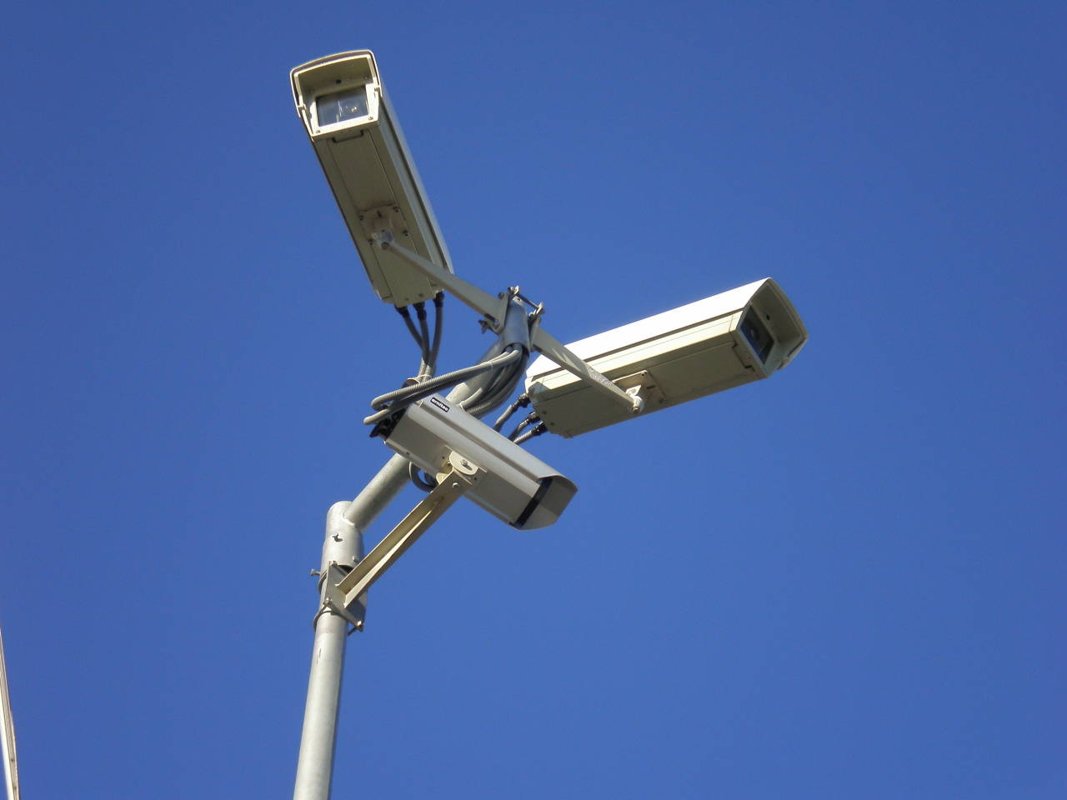
Photo: Paweł Zdziarski (CC BY 2.5)