Introduction
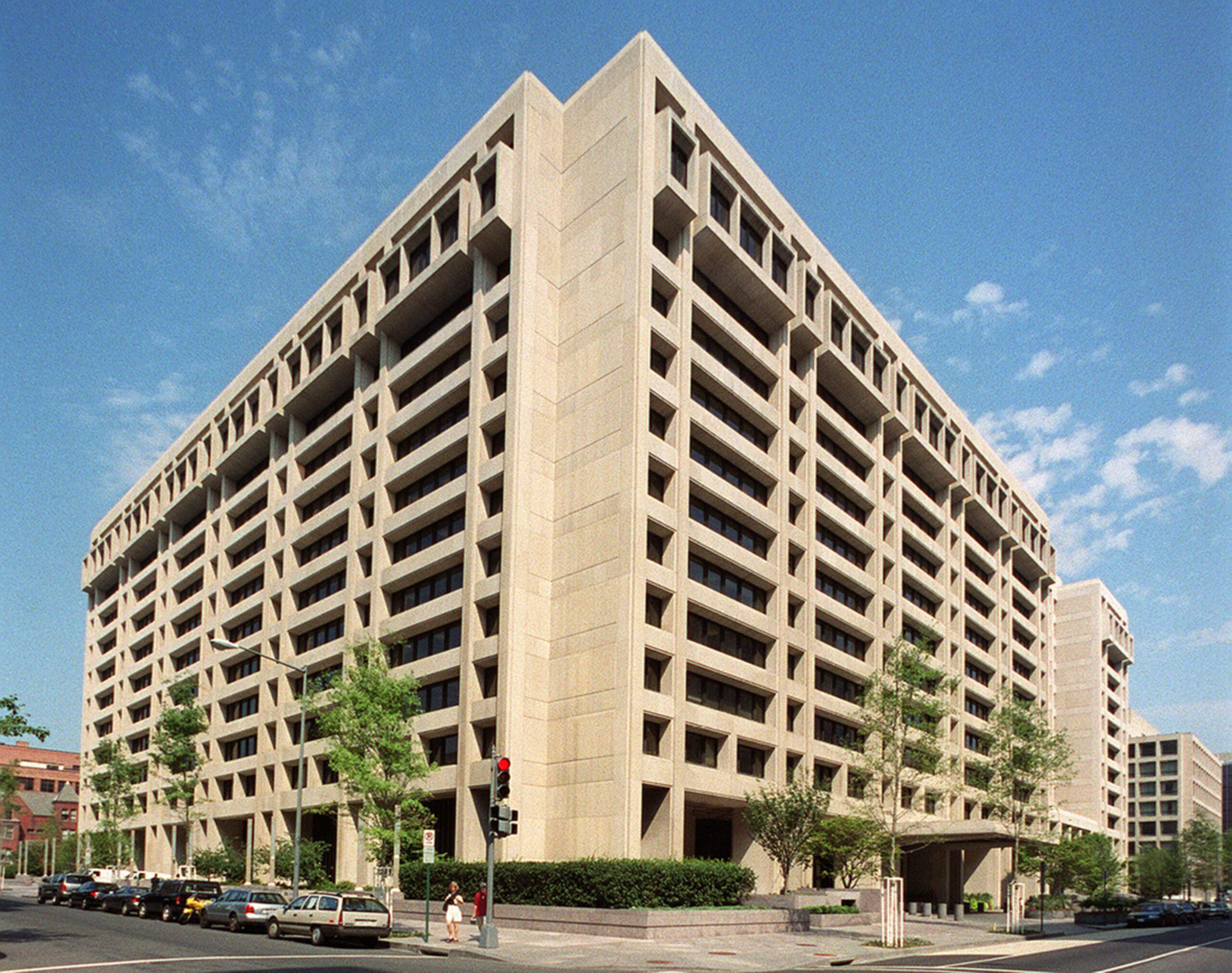
In July 1944, while World War II was still ravaging Europe, 730 delegates from 44 allied nations gathered at the Mount Washington Hotel in Bretton Woods, New Hampshire. There, in the so-called “Gold Room,” they signed the agreements that would shape the postwar global economic order. From those meetings, two institutions were born that would define the economic destiny of humanity for the next eight decades: the International Monetary Fund (IMF) and the World Bank.
Officially, their mission was noble: rebuild Europe, stabilize the international monetary system, foster trade, and reduce poverty. Eighty years later, their legacy is profoundly controversial. These two institutions, headquartered in Washington, D.C., and effectively controlled by the major Western powers, have become the guardians of global debt, wielding unprecedented power over the economic policies of developing countries and perpetuating a system of dependency that many scholars identify as the core of financial neocolonialism.
This article explores how the IMF and the World Bank evolved from instruments of reconstruction into tools of control through debt, connecting their operations with the central thesis of our series: that power expands by nature and finds in international financial architecture one of its most effective vehicles.
Bretton Woods: The Birth of a New Order
The Bretton Woods agreements established the rules of the international economic game for the second half of the 20th century. The system rested on three fundamental pillars: each state had to define its currency in relation to gold or the U.S. dollar, the currency’s value could only fluctuate within a 1% margin, and each state was responsible for defending that parity.
At the center of the system were two institutions: the IMF, designed to oversee the monetary system and provide short-term loans to countries with balance of payments problems; and the World Bank (then the International Bank for Reconstruction and Development, IBRD), created to channel funds toward European reconstruction and the development of poorer countries.
The Keynes vs. White Battle
Behind the facade of international cooperation, an ideological battle was fought that would determine the nature of these institutions for decades. Two visions clashed at Bretton Woods.
British economist John Maynard Keynes proposed creating a true global central bank that would issue an international currency, the bancor. His vision was of a cooperative fund that states could draw from to maintain economic activity and employment during periodic crises. Keynes imagined an institution that would help governments the way the New Deal had helped the United States during the Great Depression: a mechanism for global solidarity.
Opposing him, U.S. delegate Harry Dexter White —who years later was discovered to be a Soviet spy— advocated for an IMF that functioned more like a bank, ensuring that borrowing states could repay their debts on time. His vision prevailed. Keynes’s proposal was rejected because it would have diminished U.S. influence, allowing the dollar to consolidate itself as the world’s reference currency.
As economic historian Benn Steil notes in “The Battle of Bretton Woods,” White’s victory over Keynes was not merely technical but deeply political: it determined that the international financial system would serve Washington’s interests rather than genuine multilateral cooperation.
The IMF: The Firefighter Who Sets the House on Fire
The IMF began with 29 member countries and a clear mandate: to prevent the competitive devaluations and trade barriers that had characterized the Great Depression. During its first three decades, its primary function was supervising the fixed exchange rate system established at Bretton Woods.
But in 1971, President Richard Nixon suspended the dollar’s convertibility into gold, ending the Bretton Woods system. From that point on, the IMF underwent a radical transformation. Without a fixed exchange system to oversee, the institution needed a new purpose. It found it in extending conditional credit to developing countries.
Conditionality as a Control Mechanism
When a country requests an IMF loan, it does not simply receive money. It receives a program — a set of economic conditions it must implement to access the funds. This mechanism is known as conditionality, and it is the institution’s most powerful tool.
Typical conditions include:
– Reduction of public spending (austerity)
– Elimination of food and fuel subsidies
– Privatization of state-owned enterprises
– Liberalization of trade and foreign investment
– Currency devaluation
– Interest rate hikes
On paper, these measures aim to restore macroeconomic balance. In practice, as countless studies have documented, the results have been devastating for borrowing countries’ populations.
Joseph Stiglitz, Nobel Prize winner in Economics and former World Bank chief economist, put it bluntly in his book “Globalization and Its Discontents”:
“The IMF’s policies not only failed to stabilize economies but in many cases made them worse. The IMF did not act as a stabilization fund but as a missionary of market fundamentalism, imposing uniform recipes without considering each country’s specific circumstances.”
Latin America’s Lost Decade
The 1980s were tragically illustrative. Following the 1982 debt crisis, triggered by rising interest rates in the United States, Latin America became the perfect laboratory for IMF policies. Mexico, Argentina, Brazil, Peru, and other countries were forced to implement severe structural adjustment programs to restructure their debts.
The result was what became known as the “Lost Decade”: per capita income fell, poverty skyrocketed, public investment in education and health collapsed, and inequality reached record levels. Meanwhile, the commercial banks that had irresponsibly lent to these dictatorships were bailed out with taxpayer money — a phenomenon Naomi Klein would later call “disaster capitalism” in “The Shock Doctrine”.
The World Bank: Development With Strings Attached
If the IMF is the firefighter who sets the house on fire, the World Bank is the architect who draws up the blueprints for that same house. Officially dedicated to poverty reduction, the World Bank channels billions of dollars in loans to developing countries. But these loans never come without strings attached.
From Reconstruction to Conditionality
The World Bank was born to rebuild Europe after World War II. Its first loan, in 1947, was $250 million to France — the largest loan in real terms the bank has ever issued. But that loan already carried political conditions: before approving it, the U.S. State Department demanded that the French government expel Communist ministers from its coalition government. France complied, and the loan was approved within hours.
This episode set a precedent. The World Bank was not a neutral technical institution; it was a political instrument serving the interests of its principal shareholders.
The Turn to Structural Adjustment
With Robert McNamara‘s arrival at the World Bank’s presidency in 1968, the institution massively expanded its lending toward development programs. But it was in the 1980s, under the influence of Ronald Reagan’s and Margaret Thatcher’s neoliberal thinking, that the World Bank fully embraced Structural Adjustment Programs (SAPs).
These programs required borrowing countries to implement market reforms in exchange for new loans. The recipes were always the same: privatization of state enterprises, trade liberalization, financial deregulation, elimination of subsidies, and state downsizing.
As economist Giovanni Arrighi documented, the historical context was decisive: following the dollar crisis of 1979–1980, the United States adjusted its monetary policy to aggressively compete for global capital. The sudden capital scarcity for poor countries —precipitated by the Mexican default of 1982— created the perfect environment to impose the Washington Consensus.
The Washington Consensus: Neoliberal Faith
In 1989, economist John Williamson coined the term “Washington Consensus” to describe the set of policies that the IMF, the World Bank, and the U.S. Treasury recommended — and demanded — from developing countries. The decalogue included:
- Fiscal discipline: reduce public deficits
- Public spending redirection: from subsidies to basic services
- Tax reform: broaden the tax base
- Interest rates: market-determined
- Exchange rates: competitive
- Trade liberalization: elimination of barriers
- Openness to foreign direct investment
- Privatization of state enterprises
- Deregulation: removal of barriers to competition
- Legal security for property rights
In theory, these measures were supposed to generate economic growth. In practice, the results were disastrous for many countries. Economist Dani Rodrik, in “The Globalization Paradox,” demonstrates empirically that countries applying Washington Consensus recipes grew less than those maintaining some degree of state intervention and trade protection.
The irony runs deep: the countries that today preach total openness and fiscal discipline from Washington, D.C., built their own industrial development behind protectionist walls. The United States, Germany, Japan, and South Korea industrialised thanks to tariff policies and state subsidies that the Washington Consensus forbids in developing countries.
The Voting System: Apparent Democracy
One of the most frequent criticisms of the IMF and World Bank is the profound inequality in their governance systems. Unlike the United Nations General Assembly, where each country has one vote, at Bretton Woods voting power is proportional to the capital quota each country contributes.
This means that the United States holds approximately 16% of voting power in the IMF and a similar percentage in the World Bank — enough to veto the most important decisions, which require an 85% majority. The five largest shareholders (United States, Japan, Germany, France, and the United Kingdom) together control over 35% of the votes.
Meanwhile, Africa’s 54 countries collectively hold less than 5% of voting power. A country like Nigeria, with over 200 million people, has less voting power than the Netherlands. This asymmetry is not accidental: it is the political architecture of global financial control.
The Tradition of Power-Sharing
Historically, the IMF’s managing director has always been European, while the World Bank’s president has always been American. This informal agreement, though increasingly challenged, reflects the power reality underlying these institutions: Europe and the United States divide control of the international financial system as spheres of influence.
Landmark Cases
Greece (2010-2015): Austerity as Punishment
When Greece faced a debt crisis in 2010, the “Troika” —the IMF, the European Central Bank, and the European Commission— imposed one of the harshest adjustment programs in history. Conditions included massive public spending cuts, privatizations, tax increases, and labor reforms that reduced wages and pensions.
The result was a humanitarian catastrophe: Greek GDP contracted by 25%, unemployment reached 27%, poverty doubled, and life expectancy fell for the first time in decades. Yanis Varoufakis, Greece’s finance minister during the crisis, documented in “Adults in the Room” how the Troika used debt as an instrument of political discipline, systematically ignoring the alternatives proposed by the Greek government.
Argentina: The Endless Cycle
Argentina has been one of the countries that has turned to the IMF most often throughout its history. The cycle repeats endlessly: economic crisis → IMF loan → adjustment conditions → recession → inability to pay → new crisis. Since 1958, Argentina has signed more than 20 agreements with the IMF. The accumulated result is an unpayable external debt and a structurally dependent economy.
Africa: The Adjustment Laboratory
The African continent has been the main laboratory for Structural Adjustment Programs for decades. Studies by economist James Ferguson (“Global Shadows”) and anthropologist Janet Roitman (“Fiscal Disobedience”) document how IMF and World Bank policies have reconfigured African economies to serve international creditors’ interests, often at the expense of their populations’ well-being.
Zambia provides a paradigmatic example. In the 1970s, Zambia was a middle-income country with a diversified economy. After decades of adjustment programs demanding a focus on copper exports, elimination of subsidies, and privatization of state enterprises, Zambia is today one of the world’s poorest countries, with an external debt exceeding 100% of its GDP.
Connection to the Geopolitics of Control Series
The IMF and the World Bank are central pieces in the puzzle of global control we have been exploring in this series. They connect directly with:
-
Bertrand de Jouvenel: his thesis that power expands by nature finds a perfect manifestation in these institutions. Created with a limited mandate, both organizations have constantly expanded their reach and influence, imposing increasingly intrusive conditions on countries’ economic sovereignty.
-
David Graeber: as we explored in our earlier article, Graeber argues that markets are founded on violence. The IMF and World Bank are the agents of that institutionalized violence, using debt as a disciplinary mechanism.
-
Maurizio Lazzarato: Lazzarato’s “indebted man” is not a philosophical abstraction. It is the concrete citizen of Greece, Argentina, or Zambia, whose life is shaped by decisions made by bureaucrats in Washington who have never set foot in their country.
-
John Perkins: the “economic hit men” Perkins describes —consultants who convinced poor countries to accept unpayable loans— operated with the implicit backing of the IMF and World Bank.
-
Nkrumah and Sankara: both denounced debt as the new face of colonialism. The IMF and World Bank are the institutions that materialize that financial neocolonialism day by day.
-
Pedro Baños: these institutions embody the economic lever of the 7 levers of domination. They control access to credit, dictate economic policies, and condition the sovereignty of nations.
FAQ
Are the IMF and World Bank the same thing?
No, although they were born together at Bretton Woods and share headquarters in Washington, D.C., they have different functions. The IMF focuses on global financial system stability and offers short-term loans for balance of payments crises. The World Bank focuses on long-term development, financing infrastructure, education, and health projects in developing countries. However, in practice, both apply similar conditions to their loans.
What are Structural Adjustment Programs (SAPs)?
They are sets of economic policies that the IMF and World Bank require from borrowing countries as a condition for receiving loans. They typically include public spending cuts, privatizations, trade liberalization, and elimination of subsidies. They have been widely criticized for their negative effects on the most vulnerable populations.
Why is the IMF so heavily criticized?
The main criticisms include: imposing austerity policies that deepen recessions, the lack of democracy in its voting system (where the United States has veto power), applying uniform recipes without considering local circumstances, and the fact that its policies systematically benefit international creditors over debtor populations.
What is the Washington Consensus?
It is a set of ten economic policies promoted by the IMF, the World Bank, and the U.S. Treasury in the 1990s. It includes fiscal discipline, trade liberalization, privatization, and deregulation. Its application has been highly controversial, especially in Latin America and Africa, where in many cases it failed to deliver promised growth and increased inequality.
How is the IMF financed?
The IMF is financed primarily through quotas contributed by its member countries. Quotas are proportional to each economy’s size and determine each country’s voting power. The IMF can also obtain funds through loans from its members and through gold sales. The institution has approximately $755 billion in financial resources.
Conclusion
Eighty years after Bretton Woods, the balance of the IMF and the World Bank is deeply ambiguous. Born with a promise of stability and development, they have become the guardians of a global financial system that perpetuates inequality between the North and the South. Using debt as a disciplinary mechanism, these institutions have conditioned the economic sovereignty of dozens of countries, imposing policies that often benefit creditors more than local populations.
The conditionality of their loans is not a financial technicality: it is an instrument of power that allows a few powers to shape the economic policies of the rest of the world. Like so many mechanisms of control we have been exploring in this series, it operates under the disguise of technical neutrality and economic expertise, but its real function is to maintain and expand a global order designed to benefit those who control it.
Understanding the role of the IMF and the World Bank is not merely a question of economics. It is about understanding how power works in the 21st century: through seemingly benign institutions that, without firing a single shot, govern the lives of millions of people through the invisible architecture of debt and finance.
In the next article, we will explore energy control: how oil, gas, and natural resources have become the oldest and most powerful lever of global domination.
📚 Related Books
- “Globalization and Its Discontents” — Joseph Stiglitz
- “The Globalization Paradox” — Dani Rodrik
- “The Battle of Bretton Woods” — Benn Steil
- “The Shock Doctrine” — Naomi Klein
- “Global Shadows: Africa in the Neoliberal World Order” — James Ferguson
- “Adults in the Room: My Battle with the European and American Deep Establishment” — Yanis Varoufakis
- “Debt: The First 5,000 Years” — David Graeber
- “The Making of the Indebted Man” — Maurizio Lazzarato
- “Confessions of an Economic Hit Man” — John Perkins