Introduction
There are forms of domination that need no tanks, bombs, or economic sanctions. They are subtler, deeper, and in many ways more effective. They operate in the realm of ideas, desires, and aspirations. They do not force you to do something: they make you want to do it.
This is the essence of soft power, a concept coined by Joseph Nye in 1990. It describes a country’s ability to influence others through cultural attraction, political values, and the legitimacy of its foreign policies, rather than through military or economic coercion. But what Nye presented as a tool of international leadership has a less benevolent face: when that soft power becomes cultural control —the imposition of one worldview over others— it ceases to be seduction and becomes cultural imperialism.
In this installment of the Geopolitics of Control series, we explore how soft power —from Hollywood to global brands, through education, language, and values— functions as one of the most sophisticated levers of global domination.
Joseph Nye and the Invention of Soft Power
Joseph Nye, a political scientist at Harvard University, coined the term soft power in his 1990 book Bound to Lead: The Changing Nature of American Power, and further developed it in 2004’s Soft Power: The Means to Success in World Politics. For Nye, power has three faces: hard power (military and economic), soft power (cultural and ideological), and smart power (the strategic combination of both).
Soft power rests on three fundamental resources:
- Culture — in those aspects that are attractive to other countries.
- Political values — when a country lives up to its own ideals at home and abroad.
- Foreign policies — when they are perceived as legitimate and possessing moral authority.
Nye argues that “seduction is always more effective than coercion,” and that values such as democracy, human rights, and individual opportunities are “deeply seductive.” In essence, soft power seeks to make others want what you want, not because they fear the consequences of not wanting it, but because they find it attractive, desirable, inevitable.
The Two Faces of Soft Power
Nye acknowledges that soft power is not inherently good: “Hitler, Stalin, and Mao all possessed a great deal of soft power in the eyes of their acolytes, but that did not make it good. It is not necessarily better to twist minds than to twist arms.”
This intellectual honesty is key: soft power is a tool, not a virtue. And like any tool of power, it can be used to dominate, manipulate, and control.
From Gramsci to Nye: Cultural Hegemony as Foundation
Before Nye coined the term, Italian philosopher Antonio Gramsci (1891-1937) had developed the concept of cultural hegemony from a Marxist perspective. Imprisoned by Italian fascism, Gramsci wrote his Prison Notebooks, analyzing how the ruling class controls not only the means of economic production but also the means of cultural production.
For Gramsci, cultural hegemony is the process by which the worldview of the ruling class —its beliefs, values, morality, and explanations of the world— becomes the accepted cultural norm, presenting itself as natural, inevitable, and beneficial for everyone. It is not merely about imposing ideas, but about getting subordinate classes to adopt as their own the ideas of their rulers.
The connection to Nye is direct: soft power is the contemporary tool of cultural hegemony. What Gramsci described as the conquest of a society’s “common sense” has now globalized: it is no longer about the hegemony of one class over another within a nation-state, but about the hegemony of one civilization —the Western, American-led civilization— over the rest of the world.
Hollywood: The Dream Factory as a Control Machine
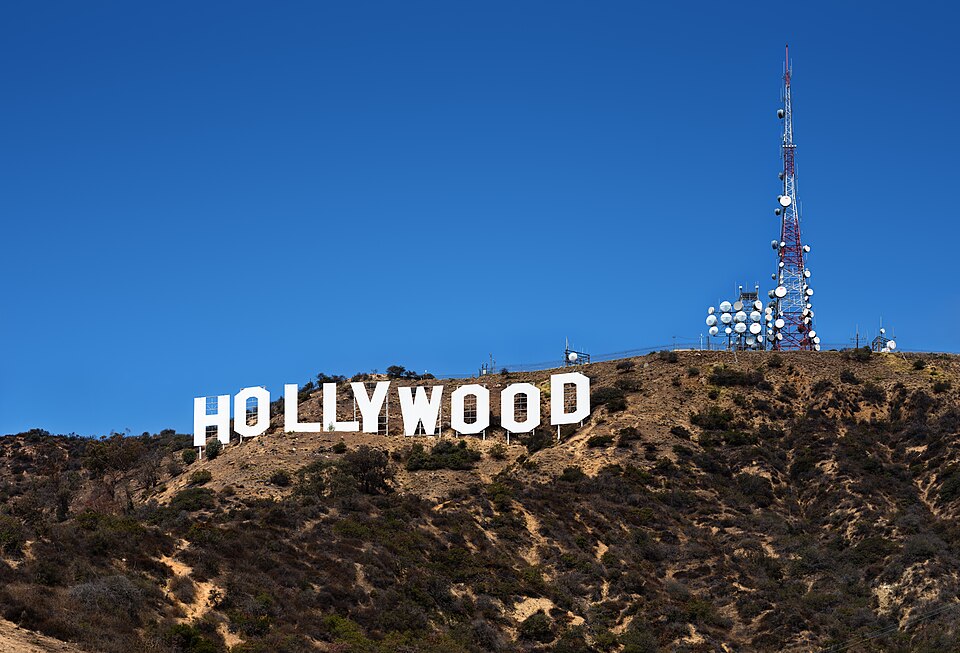
If there is one emblem of American soft power, it is Hollywood. The United States film industry is not just entertainment: it is one of the most powerful instruments of cultural projection ever created.
Global Market Dominance
Hollywood controls approximately 70% of the global film market. American movies are screened in nearly every country in the world, and in many they represent over 80% of box office revenue. This dominance is no accident: it is the result of decades of commercial strategy backed by the U.S. government, which has actively negotiated the opening of film markets worldwide through trade agreements.
The Values Being Exported
Every Hollywood movie is a vehicle for values: individualism, heroism, poetic justice, consumerism, the American Dream, liberal democracy, freedom understood as the ability to choose in the marketplace. These narratives are not presented as propaganda —that would be counterproductive— but as universal stories. But what is “universal” is, in reality, deeply particular: a worldview born in a specific cultural and historical context.
As Nye himself noted: “the best propaganda is the kind that does not look like propaganda.”
The Power to Define the “Bad Guy”
One of Hollywood’s subtlest geopolitical functions is its ability to define who the “bad guy” is in each era. During the Cold War, Soviets were the default antagonists. In the 1990s, terrorists and drug traffickers. In the post-9/11 era, Middle Eastern extremists. More recently, Russian oligarchs and tech moguls. This capacity to shape the collective imagination about who represents a threat is a form of soft power that prepares the ground for hard power policies.
Global Brands: Consumption as Cultural Affiliation
If Hollywood shapes the imagination, global brands shape daily life. Coca-Cola, McDonald’s, Apple, Nike, Google, Netflix, Disney — these are not just companies: they are cultural ambassadors.
The American Lifestyle as a Product
Consuming American products is not merely an economic transaction: it is a symbolic affiliation. Drinking Coca-Cola, wearing Nike sneakers, using an iPhone, or watching Netflix series connects the consumer to a lifestyle, a set of values, and ultimately, a civilization.
Global brands have achieved what no army has ever accomplished: billions of people around the world have voluntarily adopted consumption habits, aesthetics, and aspirations born in the United States. And not only in the U.S.: the phenomenon of “Westernization” has transformed entire societies, from food to clothing, from music to the very conception of personal success.
The Attention Economy as a Battlefield
In the 21st century, cultural control is increasingly exercised through the attention economy. Digital platforms —Google, Meta (Facebook/Instagram), TikTok, X (Twitter), YouTube— are not neutral spaces: they are architectures that shape what we see, what we think, and ultimately, what we are. The algorithm does not merely recommend content: it configures our reality.
The concentration of these platforms in the hands of a handful of American corporations (and increasingly, China’s TikTok) means that control of the global narrative rests in very few hands. Datafication —which we discussed in our article on digital surveillance— combines here with cultural control: data about our tastes, fears, and desires is used to fine-tune messages that keep us within a predetermined framework of thought.
Language as an Instrument of Power
The dominance of English as a global lingua franca is perhaps the most successful example of soft power sustained over centuries. It is no coincidence that science, technology, international business, diplomacy, and global entertainment predominantly operate in English.
The British Tradition and the American Handover
English first expanded with the British Empire, but it was the United States that consolidated its position as a global language in the 20th century. Today, English is an official or co-official language in over 60 countries and is spoken by nearly 1.5 billion people worldwide, though only about 400 million have it as their mother tongue.
English dominance confers an immense strategic advantage: those who publish in English reach global audiences; those who research in English receive more citations and recognition; those who negotiate in English have the communicative initiative. Other languages —including Spanish, spoken by 600 million people— remain relegated to regional status.
Responses from Other Nations
China has responded with the Confucius Institutes, promoting Chinese language and culture worldwide as part of its soft power strategy. Spain maintains the Instituto Cervantes to promote Spanish. France has the Alliance Française. Germany, the Goethe-Institut. But none of these initiatives matches the global reach of English, backed by the American cultural machine.
Education as a Cultural Battlefield
American universities —Harvard, MIT, Stanford, Yale, Columbia— are first-order soft power institutions. They attract the best students from around the world, who then return to their home countries with training, networks, and often a worldview aligned with Western values.
This phenomenon —known as “brain drain” in its departure phase and “return of Western-educated elites” in its return phase— creates a global ruling class trained in the values and institutions of American soft power. There is no need to impose anything: the elites already think like “them” because they were educated to do so.
Baños’ 7 Levers and Cultural Control
In our previous article, we explored Pedro Baños’ 7 levers of domination. The cultural lever is the fifth, and perhaps the subtlest. Let us recall all seven:
- Military — Bases, weaponry, threat.
- Economic — Debt, sanctions, resource control.
- Technological — Cyberwar, surveillance.
- Media — Propaganda, narrative control.
- Cultural — Soft power, entertainment industry, imposed values.
- Mental — Psychological manipulation, perception management.
- Diplomatic — Alliances, international organizations.
The cultural lever and the media lever are intimately related: the former works on values, aspirations, and identity; the latter on information and narrative. Together they form what we could call cognitive control: the ability to shape how we perceive reality.
Soft Power as a Substitute for War
Baños notes that cultural control achieves what no war has ever achieved: that the dominated love their dominators. The Philippines is a paradigmatic case: colonized by the United States, it remains one of the most pro-American countries in Asia, despite —or perhaps thanks to— the deep cultural imprint that American imperialism left on its language, education, religion, and aspirations.
Cultural Imperialism: The Dark Side of Soft Power
Cultural imperialism is the imposition by a dominant group of its own culture upon another community. Unlike natural cultural diffusion —which occurs when cultures interact and exchange influences voluntarily— cultural imperialism involves an asymmetric power relationship.
Herbert Schiller, one of the first theorists of the concept, defined it as “the sum of processes by which a society is brought into the modern world system centered on the United States, and how its dominating stratum is attracted, pressured, forced, and sometimes bribed into shaping social institutions to correspond to the values and structures of the dominating centers of the system.”
The Destruction of Local Cultures
Cultural imperialism does not merely impose foreign values: it erodes and destroys local cultures. When a community abandons its language, music, traditional dress, or forms of social organization to adopt those of the dominant empire, an irreparable loss of cultural diversity and cognitive sovereignty occurs.
This process has been extensively documented in the context of European colonization of the Americas, Africa, and Asia. Colonial powers did not only exploit resources and subjugate populations: they systematically destroyed indigenous cultures, imposing their language, religion, education, and values as “superior.”
Neocolonial Cultural Control in the 21st Century
Today, cultural imperialism rarely requires military occupation. It operates through:
– Trade agreements that open cultural markets.
– Digital platforms that monopolize content distribution.
– Scholarships and educational programs that train aligned elites.
– Development aid conditioned on institutional reforms.
– Entertainment industries that saturate local markets.
The paradox is that this imperialism is often voluntary: people do not feel that anything is being imposed on them. They choose to consume foreign cultural products because they perceive them as better, more modern, more aspirational.
Resistance and Counter-Hegemony
Cultural control has always faced resistance. Cultural decolonization movements, the revival of indigenous languages, the rise of local and regional cultural industries (Bollywood, Nollywood, K-pop, Japanese anime, Latin American telenovelas) demonstrate that cultural hegemony is not a one-way process.
The global success of K-pop and Korean dramas is a fascinating example of successful counter-hegemony: South Korea has built a cultural industry that competes with Hollywood on its own terms, generating significant soft power that has improved its international image and boosted its economy.
China’s “Going Out” Strategy
China has developed its own soft power strategy through the Confucius Institutes, the Belt and Road Initiative (BRI), and investment in global media outlets such as CGTN. Although its success is limited compared to American soft power —Chinese culture lacks the same global appeal as American culture— it represents a growing challenge to the Western monopoly on global narrative.
Connection to the Geopolitics of Control Series
Soft power and cultural control fit perfectly into our investigation of the forms of global domination. As we saw in the article on Pedro Baños and his 7 levers, the cultural lever is one of the most sophisticated because it works on desire, not fear.
It also connects to Chomsky and Herman’s propaganda model: if the media manufacture consent by shaping what we think, mass culture manufactures desire by shaping what we want.
And it links back to our initial reflection on Bertrand de Jouvenel: power expands by nature, and one of its most effective expansions is the one that colonizes minds before territories.
FAQ
What is the difference between soft power and hard power?
Hard power uses coercion —military or economic— to achieve objectives. Soft power uses attraction —cultural, ideological, diplomatic— to make others want what you want. Smart power combines both strategically.
Is soft power inherently bad?
Not necessarily. Soft power can be used for positive purposes (promoting human rights, international cooperation). The problem arises when it becomes cultural imperialism, imposing one worldview over others and eroding cultural diversity.
How does Hollywood contribute to cultural control?
Hollywood controls 70% of the global film market, exporting not only entertainment but specific cultural values: individualism, consumerism, the American Dream. It also defines who the “bad guy” is in each geopolitical era, shaping the global collective imagination.
Can a small country develop soft power?
Yes. South Korea is the clearest example: through K-pop, dramas, and Korean cinema (Parasite), it has built global soft power that competes with much larger countries. Uruguay, Costa Rica, and New Zealand have also developed soft power based on values such as peace, sustainability, or quality of life.
What role do brands play in cultural control?
Global brands act as cultural ambassadors. Consuming American products is an act of symbolic affiliation with a lifestyle. Companies like Coca-Cola, McDonald’s, Apple, and Nike spread cultural values and aspirations far beyond their products.
Conclusion
Soft power and cultural control represent the subtlest frontier of global domination. While wars and economic sanctions are visible and generate resistance, the conquest of minds operates in the shadows of desire and aspiration.
Understanding how it works —from Hollywood movies to the brands we wear, from the language we speak to the universities where we study— is the first step toward reclaiming cognitive sovereignty. Because the most effective control is not the one exercised with tanks, but the one that makes you not even realize you are being controlled.
As Gramsci wrote: “The old world is dying. The new world is slow to appear. And in that chiaroscuro, monsters arise.” Perhaps the most dangerous monster is the one we cannot see because it lives inside our own heads.
If you enjoyed this article, we recommend reading:
– Pedro Baños and the 7 Levers of Global Domination
– Chomsky & Herman: Manufacturing Consent — The Propaganda Model
– Digital Surveillance: From Snowden to Datafication
Related Books
- Soft Power: The Means to Success in World Politics — Joseph S. Nye Jr.
- Prison Notebooks — Antonio Gramsci
- El dominio mundial (Global Domination) — Pedro Baños
- Manufacturing Consent: The Political Economy of the Mass Media — Noam Chomsky and Edward S. Herman
- Open Veins of Latin America — Eduardo Galeano
- Culture and Imperialism — Edward W. Said
Featured image: Hollywood Sign by Thomas Wolf (www.foto-tw.de), licensed under CC BY-SA 3.0.