Introduction
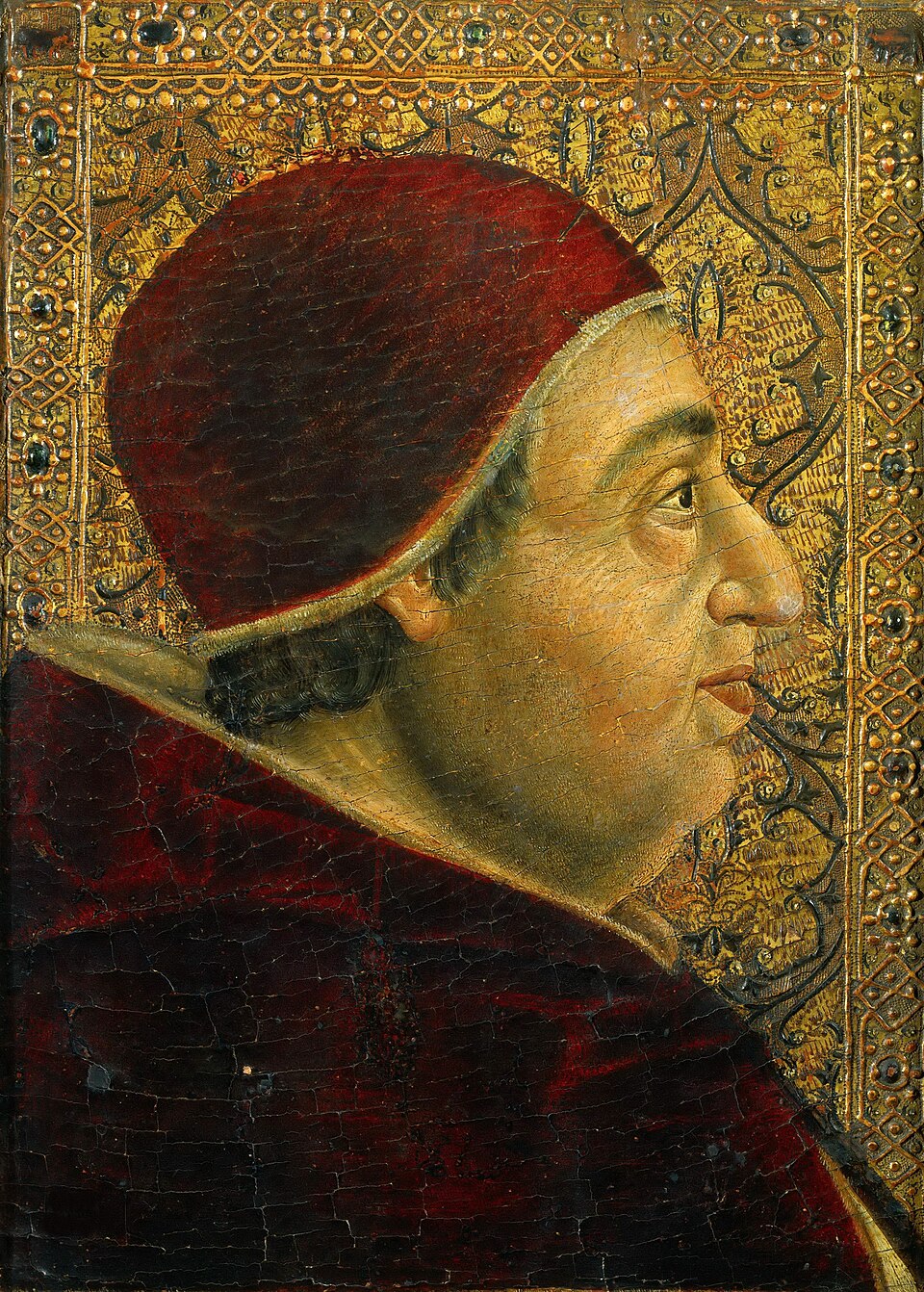
Between 1455 and 1503, the Catholic Church was governed by two Spanish popes, uncle and nephew, belonging to the same Valencian family: the Borja (Borgia, in Italian). Callixtus III (1455–1458) and Alexander VI (1492–1503) represented the pinnacle of Spanish influence in the Vatican.
Since then — more than five hundred years — no Spaniard has ever again become Pope. Not during the 16th century, when the Spanish Empire was the hegemonic power of Europe and the principal defender of Catholicism against the Protestant Reformation. Not during the 17th, when the Spanish tercios dominated European battlefields. Not during the 18th, when the Spanish Bourbon monarchy maintained close ties with Rome. Not in the 19th, 20th, or 21st centuries.
How is it possible that the world’s foremost Catholic power — the nation that invested the most money, blood, and resources in defending the faith — has not had a single Pope in five centuries?
The answer is not religious. It is geopolitical. The last Spanish Pope was, in a certain sense, deposed not by the Vatican but by the European balance of power. Spain’s rival powers — France, the Italian states, the Holy Roman Empire — understood that control of the Papacy was too important a lever of power to leave in the hands of a single nation. And they worked actively to prevent Spain from ever having another Pope.
This article, the second in the «Spain: Laboratory of Control» sub-series, explores how and why Spanish influence in the Vatican was eliminated, and what it tells us about the control of religious power as a geopolitical tool.
The Rise of the Borgias: Two Valencian Popes
Callixtus III (1455–1458): The First
Alfons de Borja was born in 1378 in Torre de Canals, near Xàtiva, in the Kingdom of Valencia. He was a brilliant jurist who served King Alfonso V of Aragon and was subsequently named cardinal. In 1455, at age 77, he was elected Pope under the name Callixtus III.
His pontificate was brief but significant. He promoted his nephew Rodrigo de Borja — the future Alexander VI — to cardinal and organized the defense of Christendom against the Ottoman threat following the fall of Constantinople (1453). However, his rigorous character and his clear inclination toward the interests of the Crown of Aragon generated tensions with the Italian cardinals.
Alexander VI (1492–1503): The Apex
Rodrigo de Borja, Callixtus III’s nephew, was elected Pope in 1492 after a conclave marked by simony and political alliances. His pontificate was one of the most controversial and, also, one of the most influential in history.
Key milestones of his papacy:
– He arbitrated and legitimized the Treaty of Tordesillas (1494), which divided the New World between Spain and Portugal.
– He decisively supported the Catholic Monarchs in their American expansion.
– His bull Inter caetera (1493) laid the legal foundations for the evangelization of the Americas.
– He was a patron of the arts and sponsored artists such as Pinturicchio.
But he was also accused of nepotism, immorality, and using his position to aggrandize his family. His children — Cesare, Lucrezia, Giovanni, and Gioffre Borgia — became protagonists of Renaissance Italian history.
Alexander VI died in 1503. With him ended the era of Spanish popes. After his death, power in the Vatican remained firmly in Italian hands for centuries. But why?
The Conspiracy Against the Spanish Pope
To understand why Spain never had another Pope, we must examine the geopolitical factors that operated after Alexander VI’s death.
1. The Italian Reaction
The Italian cardinals, who had watched the Borgia power with suspicion for decades, acted quickly to regain control of the Papacy after Alexander VI’s death. His successor, Pius III (Italian), lasted only 26 days. He was followed by Julius II (Italian), one of the most warlike popes in history, known as “the Warrior Pope,” whose pontificate was largely dedicated to reducing Spanish influence in Italy.
2. The Sack of Rome (1527)
On May 6, 1527, the troops of Emperor Charles V — Spanish and German — sacked Rome for eight months. It was one of the greatest catastrophes in the city’s history: thousands dead, churches profaned, works of art destroyed. Pope Clement VII (Italian, of the Medici family) had to take refuge in Castel Sant’Angelo and eventually surrendered.
Although the Sack of Rome was partly accidental (the soldiers mutinied when they did not receive their pay), the trauma was immense. For Italians and for the Church, Spain was marked as the power that had violated the sanctity of Rome. From then on, the memory of the Sack of Rome functioned as a tacit veto against any Spanish candidate for the Papacy.
3. The Politics of Balance
France, the Italian states, and other European powers developed an explicit strategy to prevent Spain from controlling the Vatican. In the conclaves, alliances were formed to block Spanish candidates, even when Spain was the dominant power in Europe.
The Spanish monarchy attempted several times to place a Pope favorable to its interests. Philip II, in particular, actively pressured the conclaves of the late 16th century. But he always encountered combined opposition from France and the Italian cardinals.
4. The Black Legend of the Borgias
The reputation of the Borgias was systematically destroyed by their enemies. The accusations of incest, poisoning, and sexual depravity against Alexander VI and his family were exaggerated and, in many cases, invented by his political rivals. This smear campaign — an extension of the Spanish Black Legend — served to discredit not only the Borgias but the very possibility of a Spanish Pope.
It is noteworthy that many of the most scandalous stories about the Borgias — such as the Banquet of Chestnuts or the systematic use of poison — lack reliable contemporary sources and come from writers hostile to Spain, such as the Italians Guicciardini and Machiavelli.
Why Has There Never Been Another Spanish Pope?
Five centuries later, the question remains. There have been popes from almost every European country and, in the 20th and 21st centuries, from Latin America, Africa, and Asia. But not one from Spain.
The reasons are multiple:
1. The Geopolitical Veto: The memory of the Sack of Rome and the fear that Spain would dominate the Church have functioned as an informal but effective veto for centuries.
2. Italian Nationalism: For over 450 years (1523–1978), all popes were Italian. The Church considered that the Pope should be Italian to preserve the Vatican’s independence from foreign powers.
3. Lack of Strong Candidates: Paradoxically, Spain’s power in the Church — the king could appoint bishops through the Patronato Regio — meant that Spanish prelates were seen as too close to political power, which weakened them as papal candidates.
4. The Evolution of the European Balance: When Spain declined as a power in the 18th century, other nations took its place. But by then, the tradition that the Pope should not be Spanish was firmly established.
Connection with the Geopolitics of Control Series
The elimination of the Spanish Pope is a perfect case of control through geopolitical veto. Several of Pedro Baños’ levers of domination are aligned:
- 👥 Diplomatic lever: France and Italy wove alliances in the conclaves to systematically block Spanish candidates.
- 📺 Media lever: The Black Legend of the Borgias discredited the family and, by extension, any Spanish aspirant to the Papacy.
- 🏛️ Military lever: The Sack of Rome (1527) created a trauma that served as moral justification for the veto against Spain for centuries.
This story connects directly with Bertrand de Jouvenel’s thesis: power expands by nature, but it also defends against the expansion of others. Control of the Vatican was a key piece of the European chessboard, and Spain’s rival powers understood that allowing Spain to have a Pope would give it an immense strategic advantage.
The previous article in this sub-series, The Dismantling of the Spanish Empire, showed how Spain’s colonies were taken away. This one shows how one of its most subtle and enduring levers of power — influence over the religious conscience of the West — was stripped from it.
To go deeper, we recommend:
- The Dismantling of the Spanish Empire
- The Black Legend — Propaganda, Narrative Control, and the Destruction of an Empire (coming soon)
- Bertrand de Jouvenel — Power Expands by Nature
- Pedro Baños and the 7 Levers of Domination
FAQ
Who was the last Spanish Pope?
Alexander VI (Rodrigo de Borja, 1492–1503), from Xàtiva (Valencia). He was the last of the two Spanish popes in history — the other was Callixtus III (Alfons de Borja, 1455–1458), his uncle. Since 1503, no Spaniard has occupied the throne of Saint Peter.
Why has there never been another Spanish Pope?
A combination of factors: the tacit veto of European powers (especially France), the trauma of the Sack of Rome (1527), the tradition of Italian popes that lasted until 1978, and the perception that Spanish prelates were too close to the political power of the Spanish monarchy.
Was Alexander VI a corrupt Pope?
The accusations against Alexander VI are numerous, but many come from sources hostile to Spain and the Borgias. Modern historiography tends to moderate these accusations, recognizing that Alexander VI was a politically astute pope who navigated a turbulent era, while also admitting that his nepotism and worldliness were excessive even by the relaxed standards of the Renaissance.
What was the Sack of Rome and why is it important?
It was the looting of Rome by Charles V’s troops in 1527, mostly Spanish and German. It lasted eight months and caused massive destruction. The Sack of Rome traumatized the Church and created a deep resentment toward Spain that functioned as an implicit veto against any Spanish candidate for the Papacy for centuries.
Were there Spanish popes other than the Borgias?
Only two popes in the entire history of the Papacy have been Spanish: Callixtus III and Alexander VI, both from the Borja (Borgia) family. None of the 200 subsequent popes has been Spanish.
Conclusion
The last Spanish Pope was not overthrown by a council or a revolution. He was eliminated by the European geopolitical chessboard, which could not allow a single nation — the most powerful of its time — to also control the spiritual conscience of the West.
The story of the Spanish popes is the story of how power closes itself off against other power. Spain, which had given the Church its warriors, its theologians, and its gold, was systematically excluded from the highest ecclesiastical dignity simply for being too powerful.
For more than five hundred years, the veto against a Spanish Pope has been a silent constant of Vatican politics. There is no written law that prohibits it, but there is a geopolitical law that has prevented it: in the game of power, when someone becomes too strong, others ally to hold them back.
This is the second article of the «Spain: Laboratory of Control» sub-series. Next up: Franco, Kissinger, and the US-tutored Spanish Transition.
📚 Related Books
- The Borgias: Power, Ambition, and Legend — Various authors
- Alexander VI: The Spanish Pope — Joan Francesc Mira
- The Sack of Rome, 1527 — André Chastel
- The Black Legend — Julián Juderías
- The Power (Le Pouvoir) — Bertrand de Jouvenel
- El dominio mundial (Global Domination) — Pedro Baños