Introduction
There are regions in the world that, by their geographic position and their resources, become the center of gravity of global power. The Middle East is, without doubt, the most important of them all. For over a century, the great powers have competed to control this strip of land that connects three continents, holds the world’s largest oil reserves, and is the birthplace of the three monotheistic religions.
This series explores how power has been exercised in the Middle East through every lever of domination: military, economic, diplomatic, media, and technological. From the secret agreements of World War I to the nuclear standoff with Iran, passing through the creation of Israel, the Palestinian tragedy, the wars in Iraq and Libya, and the silent weapon of the petrodollar.
The Stage: The Heart of the World
Halford Mackinder, the father of classical geopolitics, formulated his Heartland theory in 1904: whoever controls the heart of Eurasia will control the World-Island, and whoever controls the World-Island will control the world. The Middle East is not the Heartland, but it is its gateway, its hinge. It is the point where Europe, Asia, and Africa meet, and where the energy routes that fuel the global economy pass through.
Zbigniew Brzezinski, the American geopolitical strategist, updated Mackinder’s thinking in his book The Grand Chessboard (1997). For Brzezinski, Eurasia is a chessboard where the US must prevent at all costs the emergence of a rival power that could challenge its hegemony. The Middle East is the central piece of that board: whoever controls its resources and its routes will have a decisive advantage over any competitor.
Sykes-Picot: The Colonial Partition That Drew the Borders
In 1916, in the midst of World War I, two diplomats —Britain’s Mark Sykes and France’s François Georges-Picot— secretly drew the borders of the Middle East that, for the most part, remain in place today. The Sykes-Picot agreement divided the territories of the Ottoman Empire into British and French zones of influence, without regard for ethnic groups, religions, or cultural realities.
This artificial map created states that had never existed as such: Iraq, Syria, Jordan, Lebanon, Palestine. The straight lines drawn from London and Paris ignored the divisions between Sunnis and Shias, Kurds and Arabs, Druze and Christians. Decades of sectarian conflict and civil wars have their origin in that arbitrary drawing.
Control of the region began, as almost always, with a pencil and a map.
Oil: The Blood of Power
If there is a single factor that explains the powers’ obsession with the Middle East, it is oil. The region holds nearly 50% of the world’s crude oil reserves. Controlling that resource means controlling the global economy.
Control of Middle Eastern oil has been exercised in several ways:
- Direct control: colonies, mandates, military bases, interventions.
- Corporate control: the “Seven Sisters” (Standard Oil, Shell, BP, etc.) dominated extraction and commercialization for decades.
- Financial control: the petrodollar, the agreement by which oil is sold in dollars, forcing any buyer country to hold US currency reserves.
- Military control: the US Fifth Fleet in Bahrain, bases in Qatar, UAE, Kuwait, Saudi Arabia, Turkey, and Iraq.
Any leader who tried to break this control —whether by nationalizing oil, creating alternative currencies, or allying with rival powers— was systematically eliminated. Gaddafi, Saddam, Mossadegh (Iran, 1953), and Hugo Chávez outside the region all share the same pattern.
The Levers of Control in the Middle East
The framework of Pedro Baños’ 7 Levers of Domination applies almost perfectly to the Middle East:
Military lever
The most visible. Invasions (Iraq 1990-91, Iraq 2003), proxy wars (Syria, Yemen), military bases scattered across the region, targeted bombings, drones assassinating enemy leaders. The military-industrial complex found in the Middle East its best customer and its best testing ground.
Economic lever
Oil and the petrodollar are the most powerful economic tools ever designed. Add to these economic sanctions (Iran, Syria, Iraq in the 1990s), exclusion from the SWIFT system, and conditional IMF loans.
Diplomatic lever
The veto in the UN Security Council has been used systematically to protect Israel and to block any resolution condemning Western interventions. The alliance with the Gulf monarchies ensures votes in the General Assembly.
Media lever
Narrative has been key. The demonization of Saddam (weapons of mass destruction that did not exist), of Gaddafi (invented or exaggerated massacres), of Iran (“terrorist regime”). At the same time, the construction of the narrative of Israel as the “only democracy in the Middle East” has legitimized decades of occupation.
Cultural lever
American soft power has penetrated deeply into the region, from military bases exporting the American way of life to the entertainment industry. But there is also powerful cultural resistance: political Islam, pan-Arabism, Iranian nationalism.
Technological lever
Stuxnet, the cyberattack on Iran’s nuclear program, was a turning point. Since then, cyberwarfare has become another dimension of the conflict. States like Israel and the US have an overwhelming technological advantage.
Mental lever
Perhaps the most subtle. Mental control is exercised through fear (terrorism as an excuse for surveillance), disinformation, and the creation of permanent enemies that justify military spending and constant intervention.
The Actors on the Board
Control of the Middle East is not exercised in a vacuum. There are multiple actors with conflicting interests:
- The United States: the hegemon, with bases, fleets, allies, and the ability to intervene at any time. Its alliance with Israel and Saudi Arabia has been the pillar of its regional policy for decades.
- Russia: since its intervention in Syria (2015), it has returned as a key player. Its naval base in Tartus and its alliance with Iran give it a presence it has not had since the Cold War.
- China: the newest but most resource-rich player. Dependent on the region’s oil, it seeks to secure supply without getting militarily involved. Its Belt and Road Initiative passes through the Middle East.
- Britain and France: the former colonial powers maintain military and diplomatic presence, but their influence has drastically diminished.
- Regional powers: Israel, Saudi Arabia, Iran, Turkey, UAE, Qatar, Egypt. Each with its own ambitions and conflicts.
The Common Thread: Debt
As we will see throughout this series, debt has been a control tool as important as oil or military bases. Middle Eastern countries have been indebted, sanctioned, excluded from the global financial system, or forced to accept IMF conditions based on their docility or rebellion.
As David Graeber wrote in Debt: The First 5,000 Years, debt has been humanity’s oldest tool of social control. In the Middle East, that tool has been applied at the scale of sovereign states.
Connection with the Geopolitics of Control Series
This article opens a new series that connects directly with everything we have explored so far. Baños’ 7 levers, Jouvenel’s expansion of power, Graeber’s debt as control, Brzezinski’s Eurasian chessboard, Nkrumah’s neocolonialism, and Quijano’s coloniality of power find in the Middle East their most brutal manifestation.
As Bertrand de Jouvenel wrote in Power, power tends to expand by nature. The Middle East is the place where that expansion has met the most resistance —and therefore, where it has been exercised with the most violence.
Related articles:
– Pedro Baños and the 7 Levers of Domination
– Brzezinski and Mackinder — The Grand Chessboard
– The IMF and the World Bank — The Guardians of Debt
– Confessions of an Economic Hit Man
– Sun Tzu and Classical Strategy
FAQ
Why is the Middle East so geopolitically important?
For three reasons: its strategic position (connecting Europe, Asia, and Africa), its oil and gas reserves (nearly 50% of the world total), and its control over key maritime routes such as the Strait of Hormuz and the Suez Canal.
What was the Sykes-Picot agreement?
A secret 1916 agreement between Britain and France to divide the territories of the Ottoman Empire after World War I. Its artificial borders, drawn without regard for ethnicities or religions, are the root of many current conflicts.
What is the petrodollar?
The agreement by which oil is sold in US dollars, established in 1973 between the US and Saudi Arabia. This forces any country wanting to buy oil to hold dollar reserves, reinforcing US financial hegemony.
Which powers are competing for control of the Middle East today?
Primarily the US, Russia, and China, plus regional powers such as Iran, Israel, Saudi Arabia, and Turkey. Each pursues its own interests on an increasingly multipolar board.
What do Baños’ 7 levers have to do with the Middle East?
Everything. The military, economic, diplomatic, media, cultural, technological, and mental levers have been systematically applied in the region. This series explores how each has been used by the powers to maintain control.
Conclusion
The Middle East is not a chaotic, ungovernable place, as is often portrayed in the media. It is a board where power is played by very clear rules: whoever controls oil controls the global economy; whoever controls the routes controls trade; whoever controls the narratives controls perception.
This series will cover each piece of that board: Israel, Palestine, the petrodollar, Gaddafi, Saddam, Iran, Syria, debt and sanctions. And in the end, we hope to have drawn a clear map of how power has functioned —and continues to function— in the most disputed region on the planet.
Welcome to The Middle East: The Chessboard of Control.
📚 Related Books
- The Grand Chessboard — Zbigniew Brzezinski
- El dominio mundial — Pedro Baños
- Debt: The First 5,000 Years — David Graeber
- Confessions of an Economic Hit Man — John Perkins
- Power — Bertrand de Jouvenel
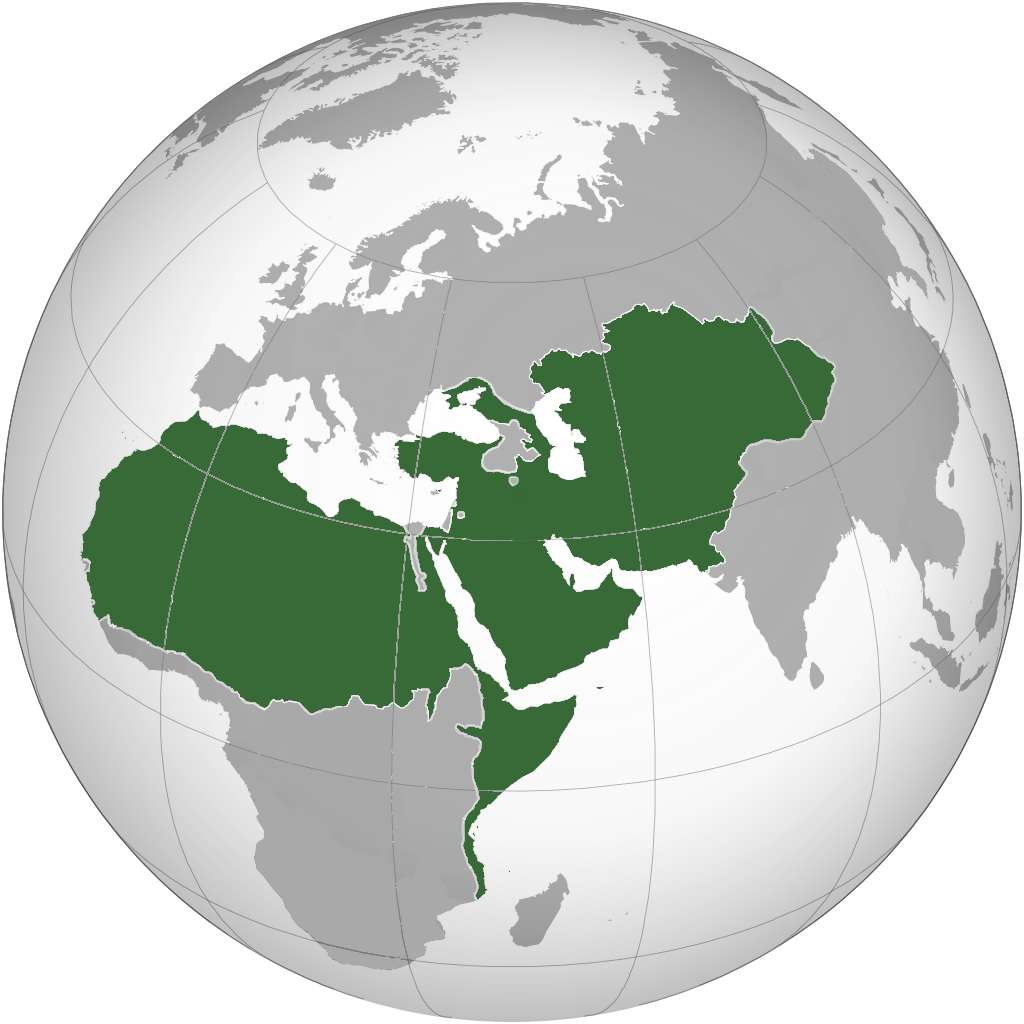
Featured image: Map of the Middle East by RRRRRRRRRRR999, CC BY-SA 4.0, via Wikimedia Commons.