Introduction
In the spring of 1981, Spain experienced one of the greatest health tragedies of the 20th century. Over several weeks, thousands of people began falling ill: fever, muscle pain, skin rashes, breathing difficulties. Hospitals filled with patients exhibiting inexplicable symptoms. Doctors, bewildered, did not know what was causing this epidemic of unknown origin.
The government spoke of a new strain of flu. Then, of an atypical bacteria. Weeks passed before the true cause was identified: denatured rapeseed oil, adulterated and fraudulently sold as olive oil.
The result was devastating: over 20,000 people affected, at least 1,100 dead (some estimates raise the figure to 5,000), and tens of thousands of survivors with permanent sequelae. It was the largest mass poisoning in peacetime in Spain’s history.
But the story of the toxic oil is not just a health tragedy. It is also a case study in how power manages disasters: how responses are delayed, how responsibilities are hidden, how the weak are sacrificed to protect the strong, and how, decades later, unanswered questions continue to weigh on a country’s collective conscience.
This article, the fifth in the «Spain: Laboratory of Control» sub-series, examines the toxic oil case from a geopolitical perspective.
What Was the Toxic Oil Syndrome?
The toxic oil syndrome (TOS) was a mass poisoning caused by the consumption of denatured rapeseed oil that had been adulterated and sold as edible olive oil.
The oil was rapeseed oil — a cheap product originally intended for industrial use — imported from France. In France, the oil had been denatured with aniline (a toxic chemical compound) to make it unfit for human consumption, as required by law for industrial products.
In Spain, a network of intermediaries — with the complicity or negligence of the authorities — reacquired this oil, processed it illegally to remove the color and smell of aniline, and sold it at low prices in street markets and neighborhood shops as if it were olive oil. The population, in a country where olive oil was expensive, bought the fraudulent product en masse.
The result was catastrophic.
The Facts: Timeline of a Foretold Catastrophe
May 1, 1981: The first cases of a mysterious illness are recorded in children from the outskirts of Madrid (Leganés, Fuenlabrada, Alcalá de Henares). Symptoms include high fever, abdominal pain, and skin rashes.
May 1981: Cases multiply. Hospitals in Madrid and other provinces (Castilla y León, Castilla-La Mancha, Basque Country) become saturated. The Ministry of Health speaks of “atypical pneumonia” and later a “flu outbreak.” The identification of the true origin is delayed for weeks.
June 1981: A team of doctors at Madrid’s Niño Jesús Hospital suspects the cheap olive oil. Health authorities, however, are slow to act. On June 10, the government bans the sale of olive oil packaged in plastic jugs and finally identifies adulterated rapeseed oil as the cause.
July 1981: The epidemic begins to subside, but affected individuals continue to increase due to the incubation period. Thousands are now hospitalized. The government creates an investigation commission, but crisis management remains chaotic.
1982-1983: The political scandal erupts. Responsibilities are investigated. Several officials are removed. The prosecutor’s office files charges against importers, intermediaries, and those responsible for the illegal refinery.
1987: The trial begins. It is one of the longest and most complex trials in Spanish judicial history. Thousands of victims await justice.
1997: The verdict acquits most of the accused. Only a few people are convicted of minor offenses. Large companies and the political officials responsible remain outside the process.
Today: Thousands of victims still await full compensation. The case remains open for many affected associations.
The Government’s Response
The government’s handling of the toxic oil crisis was, at best, incompetent. At worst, criminally negligent.
The first symptoms appeared on May 1, 1981. The government took six weeks to identify the cause. During that time:
– Hypotheses pointing to the oil were systematically dismissed
– It was publicly stated that there was no cause for alarm
– Doctors who warned of the link to the oil were ignored or overruled
– Products already under suspicion continued to be sold
When the oil was finally identified as the cause and its sale prohibited, thousands of people had already consumed the product. The sequelae — autoimmune diseases, neurological damage, chronic respiratory problems — would accompany survivors for the rest of their lives.
The Conspiracy Theory
Some researchers and victims’ associations maintain that the poisoning was not an accident but an unintentional experiment or even a test of biological or chemical weapons on the civilian population.
This hypothesis — not judicially proven — is based on several factors:
– Aniline alone does not explain all the observed syndromes
– The symptoms matched exposure to certain organophosphate compounds (used as chemical weapons)
– The slowness of the government response was suspicious
– The destruction of evidence and opacity in case management
Although this theory has not been confirmed, the fact that it persists four decades later reveals the deep distrust that the case generated in the Spanish population toward its institutions.
Responsibility: A System of Impunity
The toxic oil case stands out for how responsibilities were systematically diluted:
- French importers: The French company that sold the denatured oil was never prosecuted in Spain.
- The Spanish government: No high-ranking official of the Calvo-Sotelo (UCD) government or the subsequent González (PSOE) government assumed political responsibility.
- Health authorities: The officials who took weeks to identify the cause never faced consequences.
- Intermediaries: Only a few small distributors were convicted.
The message Spanish society received was devastating: you can poison 20,000 people and cause over 1,000 deaths without anyone truly assuming responsibility.
Connection with the Geopolitics of Control Series
The toxic oil case is an example of control through managed disaster. Several of Pedro Baños’ levers are aligned:
- 📺 Media lever: The government managed the narrative during the critical weeks, minimizing risk and disinforming the population.
- 👥 Diplomatic lever: Relations with France complicated the pursuit of accountability against the exporting company.
- 💰 Economic lever: The interests of the oil industry and trade with France weighed more than public health.
The case also connects with David Graeber’s thesis on how power uses debt and legal responsibility to perpetuate inequality. The toxic oil victims fought for decades for compensation that never fully came, trapped in a bureaucratic and judicial labyrinth that wore them down to death.
To go deeper:
– Spain’s Nuclear Plan
– Franco and Kissinger
– Markets Are Founded on Violence — David Graeber
FAQ
What exactly happened with the rapeseed oil?
In 1981, a network of intermediaries illegally sold industrial rapeseed oil denatured with aniline as if it were edible olive oil. Consuming this oil caused a mass poisoning affecting over 20,000 people and causing at least 1,100 deaths.
How many people died from the toxic oil?
Official figures speak of at least 1,100 deaths, but some victims’ associations raise the figure to over 5,000. The imprecision is due to lack of transparency in case management and the fact that many subsequent deaths related to sequelae were not counted as part of the tragedy.
Were there criminal convictions?
Yes, but very few relative to the magnitude of the disaster. A few small distributors were convicted, but the large importers, political officials, and bureaucrats who delayed identification of the problem were never properly prosecuted. The case is considered an example of structural impunity.
Was the toxic oil a biological experiment?
An unproven theory suggests the poisoning may have been caused by organophosphate compounds present in the oil, possibly as a result of an unintentional experiment or even a chemical weapons test on the civilian population. This hypothesis has not been judicially confirmed but continues to be defended by some victims’ associations.
Why did the government take so long to identify the cause?
The government took six weeks to identify rapeseed oil as the cause of the poisoning. Official reasons cited diagnostic complexity, but critics point to a combination of incompetence, desire to minimize public alarm, and possible protection of commercial interests.
Conclusion
The toxic oil case is an open wound in Spain’s history. Over 20,000 people were poisoned. Over 1,000 died. Thousands more suffer sequelae forty years later.
And those who caused the tragedy — or who could have prevented it with faster and more honest action — never faced accountability.
Control through disaster does not always require a visible hand. Sometimes negligence, bureaucracy, and lack of transparency are enough for power to protect itself while the most vulnerable pay the price.
The lesson of the toxic oil is that impunity is also a form of control. When a system shows it can poison thousands of people without consequences for those truly responsible, it sends a clear message: power stands above justice.
This is the fifth article of the «Spain: Laboratory of Control» sub-series.
📚 Related Books
- The Toxic Oil Syndrome — José Antonio Nieto (Spanish)
- Debt: The First 5,000 Years — David Graeber
- The Power (Le Pouvoir) — Bertrand de Jouvenel
- El dominio mundial (Global Domination) — Pedro Baños
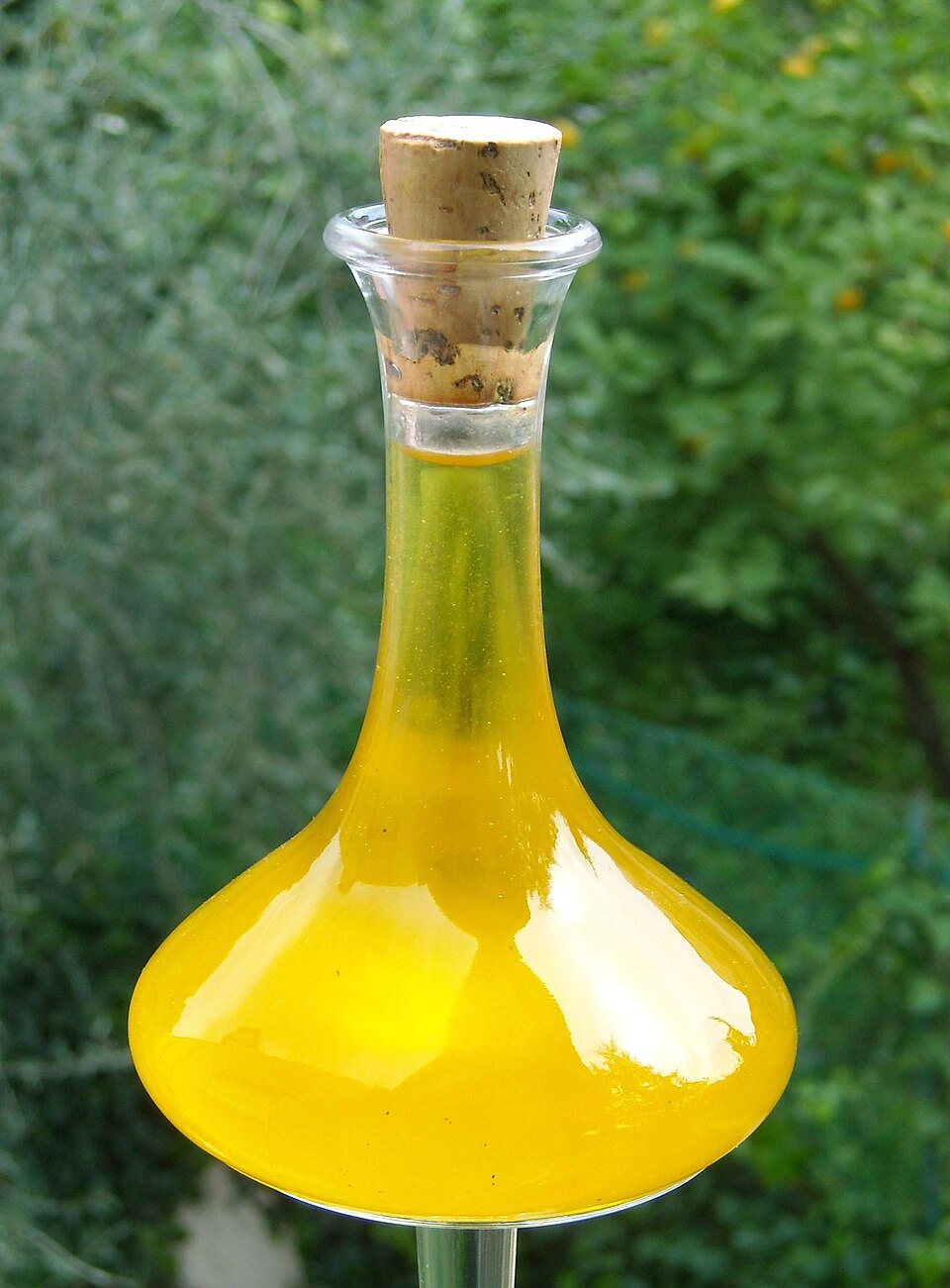
Featured image: Olive oil from Oneglia. Source: Wikimedia Commons, public domain.
