Introduction
In the 1950s, Spain launched an ambitious nuclear program. It created the Junta de Energía Nuclear (JEN), explored uranium deposits on its own soil, trained scientists and engineers, and planned the construction of up to seven nuclear power plants that were to free the country from its energy dependence on foreign sources.
Spain had uranium. It had technology. It had scientists. It had a plan.
Fifty years later, Spain imports almost all the uranium it consumes, its existing nuclear plants have scheduled closure dates, and no new plant has been built in decades. The country that could have been a nuclear energy power has become a net importer of nuclear fuel and depends on France and Morocco for its electricity supply.
What happened? Why was Spain’s nuclear plan truncated? Was it a technical, economic, or political decision? Or was there something more — external pressures, convenient accidents, geopolitical interests — behind the abandonment of Spain’s energy independence?
This article, the fourth in the «Spain: Laboratory of Control» sub-series, explores the history of the Spanish nuclear program and the forces that dismantled it.
The Origins: the Junta de Energía Nuclear (1951)
In 1951, seven years before the IAEA (International Atomic Energy Agency) was created, Spain founded the Junta de Energía Nuclear (JEN). It was one of the first nuclear research agencies in Europe, created by scientist José María Otero de Navascués.
The JEN established its headquarters in Madrid’s University City, built laboratories, experimental reactors, and a mineral processing plant. In 1958, Spain started up its first experimental nuclear reactor, the JEN-1, of national design and construction.
In 1960, the JEN began systematic uranium exploration in Spain. The results were promising: significant deposits were identified in Salamanca (Mina Fe), Badajoz, Ciudad Real, Cáceres, La Rioja, and other provinces. Spain had uranium to fuel its plants for decades.
The Golden Age: 1964-1975
The First Economic and Social Development Plan (1964-1967) included nuclear energy as one of its pillars. The construction of nuclear plants was planned to reduce dependence on imported oil, at a time when Franco was seeking to modernize the country.
The first plants:
– José Cabrera (Zorita, 1968): Spain’s first nuclear plant, a 150 MW PWR reactor.
– Santa María de Garoña (1971): A 460 MW BWR reactor.
– Vandellós I (1972): A 500 MW gas-graphite reactor, of French technology.
These would be followed by Almaraz I and II, Ascó I and II, Cofrentes, and Trillo. But the original plan was much more ambitious.
The Grand Plan: Seven Plants and More
The National Energy Plan of the 1970s contemplated the construction of seven new nuclear plants in addition to those already planned. The goal was for nuclear energy to provide a large part of Spain’s electricity, drastically reducing oil dependence.
The planned locations included:
– Escatrón (Zaragoza)
– Otos del Broto (Valencia) — a project with a Spanish-designed plant
– Region of Murcia
– And several more in different autonomous communities
In total, Spain considered building more than a dozen reactors in different planning phases. Had it succeeded, Spain would have been one of Europe’s nuclear powers, with its own sovereign energy industry.
The Beginning of the End: Palomares (1966)
On January 17, 1966, a US B-52 bomber carrying four thermonuclear bombs collided with a KC-135 tanker during in-flight refueling off the coast of Almería. Both planes disintegrated and the bombs fell on the fields of Palomares.
Two of the bombs ruptured on impact, releasing radioactive material (plutonium and enriched uranium). A third fell intact near the Almanzora riverbed. The fourth fell into the Mediterranean Sea and was recovered after an 80-day search operation.
The Palomares accident — known as “the Palomares bombs incident” — was a turning point in public perception of nuclear energy in Spain. The image of Spanish peasants shoveling contaminated soil while US soldiers watched from armored vehicles became etched in the collective memory.
The Spanish government accepted a confidentiality agreement with the United States, and the contaminated soil was sent to Savannah River (South Carolina) for treatment. The United States cleaned the area — or so they said — and the incident was buried in diplomatic archives.
But the seed of nuclear fear was planted. And the United States, which was Spain’s main nuclear technology supplier (except for Vandellós I, of French technology), had a strategic interest in Spain not developing a completely autonomous nuclear program.
The Turning Point: the Nuclear Moratorium (1983)
The government of Felipe González (PSOE), elected in 1982, had included the halt of the nuclear program in its electoral platform. In 1983, the government announced the nuclear moratorium: construction of five reactors in different planning phases was suspended.
The canceled projects were:
– Trillo II (Guadalajara)
– Escatrón (Zaragoza)
– Otos del Broto (Valencia)
– Two more reactors in different locations
The official reasons were economic: the cost overruns of the plants, the drop in electricity demand after the 1979 oil crisis, and growing social opposition. But the real reasons were more complex.
The 1983 nuclear moratorium was not just a technical decision. It was the result of several converging factors:
- Social pressure: The Spanish anti-nuclear movement, fueled by the memory of Palomares and the Three Mile Island accident (1979), had gained strength.
- International pressure: The United States viewed an autonomous Spanish nuclear program with suspicion. Non-proliferation was (and is) one of the priorities of US foreign policy.
- Foreign debt: Spain carried considerable foreign debt and nuclear projects were enormously expensive.
- Chernobyl (1986): The Ukrainian disaster buried any possibility of reviving the program.
The Hidden Interests: Who Benefited from the End of the Nuclear Plan?
To analyze control through energy, one must ask who benefited from Spain not developing its own complete nuclear program:
- The United States: A supplier of nuclear technology (Westinghouse, General Electric), but also a guarantor of non-proliferation. A Spain with autonomous nuclear capacity — including the possible fabrication of enriched nuclear fuel — would have been a harder player to control.
- France: With its powerful nuclear industry (Areva, EDF), France became Spain’s main energy partner. The electrical interconnection with France, though limited, made Spain partially dependent on its northern neighbor.
- Energy oligopolies: Large Spanish electricity companies (Endesa, Iberdrola, Unión Fenosa) benefited from a centralized and controlled energy market without competition from a public nuclear industry.
- Uranium-producing countries: Spain stopped exploiting its own uranium (Mina Fe in Salamanca was closed in the 1990s) and began importing from Niger, Canada, and Australia.
Connection with the Geopolitics of Control Series
The case of the Spanish nuclear plan is an example of control through energy dependence, connecting with several of Pedro Baños’ levers:
- 💰 Economic lever: Spain abandoned its potential energy sovereignty to integrate into a global energy market controlled by great powers.
- 📡 Technological lever: Spanish nuclear technology (JEN) was progressively replaced by foreign technology (Westinghouse, General Electric, Framatome).
- 🏛️ Military lever: Palomares showed who really controlled nuclear energy on Spanish soil, and the Spanish government accepted Washington’s conditions.
It also connects with Bertrand de Jouvenel’s thesis on the expansion of power: energy is power, and whoever controls energy controls the country. That Spain did not exploit its own uranium or develop its nuclear technology was not an accident: it was the result of a geopolitical chessboard where the big pieces always win.
To go deeper:
– Franco and Kissinger — How the US Managed the Spanish Transition
– Energy Control: Oil, Gas and Resources
– Digital Colonialism
FAQ
Did Spain have its own uranium for its plants?
Yes. Spain had and still has uranium deposits, especially in Salamanca (Mina Fe), Badajoz, Ciudad Real, and La Rioja. Spain’s reserves have been estimated to be able to supply existing nuclear plants for about 17 years. However, since the 1990s, hardly any uranium is extracted in Spain, and what is consumed is imported.
How many nuclear plants were canceled with the 1983 moratorium?
Five reactors in different planning phases were canceled: Trillo II, Escatrón, Otos del Broto (Valencia), and two more in other locations. The cost of the moratorium was paid by Spanish consumers through a surcharge on their electricity bills that lasted for decades.
Could Spain have developed nuclear weapons?
Technically, Spain had the capacity. The JEN had developed advanced knowledge in nuclear technology, and Spain possessed uranium. However, international pressure — especially from the United States — and the non-proliferation agreements signed by Spain prevented any military development.
What was the Palomares accident?
On January 17, 1966, a US B-52 bomber carrying four thermonuclear bombs collided with a tanker aircraft over Almería. Two bombs released radioactive material over the fields of Palomares. The Spanish government accepted the cleanup conditions imposed by the United States, and the incident was classified as a diplomatic secret for decades.
Why does Spain not exploit its uranium?
Current Spanish legislation practically prohibits uranium mining for environmental and political reasons. The Mina Fe (Salamanca), one of Europe’s largest uranium deposits, was closed in the 1990s, and several attempts to reopen it have failed due to social and legal opposition.
Conclusion
The Spanish nuclear plan is the story of a lost opportunity. Spain had uranium, technology, scientists, and a plan to build a sovereign energy industry. But a combination of accidents (Palomares), political decisions (the 1983 moratorium), external pressure (the United States, France), and changes in the global context (Chernobyl) truncated that project.
The result is a country that imports almost all its uranium, depends on interconnection with France and Morocco, and has lost much of its decision-making capacity in energy matters. Energy is sovereignty, and Spain’s sovereignty in nuclear matters was dismantled piece by piece.
This is the fourth article of the «Spain: Laboratory of Control» sub-series.
📚 Related Books
- History of Nuclear Energy in Spain — Various authors
- Palomares: The Bomb Incident — Juan Antonio de la Cruz
- The Power (Le Pouvoir) — Bertrand de Jouvenel
- El dominio mundial (Global Domination) — Pedro Baños
- Energy as a Geopolitical Weapon — Michael T. Klare
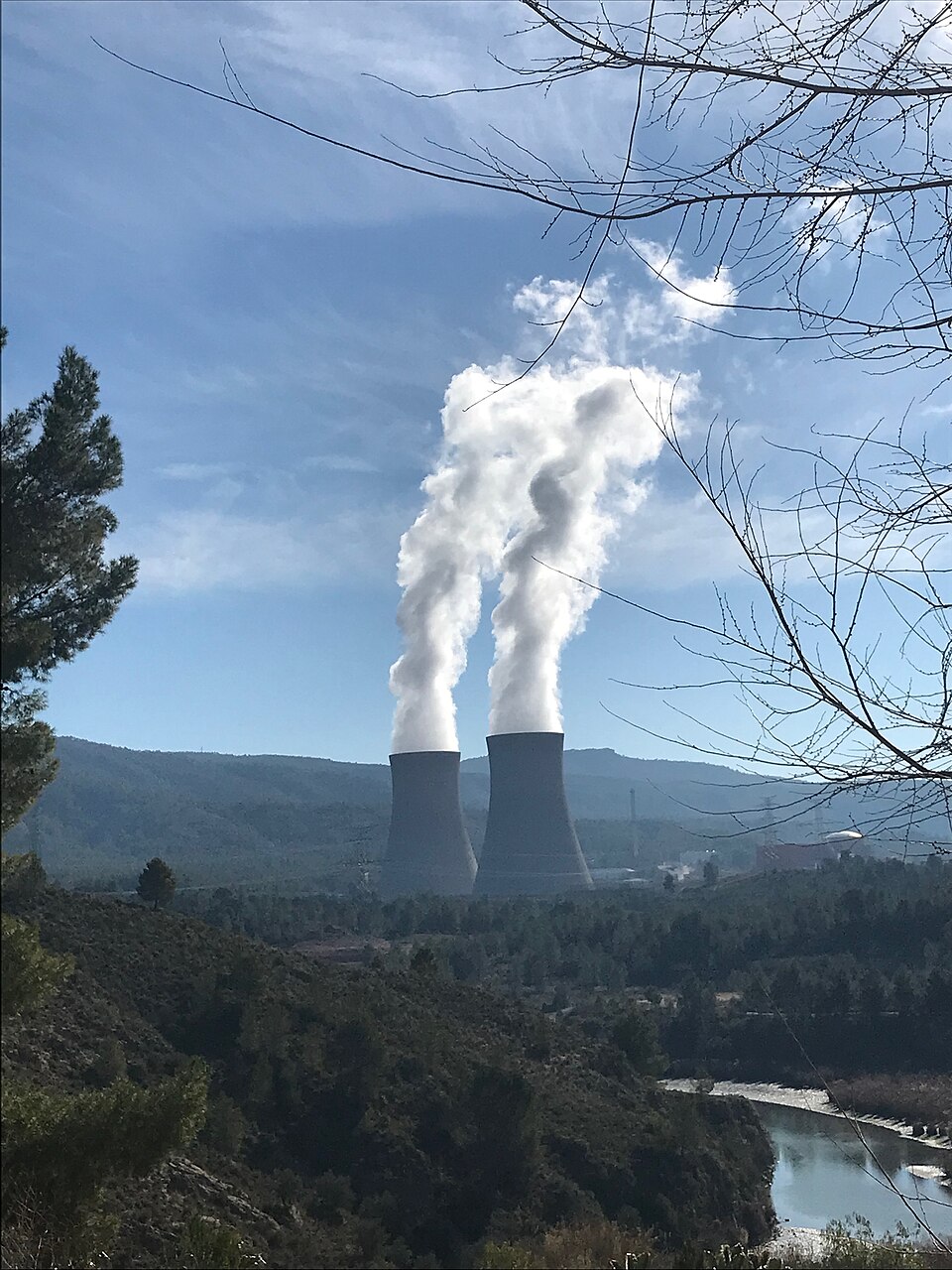
Featured image: Cofrentes nuclear power plant by Håkan Svensson, CC BY-SA 3.0, via Wikimedia Commons.
