Introduction
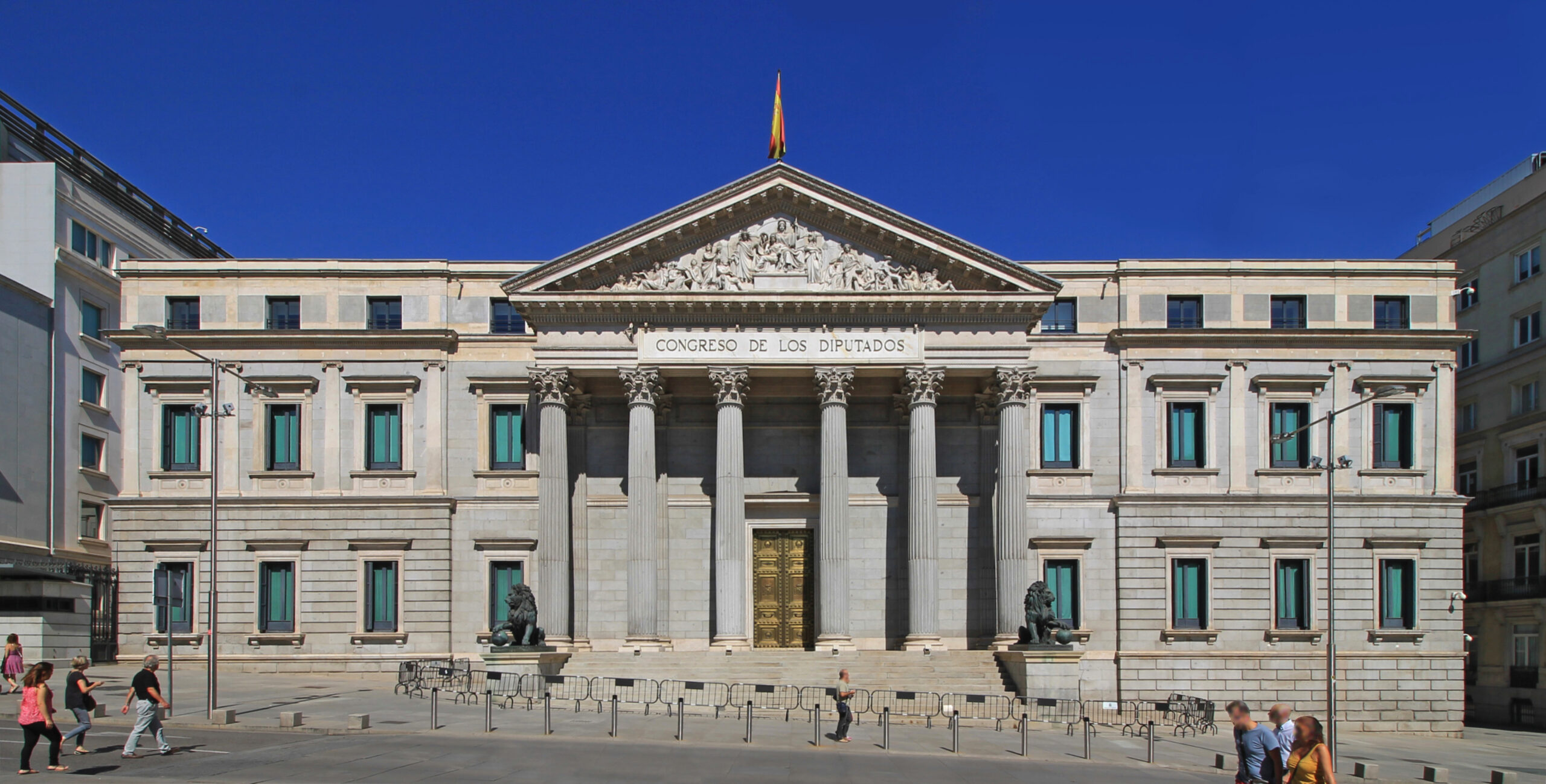
At 6:23 PM on February 23, 1981, Spain changed forever. Two hundred Civil Guards under Lieutenant Colonel Antonio Tejero stormed into the Congress of Deputies shouting “Everybody stay down!” as the investiture of Prime Minister-designate Leopoldo Calvo-Sotelo was being voted on. For eighteen hours, the country held its breath as tanks rolled into the streets of Valencia and the world watched in suspense.
Forty-five years later, the documents declassified by the Spanish government in February 2026 have revealed new details about that night. But the fundamental questions remain unanswered: was it a real coup, a rebellion by nostalgic Francoist officers? Or was it a controlled operation —perhaps even orchestrated— to frighten the country and consolidate the Transition exactly on the terms that the political and economic elites had agreed upon?
Background: The Fragile Transition
To understand the 23-F, one must understand the historical moment. Spain had been without Franco for barely six years. The dictatorship had ended in 1975, but the Transition to democracy was fragile and fraught with uncertainty.
Between 1978 and 1980, ETA lived through its “years of lead,” assassinating military officers, Civil Guards, and police officers. Discontent in the Army was growing as many Francoist officers viewed the rapid shift toward democracy and the recognition of regional autonomies as unacceptable. The legalization of the Communist Party in 1977 had been a shock to the most immobile sectors.
Adolfo Suárez, the president who had steered the Transition, resigned on January 29, 1981, pressured by internal conflicts within his own party, UCD, and growing tensions with the king. His successor, Leopoldo Calvo-Sotelo, was to be invested on February 23. The coup plotters chose that moment: the change of government was the perfect opportunity.
The Chronology of the Coup
6:23 PM — Tejero and his Civil Guards enter Congress. Three deputies remain seated, defying the order to hit the floor: former President Adolfo Suárez, Vice President Manuel Gutiérrez Mellado, and Communist leader Santiago Carrillo. Gutiérrez Mellado struggles with Tejero. The coup plotters fire into the air.
9:00 PM — Lieutenant General Jaime Milans del Bosch, Captain General of Valencia, sends tanks into the streets and declares a state of war in his region.
11:50 PM — General Alfonso Armada, the king’s former military instructor, enters Congress to negotiate with Tejero. His plan —the so-called “Operation Armada”— was to form a national unity government with himself as prime minister.
1:15 AM, February 24 — King Juan Carlos I appears on television in full military uniform and orders the rebels to stand down. The speech is decisive.
Past noon, February 24 — Tejero surrenders. The deputies are freed. The coup has failed.
The Protagonists and Their Shadows
Each of the 23-F protagonists left unanswered questions:
Antonio Tejero was sentenced to 30 years. Released on parole in 1996, he remains alive today, out of public life but never having clarified who was behind him.
Jaime Milans del Bosch was sentenced to 30 years, released in 1991 due to age, and died in 1997. His role was key: without his support, the coup would never have reached the scale it did.
Alfonso Armada, the king’s military instructor and former secretary general of the Royal Household until 1977, was the great mystery. Sentenced to 30 years, pardoned by González’s government after only five years in prison. During the trial, it was never clear whether he was acting on the king’s behalf or on his own.
King Juan Carlos I — his televised speech was presented as the act that saved democracy, but doubts about whether he knew what was being planned have persisted for decades.
Sabino Fernández Campo, secretary general of the Royal Household, was the one who actually coordinated the response to the coup from Zaragoza, according to the declassified documents. His role was more active than the king’s in the critical moments.
The Theories: Real Coup vs. Controlled Operation
The 23-F has generated three major theories that are still debated today:
Theory 1: A Real Coup by Francoist Officers
The official version: a group of military officers nostalgic for Francoism, led by Tejero and Milans del Bosch, attempted a coup. The king, faithful to the Constitution, stopped it with his speech. Democracy was saved by the Crown.
Theory 2: “Operation Armada” — A Controlled Coup
Alfonso Armada proposed a soft coup: a national unity government that included military officers and politicians from all parties (except the extremes) to “correct” the course of democracy, limiting regional autonomies and union power. Armada claimed to have the king’s support —a claim that has never been officially confirmed or denied.
According to this theory, Tejero’s coup was the violent part of a broader operation that got out of control: Armada wanted a unity government, Tejero wanted a pure military junta. Their disagreement inside Congress —when Tejero rejected Armada’s proposal— was what actually saved the situation.
Theory 3: The Coup as a Pretext for the Transition
The most elaborate theory suggests that the 23-F was, if not orchestrated, then at least permitted by sectors of the establishment to achieve two goals: discredit the most extreme sectors of the Army and, simultaneously, frighten the left and peripheral nationalists into accepting the Transition on the elites’ terms.
The result of the 23-F was paradoxical: it strengthened the king’s figure, accelerated Spain’s entry into NATO (which occurred in 1982), and consolidated a two-party system that marginalized extremes. Everything that the moderate sectors of power wanted.
What the 2026 Declassified Documents Revealed
In February 2026, on the 45th anniversary, the Spanish government declassified 100% of the documents related to the 23-F. Over 150 files that had remained secret in the CNI and other institutions.
The most important revelations:
- 12 hours at the Zarzuela Palace: the documents detail the king’s phone conversations with Milans del Bosch, Armada, and other military commanders during the night of the coup. It is confirmed that the king repeatedly called Milans to order him to stand down, but also that he maintained contact with Armada before he entered Congress.
- Orders to shoot to kill: it was confirmed that the coup plotters had orders to shoot to kill deputies if the situation required it.
- Sabino Fernández Campo’s role: the documents reveal that he, rather than the king directly, coordinated much of the response from Zaragoza, where he was when the coup began.
- International reaction: messages of support from world leaders were declassified, including one from Queen Elizabeth II to Juan Carlos I: “All of us in Great Britain are reassured to know the final result.”
However, the documents do not resolve the central question: did the king know what Armada was planning? The ambiguity remains.
The Mystery as a Tool of Control
Regardless of what actually happened that night, the 23-F itself has become a tool of political control. The lack of total transparency, the half-truths, the theories that have never been denied or confirmed, and the figure of the king as the savior of democracy have created a narrative that has served very specific interests:
- It legitimized the Crown as the guarantor of democracy against the extremes.
- It defused any criticism of the Transition model — accepting the constitutional pact was the price of not returning to the past.
- It silenced the most critical sectors of the Army and the far right.
- It allowed Spain to join NATO with barely any opposition, presenting it as part of the democratic agreement.
As Bertrand de Jouvenel wrote in Power, power tends to expand by nature, and one of its most effective tools is uncertainty. The 23-F is a perfect example: forty-five years later, we still do not know the whole truth, and that perpetual doubt is, in itself, an instrument of control.
Connection with the Geopolitics of Control Series
The 23-F fits into several of the levers of domination:
- Military lever: the coup was an attempt by military power to impose itself over civilian power.
- Media lever: the king’s speech on state television was the decisive element. Television as a political weapon.
- Mental lever: the narrative of the “king who saved democracy” has functioned as a narrative control tool for decades.
- Diplomatic lever: entry into NATO, accelerated by the coup, definitively aligned Spain with the Western bloc.
Related articles:
– Franco and Kissinger — How the US Managed the Spanish Transition
– The Assassination of Carrero Blanco — The Death of Franco’s Heir
– The Division of Power After Franco’s Death
– Gibraltar: The Thorn in Spain’s Side Since 1704
FAQ
What was the 23-F?
It was an attempted coup d’état that took place on February 23, 1981 in Spain. A group of Civil Guards under Lieutenant Colonel Antonio Tejero stormed the Congress of Deputies while the investiture of the new prime minister was being voted on.
Who stopped the 23-F coup?
Officially, King Juan Carlos I, with a televised speech in the early hours of February 24 ordering the rebel military to stand down. However, the 2026 declassified documents reveal that the secretary general of the Royal Household, Sabino Fernández Campo, had a more active role in coordinating the response.
What was Operation Armada?
It was General Alfonso Armada’s plan to form a national unity government after the coup, supposedly with the king’s support. Armada entered Congress on the night of the 23-F to negotiate with Tejero, but Tejero rejected the proposal, preferring a purely military junta.
What did the 2026 declassified documents reveal?
Over 150 files detailing the king’s phone conversations during the night of the coup, the orders to shoot to kill that the coup plotters had, the key role of Sabino Fernández Campo, and the reaction of international leaders such as Queen Elizabeth II.
Why is the 23-F still a mystery?
Because the fundamental questions —whether the king knew what was being planned, whether Armada was acting on his behalf, whether the coup was real or controlled— have never received a clear official answer. The ambiguity has benefited all the actors involved.
Conclusion
The 23-F remains, forty-five years later, the great enigma of Spanish democracy. The theories about whether it was a real coup, a controlled operation, or a mixture of both will continue to be debated until the documents still awaiting declassification are fully clarified.
But beyond what happened that night, the 23-F teaches us something fundamental about power: the mystery itself can be the most effective tool of control. While the country debates what did or did not happen, the political system that emerged from that crisis —constitutional monarchy, two-party system, NATO membership— remains intact. And perhaps that is the true lesson of the 23-F.
📚 Related Books
- Power — Bertrand de Jouvenel
- El dominio mundial — Pedro Baños
- The Grand Chessboard — Zbigniew Brzezinski
Featured image: Congress of Deputies (Palacio de las Cortes) by Luis García (Zaqarbal), CC BY-SA 4.0, via Wikimedia Commons.