Introduction
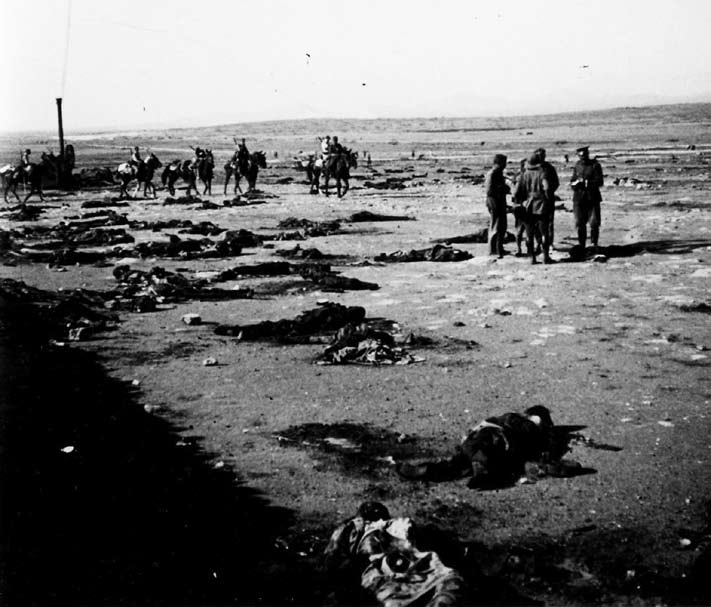
Between July 22 and August 9, 1921, the Spanish army suffered what many historians consider its worst defeat in modern times. Near the village of Annual, in the Spanish protectorate of Morocco, more than 13,000 Spanish soldiers lost their lives in a series of battles that ended in a chaotic retreat, the slaughter of surrendered troops, and the temporary collapse of Spain’s presence in the Rif.
But the Disaster of Annual was not just a military catastrophe. It was a political earthquake that shook the foundations of King Alfonso XIII’s liberal monarchy, triggered an official investigation —the Picasso File— that pointed directly at the Crown, and was ultimately buried by a military coup in 1923. The question that lingers a century later is unsettling: was Annual the result of incompetence alone, or were deeper interests at play?
Within the framework of our series Spain: Laboratory of Control, we examine Annual as a possible case of control through strategic humiliation: a defeat so massive that it weakened Spain, discredited its institutions, and paved the way for forces —both internal and external— seeking to reshape the country.
The Context: Spain in the Rif
To understand Annual, one must understand the Rif War and Spain’s colonial presence in Morocco.
The Spanish Protectorate in Morocco
Following the Algeciras Conference (1906) and the Treaty of Fez (1912), Spain was assigned the administration of northern Morocco as a protectorate. Officially, it was a “civilizing mission.” In practice, it was a disastrously managed colonial enterprise: a mountainous, hostile territory sparsely populated by independent Berber tribes who had never accepted foreign rule.
The Rif was an ungovernable region. The tribal cabildos (clans) organized guerrilla resistance against Spanish occupation with tactics for which the Spanish army was utterly unprepared. The soldiers were conscripts serving in miserable conditions: poorly dressed, shod in rope-soled espadrilles, armed with obsolete weapons, and subjected to widespread corruption that diverted supplies away from the troops.
General Silvestre and Reckless Ambition
General Manuel Fernández Silvestre, commander of the Melilla Command, was impetuous, arrogant, and a personal favorite of King Alfonso XIII. Between 1920 and 1921, Silvestre led a spectacular advance: in just over a year, his troops pushed 130 kilometers into the Rif, establishing 46 new positions and occupying the village of Annual.
But this advance was fragile. Supply lines had been stretched dangerously thin. The Spanish positions —144 scattered outposts and blockhouses— were poorly communicated, and many lacked access to drinking water. The tribes supposedly “pacified” through bribery had not been disarmed. It was a bubble waiting to burst.
The Battle: From Annual to Monte Arruit
The Ignored Warning: Mount Abarrán
On June 1, 1921, Rifian fighters attacked and captured Mount Abarrán, a position the Spanish had barely occupied hours earlier. 179 soldiers died. It was a clear warning, but Silvestre ignored it. He pressed on, establishing a new forward position at Igueriben.
The Siege of Igueriben
On July 14, Igueriben was surrounded by the warriors of Abd el-Krim, leader of the Beni Urriaguel tribe. For a week, the 300 defenders held out without water, under a merciless sun, while Rifian artillery pounded them from the heights. On July 21, the position fell. Only 33 men survived.
The Collapse at Annual
The next day, July 22, Silvestre ordered the evacuation of Annual. What should have been an orderly withdrawal turned into a rout. Indigenous units —regulares and native police— deserted en masse and joined the enemy. Spanish conscripts, left without flank protection, exhausted and terrified, were cut down as they fled.
General Silvestre vanished. His body was never found. Some witnesses said he shot himself. Others claimed he died in combat. Legend has it that, before dying, he shouted to his men: “Run, run, little soldiers, the bogeyman is coming!”
Only one unit, the Cazadores de Alcántara cavalry regiment, maintained formation and covered the retreat, suffering terrible losses in the process.
The Betrayal at Monte Arruit
The survivors —about 3,000 men— reached the fort at Monte Arruit, 35 kilometers from Melilla. There they held out for twelve days, surrounded, without water or ammunition. On August 9, General Felipe Navarro negotiated a surrender: the soldiers would hand over their weapons and be allowed to retreat to Melilla.
The Rifians did not honor the agreement. Once disarmed, all 3,000 soldiers were executed. Only the officers were taken prisoner for ransom.
Melilla, just 40 kilometers away, teetered on the brink. Had Abd el-Krim attacked the city, he would likely have taken it. But he did not. He feared triggering international intervention. Years later, he admitted it was his greatest mistake.
The Scale of the Catastrophe
The official figures presented to the Spanish parliament were staggering:
- 13,192 killed among Spanish and colonial troops
- 11,000 rifles, 3,000 carbines, 60 machine guns, 100 cannons lost
- 2,000 horses and 1,500 mules captured
- More than 130 blockhouses destroyed or abandoned
Abd el-Krim summed it up with bitter irony: “In just one night, Spain supplied us with all the equipment we needed to carry on a big war.”
Rifian casualties: about 800 dead and wounded. The disparity is so brutal that it is difficult to explain merely by Rifian tactical superiority.
The Political Aftermath: An Earthquake
The Picasso File
The government appointed General Juan Picasso (no relation to the painter) to investigate. The Picasso File, presented in July 1922, was devastating: it documented the incompetence, corruption, and lack of foresight among the military leadership.
But the most explosive finding was what it implied: that King Alfonso XIII had personally encouraged Silvestre’s reckless offensive. According to testimony gathered in the file, the monarch had pressured for the Bay of Alhucemas to be reached as quickly as possible.
Parliament established a Commission of Responsibilities. The political debate grew so intense that it threatened to delegitimize the monarchy itself.
Primo de Rivera’s Coup
On September 13, 1923, Captain General of Catalonia Miguel Primo de Rivera staged a coup. Alfonso XIII not only failed to resist it but actively supported it, appointing Primo de Rivera head of a Military Directorate.
The coup had a very convenient side effect: it buried the Picasso File and the Commission of Responsibilities. Investigations into the king’s involvement in Annual were shelved forever.
In 1924, Alfonso XIII granted amnesty to the only person convicted for the disaster: General Dámaso Berenguer, who had been High Commissioner in Morocco at the time.
The Crisis of the Restoration
Annual accelerated the terminal crisis of the Restoration system —the controlled alternation of conservative and liberal parties that had governed Spain since 1876. The monarchy lost much of its legitimacy. Primo de Rivera’s dictatorship was a seven-year parenthesis that, when it failed, led directly to the proclamation of the Second Republic in 1931.
Strategic Humiliation or Incompetence?
Here we arrive at the core of our analysis from a control perspective.
The Incompetence Thesis
The most widely accepted version is that Annual resulted from a chain of human errors: an impetuous general (Silvestre), a High Commissioner who failed to stop him (Berenguer), a king who encouraged recklessness (Alfonso XIII), a poorly equipped and corrupt army, and a tactically superior enemy.
The Control Thesis
But one must ask: who truly benefited from the Disaster of Annual?
- It deeply weakened Spain at a critical moment. The loss of 13,000 soldiers, the international humiliation, and the political crisis reduced the country’s capacity for action.
- It discredited institutions: the army, the government, and the monarchy emerged severely weakened.
- It justified dictatorship: Primo de Rivera’s coup was presented as a necessary solution to political chaos.
- It buried the investigation: responsibilities that implicated the king were never clarified.
The pattern recalls other episodes in our Spain: Laboratory of Control series: crises provoked or aggravated to reconfigure power, eliminate inconvenient actors, or weaken the country to make it more manageable.
Was Annual a designed blow? There is no conclusive proof. But the fact that the only political beneficiary —the king— managed to bury the investigation through a coup he unreservedly supported invites, at the very least, reflection.
Connection to the Geopolitics of Control Series
The Disaster of Annual fits perfectly into the framework of Pedro Baños’ 7 levers of domination:
- Military lever: A military defeat that weakens the state and makes it dependent on its allies.
- Political lever: Primo de Rivera’s coup as a direct consequence.
- Media lever: The narrative of the disaster as a “heroic defeat” to conceal responsibilities.
- Cultural lever: The Rif War as a colonial control scenario that bled Spain dry.
It also connects to Bertrand de Jouvenel‘s theory on the natural expansion of power: power extends and strengthens itself by exploiting crises. And to David Graeber‘s thesis on how debt and colonial wars function as instruments of control, draining resources and energy from the colonizing country.
This article is the seventh in the Spain: Laboratory of Control sub-series, following analyses of the dismantling of the Spanish Empire, the last Spanish pope, the truncated nuclear plan, the toxic oil poisoning, the assassination of Carrero Blanco, and the division of power after Franco.
FAQ
What was the Disaster of Annual?
It was the worst defeat of the modern Spanish army, occurring between July 22 and August 9, 1921, in the Spanish protectorate of Morocco. More than 13,000 Spanish soldiers died at the hands of Rifian tribes led by Abd el-Krim.
Who was responsible for the Disaster of Annual?
Primary responsibility lies with General Manuel Fernández Silvestre, who led a reckless advance without securing supply lines. However, the Picasso File also implicated King Alfonso XIII, who had personally encouraged the offensive.
What was the Picasso File?
It was the military investigation led by General Juan Picasso to determine responsibility for the Disaster of Annual. Its conclusions were so damaging to the monarchy that Primo de Rivera’s 1923 coup permanently buried it.
Why didn’t Abd el-Krim attack Melilla?
Abd el-Krim feared that attacking Melilla would trigger international intervention that could endanger his newly proclaimed Republic of the Rif. Years later, he admitted that not taking Melilla was his greatest strategic mistake.
How does Annual relate to the Spain: Laboratory of Control series?
Annual is a potential example of control through strategic humiliation: a military crisis that weakened the country, discredited its institutions, and justified a dictatorship that buried investigations pointing to the Crown.
Conclusion
The Disaster of Annual was not simply a lost battle. It was a turning point in Spanish history: the crisis that triggered the end of the Restoration, paved the way for Primo de Rivera’s dictatorship, and sowed the seeds of the Second Republic. More than 13,000 dead, a tainted king, a buried investigation, and a coup that “coincidentally” silenced those responsible.
Like other episodes in our Spain: Laboratory of Control series, Annual reminds us that great national catastrophes are rarely just the result of incompetence. Sometimes, they are also opportunities for power to reorganize, strengthen itself, and silence those who might question it.
Was Annual a deliberate design or a catastrophe opportunistically exploited? History offers no definitive answers, but it leaves uncomfortable questions. And those questions, a century later, remain unanswered.
If this analysis interests you, we invite you to read the rest of the Spain: Laboratory of Control series, where we explore how power has shaped, punished, and controlled Spain throughout its history.
📚 Related Books
- Annual 1921: 80 años del Desastre — Various authors (Biblioteca Nueva)
- Abd el-Krim and the Rif War — María Rosa de Madariaga
- The Spanish Morocco Disaster — Pablo La Porte
- A History of Modern Morocco — Susan Gilson Miller