Introduction
Some places cannot be measured in square kilometers, but in what they control. Gibraltar, with barely 6.8 km², is one of them. Since the Treaty of Utrecht ceded it to the British Crown in 1713, the Rock has become a symbol of strategic occupation as a tool of power: a permanent military base on Spanish territory that allows its holder to control the gateway to the Mediterranean.
Three hundred years later, Gibraltar remains far more than a territorial dispute. It is a living lesson in how classical geopolitics operates through the control of strategic choke points—a thorn embedded in Spain’s side, reminding it daily that territorial cessions do not expire when military power backs them.
The Jewel in the Crown: Why Gibraltar Matters
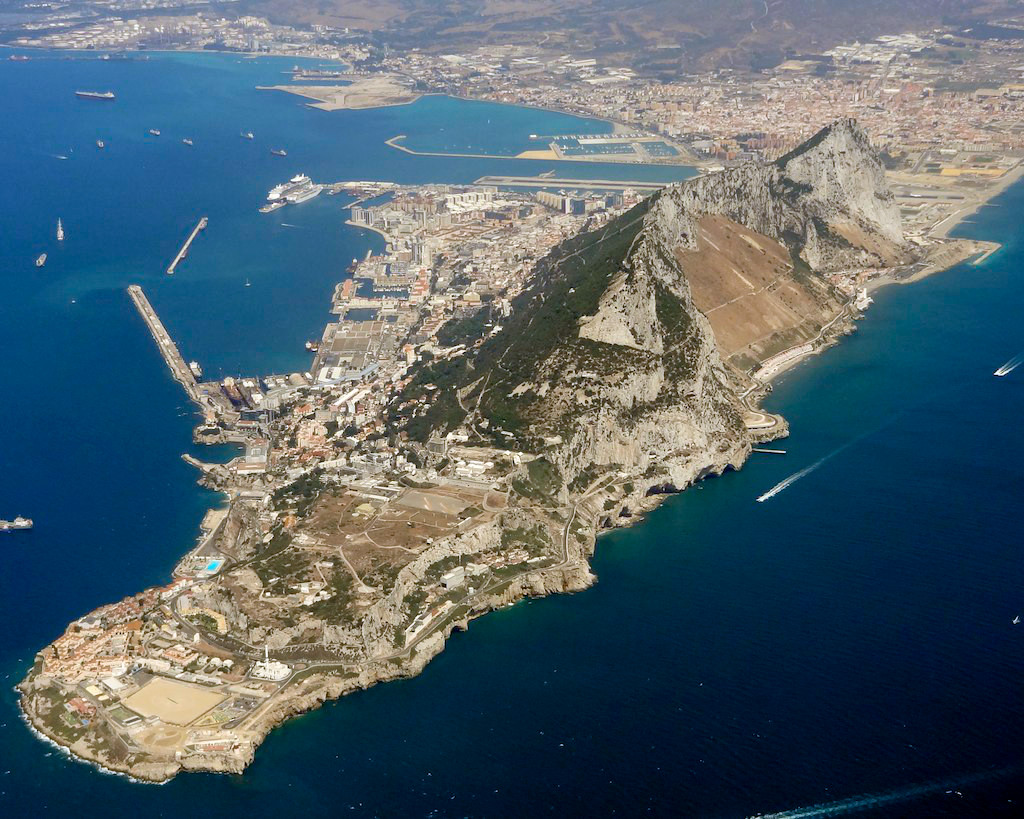
To understand why Gibraltar has been disputed for three centuries, one must look at a map. The Rock rises at the exact point where the Mediterranean Sea meets the Atlantic Ocean, at one of the busiest maritime straits on the planet. To control Gibraltar is to control who enters and who leaves the Mediterranean.
The British understood this from the very beginning. In 1704, during the War of the Spanish Succession, an Anglo-Dutch fleet under Sir George Rooke bombarded and captured Gibraltar. Nine years later, the Treaty of Utrecht (1713) formalized the cession “in perpetuity,” and Spain has never stopped demanding its return.
Halford Mackinder, the father of classical geopolitics, argued in 1904 that whoever controls the heartland controls the world. Gibraltar is not the Eurasian heartland, but it serves a similar function at the Mediterranean scale: whoever dominates the strait dominates the trade, military, and energy routes between Europe, Africa, and Asia.
Occupation as a Tool of Control
British presence in Gibraltar was neither diplomatic oversight nor historical accident. It was—and remains—a calculated strategic occupation that has functioned as a tool of control over Spain for over three centuries.
1. Permanent Military Control
Gibraltar has been for centuries an impregnable naval base. The Rock, fortified to the teeth, has allowed the Royal Navy to project power across the Western Mediterranean and the South Atlantic without depending on any other power. In every major conflict—the Napoleonic Wars, World War I, World War II—Gibraltar served as the platform from which Britain secured its imperial routes.
The control of the Rock has been so effective that when Adolf Hitler wanted to close the Mediterranean to the British in 1940, the only viable option was to take Gibraltar.
2. Economic Control: Smuggling and Fiscal Asphyxiation
During the 18th and 19th centuries, Gibraltar became a smuggling hub that drained the Spanish economy. From the Rock, the British introduced tobacco, tea, textiles, and other goods illegally into Spain, taking advantage of its free port status. The Spanish Crown watched its customs revenues evaporate without being able to do anything, as any military pressure on Gibraltar crashed against British naval superiority.
This economic control over Spain has perpetuated itself to the present day, albeit in different forms: Gibraltar remains a tax haven that attracts capital and companies, operating as a financial back door in Southern Europe.
3. Diplomatic Control: The Right of Veto
Gibraltar’s status has also functioned as a diplomatic control tool. For decades, any Spanish claim over Gibraltar has been systematically ignored by the United Kingdom and its allies. The Gibraltar question has served to keep Spain in a subordinate position on the European chessboard: every time Spain pushed too hard, the UK waved the specter of Gibraltarian self-determination or pulled strings within the European Union (of which Gibraltar was part through the UK).
Spain’s entry into the EU in 1986 and NATO in 1982 did not solve the problem. On the contrary, it normalized British presence: now the conflict was between partners, not enemies, which paradoxically defused any real pressure.
Hendaye and Operation Felix: The Moment Gibraltar Almost Changed Hands
The most critical moment for British control of Gibraltar came during World War II. In 1940, with France defeated and Britain reeling under Luftwaffe bombing, Hitler designed Operation Felix: a meticulous plan to take Gibraltar through a combined attack by two army corps, an SS division, and the Luftwaffe.
The plan required one essential condition: that Franco allow German troops to cross Spanish territory. On October 23, 1940, Hitler and Franco met for seven hours in Hendaye, on the Franco-Spanish border. Franco, cautious and calculating, set impossible conditions—massive supplies, the transfer of French Morocco—knowing Hitler would not accept them. The negotiations were so frustrating that Hitler allegedly said: “I would rather have four teeth pulled out than deal with that man again.”
Franco’s decision not to allow German passage saved Gibraltar for the Allies. But while diplomacy played out in Hendaye, the British were not idle.
The Forced Evacuation of Civilians
To turn Gibraltar into a full fortress, the British ordered the evacuation of all non-essential civilians in May 1940. 13,500 people —women, children, the elderly, and the infirm—were shipped to Casablanca. When France capitulated to Germany, the new Vichy government expelled the evacuees at bayonet point. After a 16-day nightmare voyage dodging German U-boats, they arrived in London just as the Blitz began. Many would not return to Gibraltar for up to ten years.
Gibraltar was the only place in the entire British Empire where the entire civilian population was evacuated during the war.
Eisenhower’s Underground Headquarters
At the same time, the British reinforced the Rock with a massive garrison. They excavated over 50 kilometers of tunnels inside the limestone, creating an underground city with a hospital, power plant, stores, and barracks. In November 1942, Gibraltar served as the main base for Operation Torch, the Allied invasion of North Africa. General Dwight D. Eisenhower set up his headquarters in the Rock’s tunnels, from where he coordinated the entire operation.
Eisenhower stated bluntly: “Without Gibraltar, Operation Torch would not have been possible.”
World War II proved that Gibraltar remained, three centuries later, a key piece of the global geopolitical chessboard.
The Pulse Continues: From Brexit to the Present
Brexit reopened the old wound. With the UK out of the EU, Gibraltar found itself in an awkward position: Gibraltarians had voted overwhelmingly to remain in the European Union (96%), but their status was now subject to bilateral negotiations. The so-called New Year’s Eve Agreement (December 31, 2020) established that Gibraltar would join the Schengen Area to guarantee free movement with Spain—a compromise that de facto brought the Rock closer to the Spanish orbit than ever in three centuries.
However, post-Brexit negotiations on Gibraltar have dragged on for years without a definitive agreement. Spain has pushed for co-sovereignty that would give it a voice in managing the airport and fiscal matters, while the UK and Gibraltarians defend their sovereignty. The question remains open.
Connection with the Geopolitics of Control Series
Gibraltar fits perfectly into the framework of Pedro Baños’ 7 Levers of Domination. British control over the Rock operates through multiple levers simultaneously:
- Military lever: an impregnable naval base dominating the strait.
- Economic lever: a tax haven and financial services center.
- Diplomatic lever: self-determination rights as a shield against Spanish claims.
- Technological lever: a communications and strategic surveillance base.
As Bertrand de Jouvenel wrote in Power, power tends to expand by nature. Gibraltar is the proof: an enclave that started as a naval base in 1704 and has perpetuated itself three centuries later because whoever holds it has a geopolitical advantage they will not give up.
Related articles:
– The Dismantling of the Spanish Empire — how power stripped Spain of its territories
– Pedro Baños and the 7 Levers of Domination — the complete map of power
– Franco and Kissinger: The Controlled Transition — how the US managed Spain during the dictatorship
FAQ
Why is Gibraltar still British?
Because the Treaty of Utrecht (1713) ceded the territory “in perpetuity” to the British Crown, and the UK has systematically refused to return it, supported by the Gibraltarians’ right to self-determination, who in successive referendums have overwhelmingly rejected Spanish sovereignty.
How important is Gibraltar to the United Kingdom?
Gibraltar controls the strait connecting the Atlantic with the Mediterranean, one of the world’s most important commercial and military routes. It also houses a British naval and air base, a strategic port, and functions as a financial and communications center.
What was Operation Felix?
It was Hitler’s plan to take Gibraltar during World War II. It required German troops to cross Spain, but Franco refused after the Hendaye meeting in October 1940, which permanently frustrated the German plan.
What happened to the Gibraltarian evacuees in WWII?
13,500 civilians—women, children, the elderly, and the infirm—were forcibly evacuated in 1940. After being rejected in Casablanca by the Vichy government, they were taken to London, where they endured the Blitz. Some took up to ten years to return to Gibraltar.
How did Brexit affect Gibraltar?
Brexit put Gibraltar in a complex situation, as 96% of Gibraltarians voted to remain in the EU. The New Year’s Eve Agreement (2020) integrated Gibraltar into the Schengen Area, bringing it closer to Spain. Negotiations on its final status continue.
Conclusion
Gibraltar is far more than a entrenched territorial conflict. It is a perfect example of how control of a strategic point can determine the balance of power for centuries. Since 1704, the Rock has been a tool of geopolitical control over Spain and the Mediterranean that the United Kingdom has not been willing to relinquish.
Three hundred years later, when we look at the map, Gibraltar remains the same embedded thorn. And it will remain so as long as power is measured, as it has always been measured, in the capacity to control strategic points.
📚 Related Books
- El dominio mundial — Pedro Baños
- The Grand Chessboard — Zbigniew Brzezinski
- Power — Bertrand de Jouvenel
- Gibraltar: The Greatest Siege in British History — Roy Adkins
Featured image: Aerial view of Gibraltar by Steve, CC BY-SA 2.0, via Wikimedia Commons.