Introduction
Long before Clausewitz wrote On War, long before Machiavelli counseled princes and Jouvenel analyzed the natural expansion of power, a Chinese general and philosopher named Sun Tzu wrote the most influential treatise on strategy in history: The Art of War. Composed approximately 2,500 years ago, its thirteen chapters contain the strategic principles that —explicitly or implicitly— have guided emperors, generals, corporations, and rulers down to the present day.
Sun Tzu did not merely write about military tactics. He wrote about how power is exercised. In that sense, his work is the theoretical foundation upon which all the levers of domination we have analyzed in this series rest: the economic, military, technological, media, cultural, diplomatic, and mental levers.
This article explores who Sun Tzu was, the key principles of The Art of War, how they connect with the theory of power of the Geopolitics of Control series, and why his teachings continue to be applied by states, corporations, and strategists in the 21st century.
Sun Tzu: The Strategist Who Wrote for Eternity
Sun Tzu (c. 544-496 BCE) lived during the Spring and Autumn period of ancient China, an era of constant warfare between rival states. According to tradition, he served as a general to King Helü of Wu, helping him consolidate power through successful military campaigns.
His work, The Art of War (Chinese: 孫子兵法, Sūnzǐ bīngfǎ, literally “Military Methods of Master Sun”), became not only a military manual but a philosophical text that transcends war to apply to any realm where conflict, competition, or power relations exist.
Unlike Western military treatises such as Clausewitz’s, which emphasize violence as a tool to impose one’s will, Sun Tzu starts from a radically different premise: the ideal is not to win in war, but to avoid war. The supreme victory, Sun Tzu says, is “to subdue the enemy without fighting.”
This apparent paradox contains the key to his thinking: if you can make your adversary surrender without a fight, you have won without exhausting your resources, without risking your troops, and without generating long-term resentment. It is, in essence, the most efficient way to exercise power.
Key Principles of The Art of War
1. “Know Yourself and Know Your Enemy”
This is undoubtedly Sun Tzu’s most famous principle, and for good reason. The General wrote:
“If you know others and know yourself, you will not be imperiled in a hundred battles. If you do not know others but know yourself, you will lose one battle and win another. If you do not know others and do not know yourself, you will be imperiled in every battle.”
This principle is the foundation of all strategic intelligence. In the context of our series, it applies directly to Baños’ diplomatic and intelligence lever: whoever knows their adversary best —their weaknesses, alliances, resources, and psychology— is positioned to control the board without moving a piece.
2. “All Warfare is Based on Deception”
Sun Tzu was the first great theorist of psychological warfare and strategic deception:
“When capable, feign incapacity. When near, make it appear you are far away. When far away, make it appear you are near. Offer a bait to lure the enemy. Pretend disorder and strike him.”
This principle connects directly to the mental and media levers of control: perception manipulation, disinformation, propaganda, and cognitive warfare are modern applications of the same idea. In the age of social media and artificial intelligence, strategic deception has become far more sophisticated than Sun Tzu could have imagined, but the essence remains the same.
3. “Supreme Excellence is to Subdue the Enemy Without Fighting”
Sun Tzu establishes a clear hierarchy of victories:
“Therefore the rule for the use of military force is: to subdue the enemy without fighting is best. To capture his army by assault is not as good. To capture his battalions intact is better than to destroy them.”
This revolutionary idea is the foundation of what we now call soft power, economic coercion, and hybrid warfare. If you can achieve your objectives through sanctions, debt, diplomatic pressure, or cultural control, why would you need to invade? It is, in essence, the practical application of Jouvenel’s principle: power expands, but it does so more efficiently when it meets no armed resistance.
4. “Speed is the Essence of War”
“War values victory, not prolonged operations. There is no example of a country that has benefited from a protracted war.”
This principle applies to war, business strategy, politics, and diplomacy alike. In the 21st century, where the speed of information is instantaneous, the ability to act quickly and decide before your adversary is a decisive strategic advantage.
5. “Do Not Press a Desperate Enemy”
Sun Tzu warns against cornering an adversary:
“Do not press a desperate enemy. A cornered animal will fight with the strength of desperation.”
This is a strategic lesson that many empires have ignored, with disastrous consequences. Always leaving an exit for your enemy is not weakness: it is strategic intelligence, because an adversary without hope will fight with a ferocity that multiplies their real power.
The Art of War and the Seven Levers of Domination
Sun Tzu’s work provides the philosophical and strategic substrate upon which Pedro Baños’ seven levers are built:
| Lever | Sun Tzu Principle |
|---|---|
| Military | “Supreme excellence is to subdue the enemy without fighting” — military force as deterrence, not action. |
| Economic | “Cut off the enemy’s supplies” — resource control and economic strangulation as strategy. |
| Technological | “He who arrives first on the battlefield awaits rested” — the advantage of controlling technology. |
| Media | “All warfare is based on deception” — information manipulation and propaganda. |
| Cultural | “Know yourself and know your enemy” — understanding the adversary’s culture to influence it. |
| Mental | “Attack the enemy’s plans” — psychological warfare as priority. |
| Diplomatic | “Build alliances” — diplomacy as a force multiplier. |
Each of these levers, which we have analyzed individually in previous articles, finds in Sun Tzu its oldest and most powerful theoretical foundation.
Sun Tzu in Contemporary Strategy
China and Sun Tzu
For China, The Art of War is not just an ancient book: it is a manual of national strategy that continues to inform its foreign policy and military doctrine. China’s strategy of “peaceful development,” the Belt and Road Initiative, the economic attrition war with the United States, and expansion in the South China Sea all reflect Sun Tzu-inspired principles: appearing weak when strong, winning without fighting whenever possible, and using patience as a strategic weapon.
Sun Tzu in the Corporate World
The Art of War is required reading at business schools around the world. CEOs and executives study it to understand market competition, price wars, market entry strategies, and alliance management. The maxim of “attack when the enemy is disorganized” translates in the business world to “enter a market when your competitor is having problems.”
Cognitive Warfare and Sun Tzu
In the realm of cognitive warfare, Sun Tzu’s principles are more relevant than ever. NATO defines cognitive warfare as efforts to attack and degrade rationality by exploiting systemic vulnerabilities at the individual, group, or societal level. Disinformation campaigns, deepfakes, algorithmic perception manipulation, and influence operations are all direct applications of Sun Tzu’s principle that “war is won in the mind long before it is fought on the battlefield.”
Connection to the Geopolitics of Control Series
Sun Tzu is, in many ways, the missing link of our series. We have explored the seven levers of domination from Pedro Baños’ framework: military control, debt, energy, cultural soft power, the military-industrial complex, and digital colonialism. But all of them rest on strategic principles that Sun Tzu codified two and a half millennia ago.
Debt as a weapon (Graeber, Lazzarato) is an application of the principle of “cutting off the enemy’s supplies.” Digital colonialism (Couldry, Kwet) is a manifestation of strategic deception: appearing to offer connectivity when in fact imposing dependence. Propaganda and media control (Chomsky, Baños) are modern versions of war based on deception.
Sun Tzu reminds us that strategy is not a collection of isolated tactics, but a way of thinking about power that transcends eras and technologies. A hypersonic missile, an AI algorithm, or a 21st-century trade agreement all respond, at their core, to the same principles Sun Tzu enunciated by observing armies of chariots and archers.
FAQ
Is The Art of War only about war?
No. Although officially a military treatise, its principles apply to any realm where conflict or competition exists: politics, business, diplomacy, sports, personal relationships. In fact, most of its avid readers are not soldiers, but executives, politicians, and strategists.
How does Sun Tzu differ from Clausewitz?
Clausewitz (1780-1831) defines war as “the continuation of politics by other means” and emphasizes violence, friction, and decisive battle. Sun Tzu, by contrast, sees war as the failure of strategy: his ideal is to win without fighting. Both are complementary, but Sun Tzu is more subtle, more psychological, and in many ways more modern.
Which country best applies Sun Tzu’s principles today?
China is the most explicit in incorporating them into its strategic doctrine. However, the United States, Russia and other powers implicitly apply them in their hybrid warfare, cognitive warfare, and economic coercion strategies. In the corporate world, companies like Amazon, Google, and Apple apply Sun Tzu-style principles in their market expansion.
Does The Art of War relate to Jouvenel’s theory of power?
Deeply. Jouvenel argued that power expands by nature. Sun Tzu explains how it expands: through intelligence, deception, alliances, patience, and control of terrain (physical, economic, or psychological). Both are, from different perspectives, theorists of power.
Is a 2,500-year-old text still relevant?
Absolutely. Technology changes, but human nature and power dynamics remain. Sun Tzu did not write about specific weapons, but about universal principles of conflict and competition. That is why his work remains required reading at military academies, business schools, and intelligence agencies around the world.
Conclusion
Sun Tzu was not the first strategist in history, but he was the one who best codified the universal principles of power and conflict. His Art of War is the cornerstone upon which all the levers of domination explored in this series are built: from debt and military control to digital colonialism and cognitive warfare.
Understanding Sun Tzu is understanding that strategy is not a set of tricks, but a discipline of thought: observe, analyze, plan, and act with surgical precision. It is, ultimately, understanding how power works in its purest form.
Because power, as Sun Tzu taught, is not exercised through force alone. It is exercised through intelligence.
📚 Related Books
- The Art of War — Sun Tzu (multiple editions available; Thomas Cleary translation recommended)
- El dominio mundial (Spanish) — Pedro Baños
- On War — Carl von Clausewitz
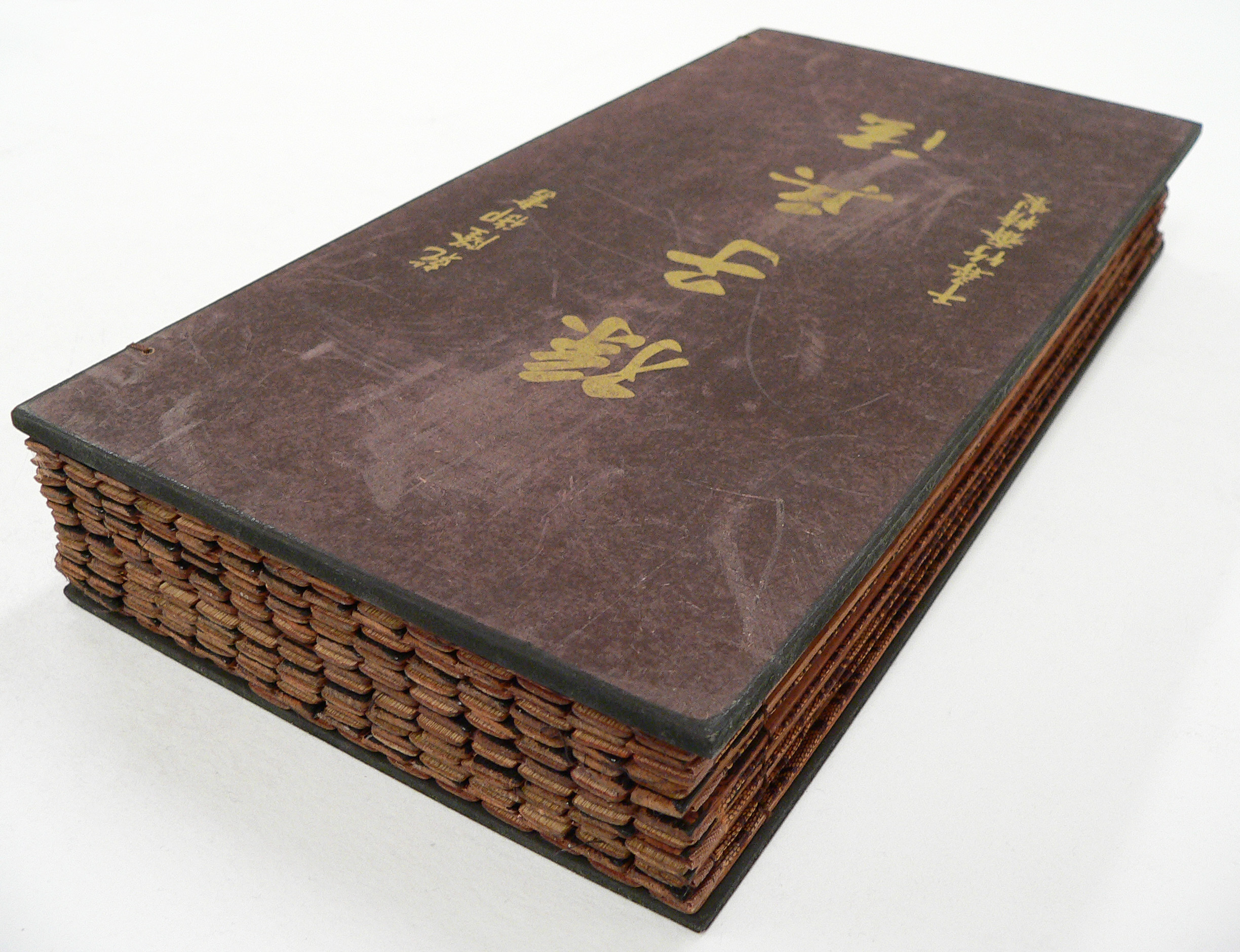
Featured image: Chinese bamboo book by vlasta2, CC BY 2.0, via Wikimedia Commons.